💬
Home Scholarship The 1974 U.S.–Saudi Petrodollar Pact and the Global Power of the Dollar

The 1974 U.S.–Saudi Petrodollar Pact and the Global Power of the Dollar

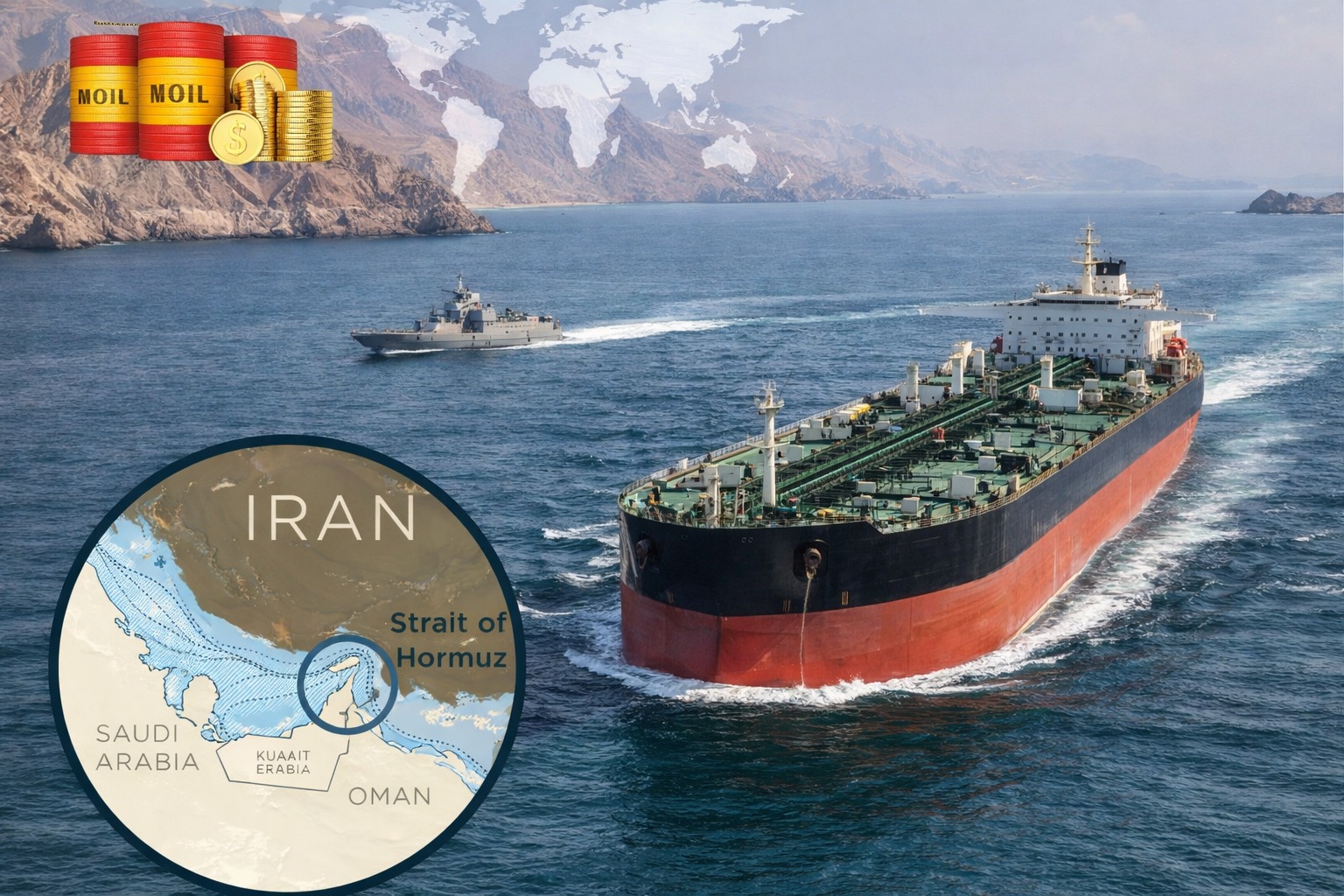
An oil tanker sails through the Strait of Hormuz, one of the world’s most strategic maritime chokepoints, as geopolitical tensions and energy trade continue to shape the global petrodollar system and international oil markets. Credit: A composite image for Newspot Nigeria (based on maritime and energy trade visuals).
Sponsored Advert
🔴 Breaking News:

By Newspot Nigeria Geopolitics Desk
Sponsored Ad
Sponsored Ad

The modern global economy rests on several strategic arrangements that were forged during moments of crisis. One of the most consequential emerged in the aftermath of the 1973 oil shock, when the United States and Saudi Arabia deepened economic and security cooperation. The result helped anchor the U.S. dollar at the center of global energy trade.

The crisis began when members of the Organization of the Petroleum Exporting Countries imposed an oil embargo on nations seen as supporting Israel during the Yom Kippur War. Oil prices surged dramatically, and industrial economies struggled with inflation and fuel shortages. The shock forced policymakers in Washington to rethink the future of global monetary stability.

The 1973 Arab Oil Embargo: The Old Rules No Longer Apply | KUER
Motorists queue for gasoline during the 1973 oil crisis, when the Arab oil embargo triggered fuel shortages and reshaped global energy politics. Credit:Historical archive / Getty Images
US Fuel Crisis
Motorists queue for gasoline during the 1973 oil crisis, when the Arab oil embargo triggered fuel shortages and reshaped global energy politics. Credit: Historical archive / Getty Images
US Fuel Crisis
Motorists queue for gasoline during the 1973 oil crisis, when the Arab oil embargo triggered fuel shortages and reshaped global energy politics. Credit: Historical archive / Getty Images
https://images.openai.com/static-rsc-3/DgDCgROxsqUw9dxat0__AcYZTDNqVpmZHEcACe5TANH_zVcrjJU6PV277-dkM2EqpGYEpnjHQjBvJAbgDJkglAWh_MtKAqLaR3XmMIfOF90?purpose=fullsize&v=1
Front pages from British newspapers capture the panic and disruption caused by the global oil crisis of the 1970s, when fuel shortages and rising prices forced governments to introduce emergency energy policies. Credit: Historical press archive

Only two years earlier, President Richard Nixon had ended the dollar’s convertibility into gold, dismantling the Bretton Woods system that had governed international finance since World War II. Without gold backing, sustaining global demand for the dollar became a strategic priority for American economic policy. The solution emerged through a deeper partnership with Saudi Arabia, the world’s largest oil exporter at the time.
Sponsored

In 1974, the United States and Saudi Arabia established a framework of cooperation covering energy trade, financial investment, and security collaboration. Saudi oil exports continued to be priced primarily in U.S. dollars, reinforcing the currency’s role in international commerce. In return, Saudi oil revenues were largely invested in American financial markets, particularly U.S. Treasury securities.

Advertisement

Sponsored
Sponsored Ad - Ad Inserter Pro
Top Advert Bottom Advert

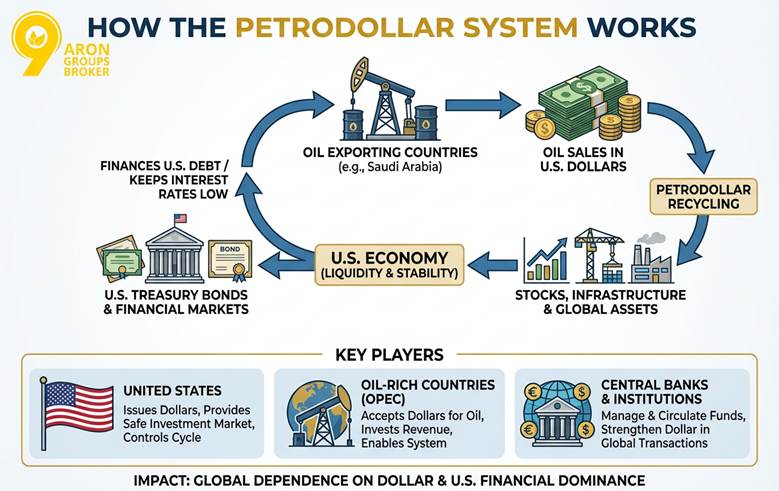
This financial recycling of oil revenues became known as petrodollar recycling. Oil-importing countries accumulated dollars to purchase energy, while oil-exporting countries reinvested those dollars into the U.S. economy. The system strengthened global demand for the dollar and helped stabilize American financial markets.

https://upload.wikimedia.org/wikipedia/commons/thumb/9/91/DOLLAR_AND_EURO_IN_THE_WORLD.svg/1280px-DOLLAR_AND_EURO_IN_THE_WORLD.svg.png
Worldwide use of the US dollar: Credit: WIKI
https://cdn.arongroups.co/uploads/2025/12/petrodollar-2.jpg
A simplified illustration showing how the petrodollar system works, linking oil exports priced in U.S. dollars to global financial markets through the recycling of oil revenues into U.S. Treasury bonds and investments. Credit: Aron Groups Broker (educational illustration)
https://images.openai.com/static-rsc-3/akTyPEOBH5RQPyEMOql0rpPcrliLlLafQh8dvAXbgkFBQGyNMT8d0jLossXXbjz_qcf1Ei66A1iFnKoTdaP9LWscmU-hNX7MBwaTLgn-vac?purpose=fullsize&v=1
Oil barrels and global financial indicators symbolize the role of energy markets in shaping international trade, currency demand, and the dominance of the U.S. dollar in global transactions. Credit:Stock financial illustration

Trump's war jolts global central banks from Fed to ECB to BOJThe arrangement also had a geopolitical dimension. The United States expanded its security cooperation with Saudi Arabia, including defense partnerships and military support aimed at protecting energy infrastructure in the Gulf. In turn, stability in oil supply routes became a strategic priority for Washington.


One of the most important routes is the Strait of Hormuz, through which a large share of global oil shipments travels. Ensuring the security of that narrow waterway became central to global energy stability. Over time, U.S. naval presence in the region helped reinforce the broader economic architecture built around oil trade.

The petrodollar system also made it easier for the United States to finance government spending. When oil-exporting countries invested their revenues in U.S. Treasury bonds, they effectively lent money to the American government. That steady demand for U.S. debt helped maintain relatively low borrowing costs.

Despite its resilience, the system has faced new challenges in recent years. Countries such as China and Russia have explored alternatives to dollar-denominated energy transactions. Discussions within emerging economic blocs like BRICS have also focused on reducing dependence on the U.S. currency.

https://images.openai.com/static-rsc-3/J31hREjDaA98s4RCZkFLjsjAwJcJhtGtw0WEQUx0b-OrlqCafcU4jGdkLpbhwg_tECkJho71o8yqQVZcCSN0sq6x0xQrvDVzvo3S3fL17Xs?purpose=fullsize&v=1
Satellite imagery of the Strait of Hormuz shows one of the world’s most important maritime chokepoints, where a significant share of global oil shipments passes between the Persian Gulf and the Gulf of Oman. Credit: Satellite imagery / space agency archive
https://static-cdn.toi-media.com/www/uploads/2012/04/5866448510_90335c124e_b.jpg
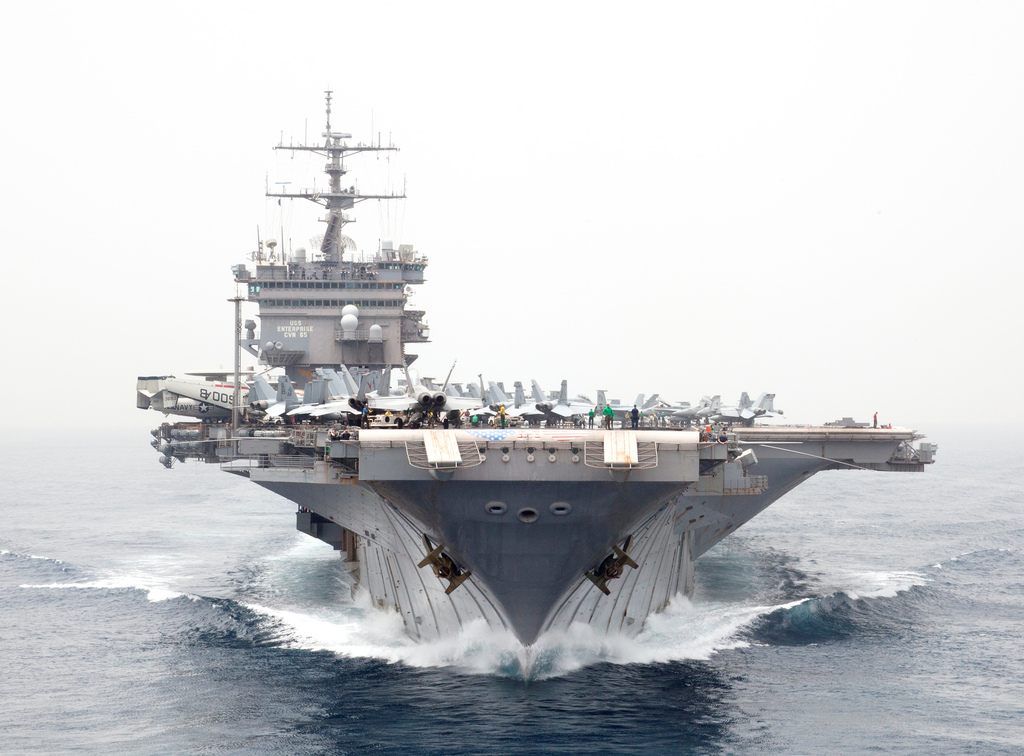
A U.S. Navy aircraft carrier sails through Middle Eastern waters, reflecting the strategic military presence that helps secure global energy shipping routes in the Persian Gulf region. Credit: U.S. Navy
https://images.openai.com/static-rsc-3/i_roriuOJVFDYnNXV4HRGHfrafy7LNCXDsuhOPsYxvggeV8JCwPOKwtXArvTcNcL0f7AzBVnCNlOtaPotHerX_2zBeb9vrwzb8nXY0e7huI?purpose=fullsize&v=1
A regional map showing the Strait of Hormuz between Iran, Oman, and the United Arab Emirates, a narrow waterway that plays a critical role in global energy transportation. Credit: Geographic reference map
Maritime traffic in the Strait of Hormuz
An analytical map highlighting shipping lanes through the Strait of Hormuz, where oil tankers move from the Persian Gulf into global markets. Credit:Energy trade map

Yet the fundamentals of the system remain largely intact. The U.S. dollar still dominates global reserves and commodity markets, while American financial institutions remain central to global capital flows. For now, the petrodollar framework continues to shape the intersection of energy, finance, and geopolitics.

Half a century after its formation, the 1974 understanding between Washington and Riyadh remains one of the most influential pillars of the modern economic order. By linking oil trade to the dollar, the arrangement reinforced the financial architecture that underpins global commerce. Its legacy continues to influence international economics, diplomacy, and strategic competition.

© Copyright © 2025 Newspot Nigeria. All rights reserved.
LAGOS WEATHER