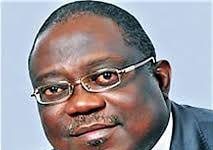

In the shifting theatre of southwestern Nigerian politics, few careers capture the unpredictable nature of power as vividly as that of Lucky Orimisan Aiyedatiwa, the governor of Ondo State. His rise from private businessman to the highest office in the state has been swift, shaped as much by circumstance as by political calculation. Now, barely a year into his first full elected mandate, a legal storm is gathering that could determine whether he will be allowed to seek another term in 2028.


Born on January 12, 1965, in the riverine community of Obe-Nla in Ilaje Local Government Area, Aiyedatiwa’s early life followed a path far removed from the centre of political power. He trained initially as a teacher at the Lagos State College of Education, where he obtained a Nigeria Certificate in Education in 1986, before later earning a degree in Business Administration from the University of Ibadan in 2001. His professional life unfolded largely in the private sector, including a period as managing director of Blue Wall Nigeria Ltd., where he built a reputation as a businessman before venturing into politics.
His political journey began quietly in 2011 when he joined the Action Congress of Nigeria, a party that would later merge into the All Progressives Congress. For several years he remained a relatively obscure figure within the party’s ranks. His fortunes changed dramatically in 2020 when he was selected as running mate to the incumbent governor, Rotimi Akeredolu.
Their victory in the governorship election that year brought Aiyedatiwa into office as deputy governor in February 2021. For much of the administration he remained largely in the background, overshadowed by the commanding presence of Akeredolu. That changed abruptly in December 2023 when the governor died after a prolonged illness. On December 27, Aiyedatiwa was constitutionally sworn in to complete the remaining months of the term.

The succession unfolded amid a tense political atmosphere. During Akeredolu’s illness, divisions had surfaced within the state government, with rumours of loyalty disputes and factional struggles circulating in political circles. Yet Aiyedatiwa managed to stabilise the administration at a delicate moment, consolidating authority and preparing for an election that would determine whether his tenure would be temporary or enduring.





Less than a year later he faced the electorate in his own right. In the governorship election of November 16, 2024, Aiyedatiwa, running on the platform of the APC, secured a decisive victory. He polled 366,781 votes, comfortably defeating the candidate of the Peoples Democratic Party, Agboola Ajayi, who received 117,845 votes. The Independent National Electoral Commission declared him winner across all 18 local government areas of the state.
The election, though marked by modest turnout, was widely considered peaceful and credible. For Aiyedatiwa, the victory was both political validation and personal vindication. On February 24, 2025, he was sworn in to begin what is widely regarded as his first full elected term as governor.


Legal challenges followed, as is customary in Nigerian politics, but the outcome was ultimately affirmed by the Supreme Court of Nigeria in March 2025, settling his mandate for the present.
Yet the deeper constitutional question was only beginning to take shape. At its core lies a technical but consequential issue, whether the fourteen months Aiyedatiwa spent completing Akeredolu’s tenure should count toward the constitutional limit of two terms for a governor.
Nigeria’s 1999 Constitution prohibits any individual from being elected governor more than twice. Supporters of Aiyedatiwa argue that because he merely completed the unfinished tenure of his predecessor, serving less than half of the four-year cycle, that period should not count as an elected term. Under that interpretation, his 2024 victory represents his first mandate, leaving the door open for a second bid in 2028.
Critics, however, see the matter differently. They argue that having taken the oath of office as governor in December 2023 and again in February 2025, Aiyedatiwa could potentially remain in office for close to nine years if he contests and wins again. Some legal analysts have drawn parallels with the national debate that once surrounded former president Goodluck Jonathan over term limits.
The dispute has now moved decisively into the courts. In 2025, an APC chieftain, Akindele Egbuwalo, filed a suit at the Federal High Court seeking a judicial interpretation of the constitutional provisions governing such succession.
A new twist emerged this week when the Court of Appeal delivered a ruling that has revived the controversy. In an unanimous decision, a three-judge panel led by Uchechukwu Onyemenam dismissed an appeal filed by Aiyedatiwa challenging an earlier procedural ruling of the Federal High Court in Akure. The appeal, marked CA/ABJ/319/2025, sought to overturn the lower court’s decision allowing Egbuwalo to amend his originating summons in the case questioning the governor’s eligibility.
The appellate court found no evidence that the trial judge had denied Aiyedatiwa a fair hearing or misapplied the law. The panel therefore dismissed the appeal as lacking merit and awarded costs of ₦2 million against the governor.
While the ruling does not decide the substantive question of whether Aiyedatiwa may run again in 2028, it clears the way for the Federal High Court to proceed with the core constitutional case. Earlier in January 2026, the Court of Appeal in Akure had halted delivery of judgment in the substantive suit pending the outcome of the appeal. With that hurdle removed, the legal battle over Ondo’s political future is set to resume.
For his part, Aiyedatiwa has remained publicly cautious. He has repeatedly stated that he has not declared any intention to contest the 2028 election, describing the litigation as premature and insisting that only the courts can interpret the constitution. His focus, he says, remains on governing the state.
That governance agenda centres on economic development. The administration has emphasised agricultural expansion, particularly cocoa cultivation, improvements in rural road networks and security, as well as renewed plans to develop the long-anticipated Ondo Port. Tourism projects, including the promotion of Araromi Beach, and initiatives involving compressed natural gas for transportation also form part of the state’s development blueprint.
Within the APC, the governor continues to command support from regional party leaders. Among them is Biodun Oyebanji of neighbouring Ekiti State, who previously hailed Aiyedatiwa’s electoral victory as a sign of confidence in the party’s leadership under President Bola Ahmed Tinubu.
Yet the very existence of the lawsuit underscores the persistent rivalries that define politics in Ondo. What began as a constitutional technicality has gradually developed into a question with potentially profound political consequences.
For now, Aiyedatiwa governs under a mandate that runs until February 2029. But whether he will be allowed to extend that mandate beyond a single elected term now rests with the courts.
In Nigeria’s restless democracy, where politics often turns on the fine print of constitutional language as much as on the ballot box, the future of Ondo’s governor may ultimately depend on how judges interpret a handful of carefully written lines. Until that judgment arrives, the question of whether Lucky Aiyedatiwa will appear again on the ballot in 2028 remains one of the most intriguing uncertainties on the state’s political horizon.
©️ Adebamiwa Olugbenga Michael is a Lagos-based political economy and policy intelligence analyst and publisher of The Insight Lens Project, providing data-driven insights across Nigeria and West Africa using open-source data.