
By Newspot Nigeria Editorial Desk


Veteran actor Pete Edochie’s lament about spending roughly ₦40,000 daily to keep his house powered struck a chord with many Nigerians. For some people, that figure may even sound modest. In Abuja, a resident recently shared that he spent over ₦50,000 in one day just to service his generator so he could have electricity at home. That was before even buying fuel.
With petrol rising from around ₦800 to nearly ₦1,000 per litre, the cost of simply having light has become a serious financial burden. Families now budget for electricity the same way they budget for food or transportation. For many households, generators have become the only dependable source of power. Citizens are privately paying for what should normally be a public service.
The effects are visible across the country. In Lagos, some business owners say they now open their shops only to sit and wait, hoping electricity will eventually come. Machines remain idle, refrigerators stop working, and workers simply watch the day pass. Some say their businesses are slowly collapsing because running generators all day is no longer sustainable.

Residents in Osogbo and Ibadan tell similar stories. Waiting endlessly for electricity has become part of daily life. Some neighborhoods receive only a few hours of power in a day, sometimes none at all. When electricity finally arrives, it may disappear again before people can complete basic tasks.





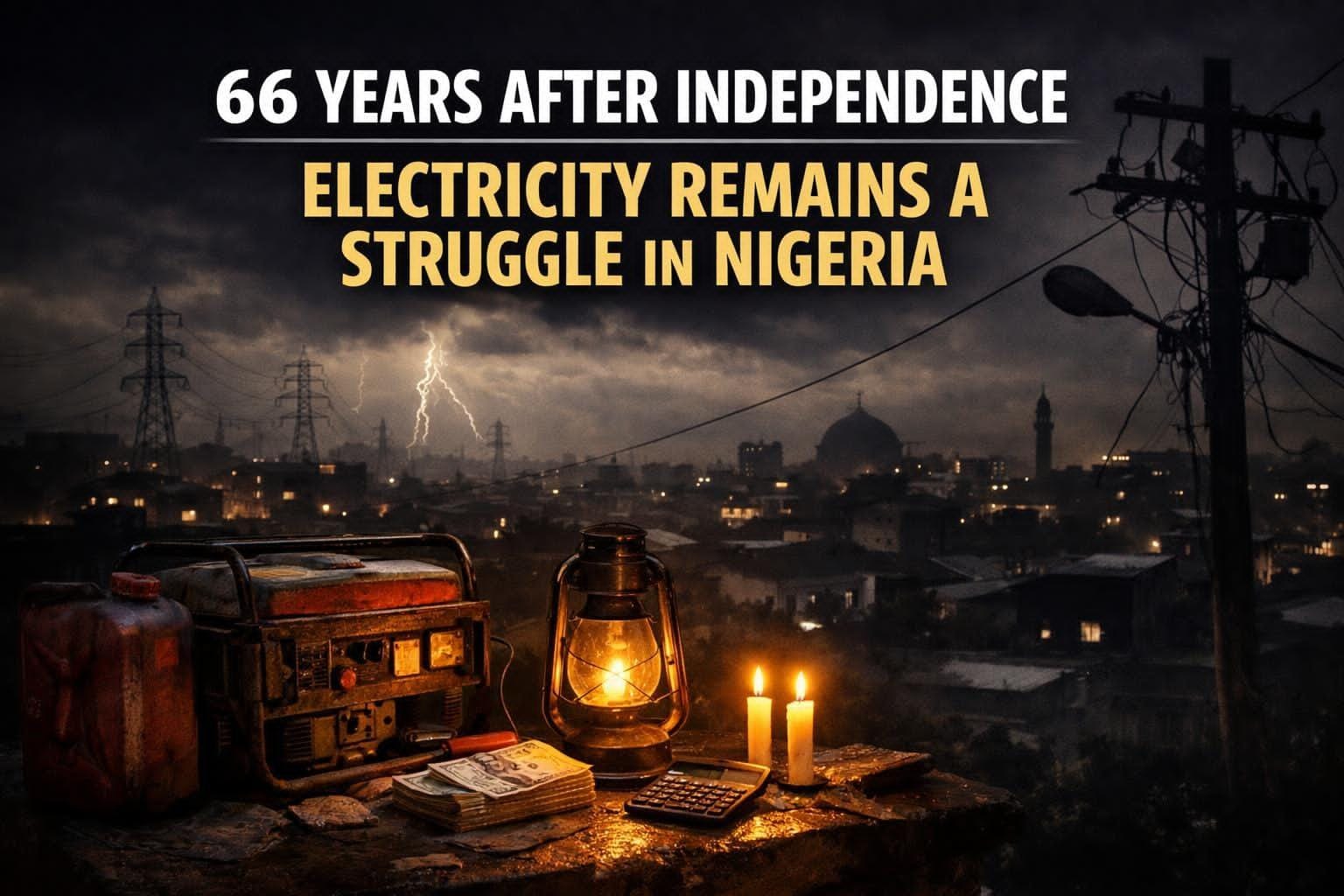
This reality raises troubling questions about Nigeria’s development path. 66 years after independence, electricity still feels like a privilege instead of a basic service. Citizens now run parallel power systems in their homes through generators. They pay for repairs, maintenance, and increasingly expensive fuel just to keep the lights on.
The situation also brings back a promise many Nigerians remember from the last election season. Almost four years ago, during the campaign period, President Bola Tinubu told voters that if he could not provide stable electricity, they should not vote for him again. His words were direct, “If I do not provide steady electricity in my first four years, do not vote for me for a second term.” That statement raised expectations that the country’s electricity crisis would finally receive urgent attention.


Another question many Nigerians quietly ask is whether citizens must simply get used to everything that goes wrong because the country lacks strong leadership guardrails. In many conversations, people are told to accept the situation or stop comparing Nigeria with more developed societies. Yet comparisons are often made with the worst examples abroad rather than the systems that actually work. Problems elsewhere are used to normalize failure at home.
What is rarely discussed is how functioning societies build systems that correct mistakes and maintain reliable public services. Their institutions respond when things break down, and leaders are held accountable. The issue is not that other countries have no problems. The issue is whether there are systems strong enough to fix those problems quickly.
Evidently, Nigerians are just asking for leadership that treats electricity, fuel affordability, and economic stability as serious priorities. The daily struggle to keep lights on should not define life in a country with Nigeria’s resources. For more national conversations and analysis on issues affecting Nigerians, follow Newspot Nigeria.
— Newspot Nigeria