

By Newspot Nigeria News Desk

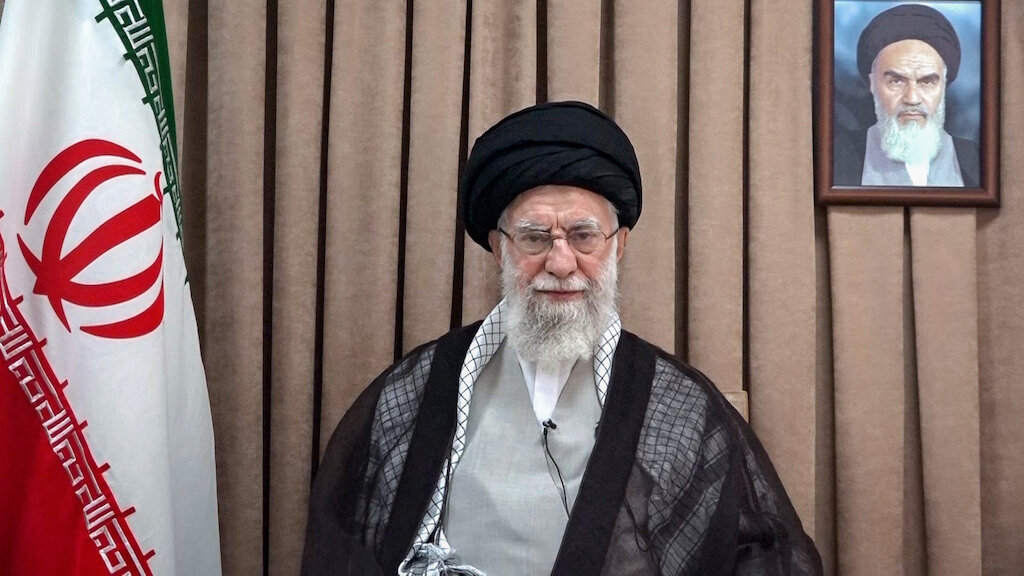
Iranian state media has confirmed that Ayatollah Ali Khamenei, the country’s Supreme Leader since 1989, was killed in a major joint military operation carried out by the United States and Israel, marking the most dramatic escalation in U.S.–Iran relations in decades.
According to official Iranian broadcasts, the 86-year-old leader died early Sunday after an airstrike struck his heavily fortified compound in central Tehran. Satellite imagery showed extensive destruction at the site, reinforcing claims that the compound was directly targeted.
U.S. President Donald Trump confirmed the killing hours earlier, describing it as a turning point for Iran and urging Iranians to “take back” their country. In public statements, he warned that further strikes would continue as part of a broader campaign aimed at disabling Iran’s military and nuclear capabilities.

Khamenei’s death has thrown the Islamic Republic into deep uncertainty. As Supreme Leader, he exercised final authority over Iran’s armed forces, judiciary, foreign policy, and nuclear strategy. His role sat above all elected institutions, making succession both constitutionally sensitive and politically volatile. No successor had been formally named.





Iran’s government and security leadership reacted swiftly. The Revolutionary Guard warned of “severe and regret-inducing punishment,” while Iran’s cabinet said the killing “will never go unanswered.” Senior officials described the strike as an act of open war.
Iran responded within hours, launching missile and drone attacks toward Israel and targeting U.S. military installations across the Gulf, including bases in Bahrain, Kuwait, and Qatar. Israeli authorities confirmed casualties from Iranian missile fire, while the U.S. military reported no American deaths but acknowledged sustained attacks on regional facilities.


The escalation has disrupted air travel across the Middle East and raised concerns about broader economic fallout. Analysts warn that any Iranian move to threaten shipping through the Strait of Hormuz could severely impact global oil markets, as roughly one-third of the world’s seaborne oil exports pass through the waterway.
Inside Iran, reactions appeared sharply divided. While state media framed Khamenei’s death as martyrdom, eyewitnesses in Tehran reported celebrations in some neighborhoods, highlighting long-standing domestic unrest fueled by economic hardship and political repression.
Internationally, governments are bracing for further escalation. In the United States, some lawmakers criticized the operation for proceeding without congressional authorization, while the White House said select leaders had been briefed in advance. Calls for restraint continue even as military exchanges persist.
The killing of a sitting Iranian Supreme Leader by foreign forces marks an unprecedented moment in Middle Eastern history, opening a volatile and unpredictable chapter for Iran, the region, and the global order.
— Newspot Nigeria