

By Newspot Nigeria Politics Desk


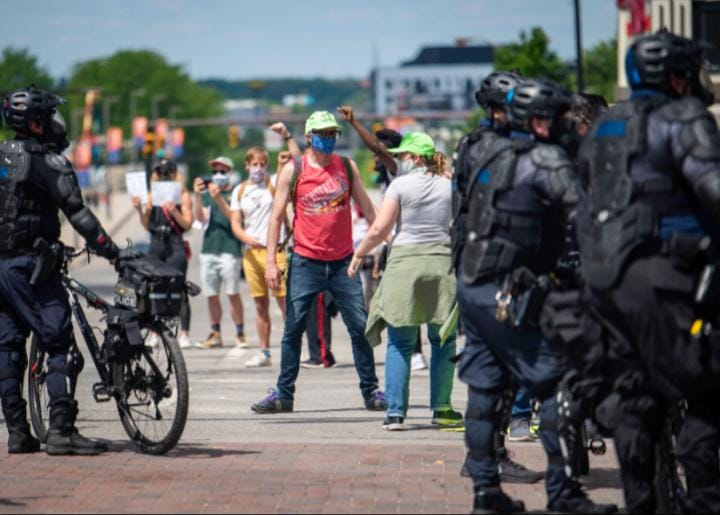
A federal class-action lawsuit filed on February 23, 2026, has accused the U.S. Department of Homeland Security and several of its sub-agencies of unlawfully surveilling, harassing, and intimidating legal observers and protesters who were monitoring immigration enforcement operations.
The suit, filed in the U.S. District Court in Maine by the democracy advocacy group Protect Democracy alongside private law firms, alleges that federal agents deployed advanced surveillance technologies to identify and retaliate against individuals exercising their First Amendment rights in public spaces.
Allegations of Surveillance and Intimidation
According to the complaint, DHS agents allegedly used a mobile application known as Mobile Fortify to scan the faces and license plates of people recording immigration raids. Plaintiffs claim the technology enabled real-time identification of observers who were otherwise engaging in lawful activity.

One of the most striking allegations centers on a widely circulated video in which a masked federal agent allegedly told a legal observer that she had been added to a database and labeled a “domestic terrorist.” The lawsuit argues that such statements, even if false, were intended to intimidate and deter constitutionally protected observation and documentation of government activity.





The complaint further alleges that some observers were followed home in unmarked vehicles, a tactic plaintiffs describe as deliberate psychological intimidation meant to signal that federal authorities knew their identities and residences.
Claims of Unconstitutional Retaliation
Plaintiffs argue that these actions amount to unlawful retaliation for engaging in protected speech and press-like activities, including observing and recording law enforcement in public places. The lawsuit maintains that none of the plaintiffs obstructed officers or interfered with enforcement operations.


The filing frames the case as a test of whether federal authorities can use modern surveillance tools against civilians who are not suspected of any crime, simply for documenting government activity in public.
Government Response
Federal officials have denied key elements of the allegations. DHS representatives have stated publicly that there is no special database labeling legal observers or protesters as domestic terrorists. Testimony before Congress by immigration enforcement leadership has also asserted that the agency does not maintain databases tracking U.S. citizens engaged in lawful protest activity.
Plaintiffs counter that the issue is not only whether such databases formally exist, but whether federal agents used the threat and appearance of surveillance to chill constitutionally protected conduct.
Broader Context
The Maine lawsuit follows a similar case filed in December 2025 in Minnesota, where civil liberties groups accused federal agents of using excessive force and intimidation against peaceful legal observers during immigration operations.
Legal analysts say the outcome of the case could have wide implications for how federal agencies deploy facial recognition, license-plate scanning, and mobile surveillance tools during domestic operations, especially where First Amendment protections are implicated.
— Newspot Nigeria