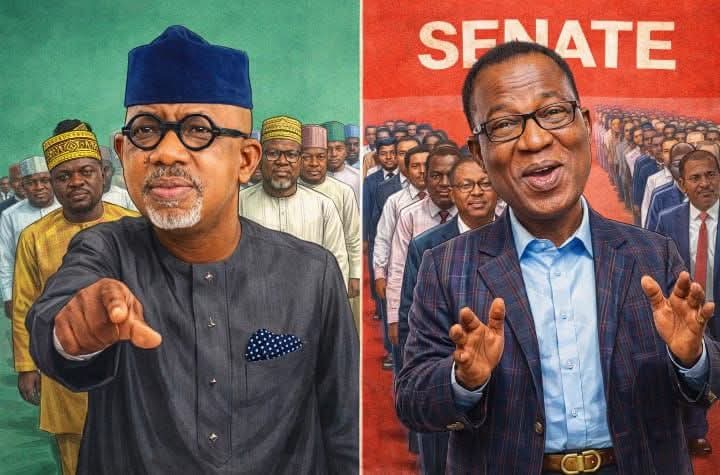

Who is a better option?
1. Political Experience and Tenure
Gbenga Daniel served two full terms (8 years) as Governor of Ogun State (2003–2011), a significant period with sustained policy implementation, investment and human capacity development, youth employment and empowerment, job creation and sports development with touch on tourism etc.
Currently a Senator representing Ogun East (from 2023)
OGD has decades-long involvement in politics, including grassroots mobilization, one of the best grassroot politician Ogun State has ever produced.

Dapo Abiodun: Serving as Governor of Ogun State since 2019, now in second term after re-election in 2023… A feat he wouldn’t have achieved without support from top politicians who threw behind him their support.





Political involvement of Prince Dapo Abiodun dates back to earlier contests (e.g., gubernatorial primaries in 2002) and other political bids.
Verdict: Daniel has longer and deeper political experience, especially at the executive level coupled with his recent experience gathered so far at the Senate.


2. Governance and Development Impact.
Gbenga Daniel focused on education, infrastructure, industry, and youth empowerment: established free trade zones and educational institutions; improved state facilities just to mention a few.
His administration attracted investments and public-private partnerships in the mid-2000s..
Legacy infrastructure has been credited with laying foundation for later development which many believed is a foundation and catalyst upon which the state IGR is skyrocketing
Dapo Abiodun
His government is often praised for industrial growth, attracting investment, and state transformation, especially building various projects and positioning Ogun for economic diversification.
Has received awards for agriculture, infrastructure, housing delivery and security which seems to be shared among players in the corridor of power and not trickling down to the masses.
His supporters highlight investment-centric development. Criticism exists (especially online) about slow pace, shady construction and awards of contracts without transparency on road works and some public services.
Verdict: They have different styles: Daniel’s work often emphasized creating institutions and capacity (education, trade zones), while Abiodun’s been more investment and project driven.
Which is “better” can depend on what outcomes one values more.
3. Recognition, Awards & Influence
Gbenga Daniel received multiple honorary degrees and awards recognizing governance performance, leadership and contributions to education.
Has a sustained reputation in political circles as a seasoned leader and mentor.
Dapo Abiodun
Has won industry and governance awards (e.g., best governor in various sectors) from national bodies which many believed was influenced/induced. Known for strong engagement with private sector and economic forums but lacking adequate transparency.
Verdict: Both have recognitions, but Daniel’s awards are more tied to public service and policy impact, while Abiodun’s reflect sectoral performance.
4. Public Perception and Criticism
Daniel’s tenure is often remembered for transformative investments and institution building, though some critics mention later political controversies.
Abiodun’s administration has both supporters for economic initiatives and critics (especially online) who feel road infrastructure and basic services could be better.
Verdict: Both attract praise and criticism, but Daniel’s legacy tends to be viewed as more institutional and long-term, whereas Abiodun’s is sometimes seen as project-focused.
If you value longer governance experience, institution building and broad political influence, then Otunba Gbenga Daniel is often seen as more accomplished historically.
If you value modern economic development, investment attraction, and sector-specific performance, then Dapo Abiodun’s record is shady in recent .
However, Ogun East electorate are enlightened and won’t exchange competence and genuine representation for aspiration born by desperation.