By Olugbenga Adebamiwa

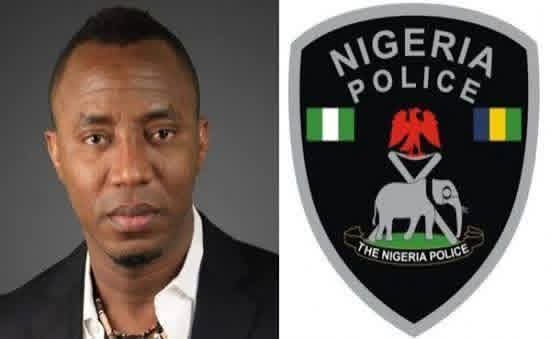
In a striking demonstration of Nigeria’s legal paradoxes, activist and journalist Omoyele Sowore experienced both triumph and restraint on the same day. In Lagos, the Federal High Court delivered a judgment hailed as a landmark for civil liberties. Simultaneously, a separate High Court in Abuja issued interim injunctions curbing Sowore and Sahara Reporters from publishing claims deemed defamatory against the Inspector-General of Police (IGP), Kayode Egbetokun.

In Ikoyi, Justice Musa Kakaki ruled that the Lagos State Commissioner of Police, Moshood Jimoh, had acted unconstitutionally and beyond his legal authority when he warned Sowore to stay away from Lagos on October 27, 2025, and later declared him “wanted” on November 3. The court held the IGP vicariously liable and awarded ₦30 million in damages, stressing that any “wanted” declaration must follow judicial oversight, including warrants and proof of evasion.




“This is not just a personal victory; it is a historic vindication of every Nigerian’s constitutional rights,” said Tope Temokun, Sowore’s legal counsel. His statement, widely shared on X (formerly Twitter), framed the judgment as a broader triumph for freedom of expression, assembly, and movement—urging citizens to consolidate this gain lest it fade into symbolic memory.


Yet, the celebration was tempered. In Abuja, a different High Court granted interim injunctions restraining Sowore and Sahara Reporters from publishing allegations against the IGP, including claims tied to ₦100 million from Anambra State security votes. Legal analysts describe this as a vivid illustration of the precarious balance between activism and accountability in Nigeria: a day of victory in one courtroom can coincide with limits in another.
Sowore, founder of Sahara Reporters and leader of the #RevolutionNow movement, has long been at the center of clashes with the state. The Lagos ruling reinforces that law enforcement cannot bypass constitutional protections, signaling judicial courage in a climate where dissent is frequently met with state pushback. At the same time, the Abuja injunction underscores that even celebrated activists remain subject to legal boundaries, especially when allegations verge on defamation.
Civil society advocates praised the Lagos decision as a symbolic victory for democracy. Online, groups such as the Take It Back Movement celebrated it as a boost for civic engagement and protest rights. Yet, observers caution that enforcement of damages in Nigeria remains inconsistent and systemic reforms are essential to prevent future abuse.
Temokun emphasized the symbolic nature of the ₦30 million award: “The monetary sum is secondary. What matters is the clear message that the law cannot be twisted for intimidation.” Sowore has indicated plans to use any recovered funds for public good, signaling commitment to principle over personal gain.
The dual rulings of February 20, 2026, capture the paradox of contemporary Nigeria: a constitution that guarantees freedoms on paper, but a political and legal environment where the exercise of those freedoms is constantly contested. The day reflects both the promise of judicial oversight and the reality of legal restraint, underscoring the need for active civic engagement to make constitutional protections tangible.
As Sowore’s legal journey demonstrates, victory is never absolute, and restraint can arrive alongside celebration. For Nigerians watching the struggle for rights and accountability, February 20 serves as both inspiration and caution: the law protects, but only collective vigilance ensures that protection becomes reality.