
By Olugbenga Adebamiwa

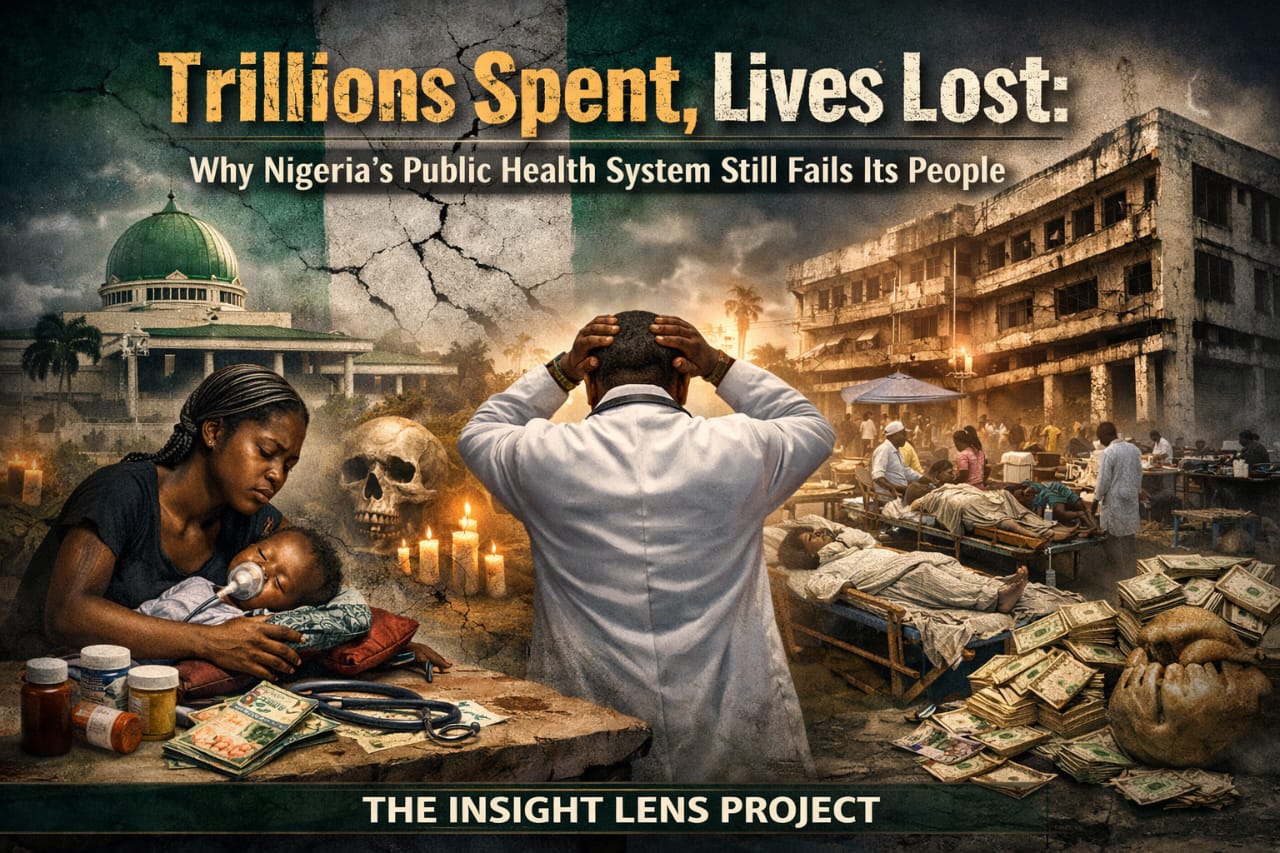
Despite rising public spending and repeated reform pledges, Nigeria’s health sector continues to deliver outcomes far below its potential. This anomaly between expanding budgets and persistently poor service delivery raises urgent questions about governance, policy priorities, and institutional accountability. At a time when global health systems are being reimagined to meet demographic pressures, pandemics, and economic uncertainty, Nigeria’s experience underscores a simple truth, money alone does not guarantee results.

Nigeria’s federal health allocation has grown significantly in recent years. The 2025 health budget rose by roughly 60 percent to ₦2.48 trillion, representing over five percent of total federal expenditure and placing health among the top four spending sectors nationally. Yet outcomes remain troubling, maternal mortality is about 512 deaths per 100,000 live births, the doctor-to-patient ratio stands at roughly 1:10,000, and only one in five primary healthcare centres (PHCs) is fully functional. Clearly, the challenge is not only funding but how resources are translated into tangible care.





Compounding this gap are systemic weaknesses in governance and policy coordination. Procurement inefficiencies, absenteeism, and informal payments erode value, while overlapping responsibilities across federal, state, and local governments create duplication, neglect, and poor accountability. Misaligned priorities further weaken impact, as capital-intensive projects often overshadow essential staffing, maintenance, and supply-chain needs. External donor funding, though critical for HIV, malaria, and TB programs, can inadvertently delay domestic reform, leaving structural inefficiencies unaddressed.


At the facility level, conditions are dire. Many hospitals lack stable electricity, running water, essential drugs, or functional diagnostic equipment. Teaching hospitals frequently handle routine cases due to weak PHCs, creating overcrowding and longer waiting times. Health worker strikes and emigration worsen service gaps, while rural communities face extreme inequities, often traveling hours to reach basic care. These institutional failures, rather than regional, ethnic, or religious factors, remain the primary barriers to progress.
Despite these challenges, there are signs of improvement. Specialist centres are emerging, selected states are recruiting additional personnel, and public-private partnerships in Lagos and elsewhere offer models for scaling capacity. Expanding health insurance for vulnerable populations has also begun to mitigate catastrophic out-of-pocket spending. Yet these gains remain uneven, highlighting the urgent need for systemic reform rather than isolated interventions.
Rebuilding Nigeria’s health system requires disciplined execution and people-centred policy. Functional PHCs with strict referral systems, transparent real-time tracking of spending, competitive pay and career pathways for health workers, robust health insurance, and strong accountability mechanisms must become standard practice. Without these fundamentals, even trillions of naira risk becoming expensive promises, leaving ordinary Nigerians to bear the human cost of a system that has yet to match ambition with results.
©️ Adebamiwa Olugbenga Michael is a Lagos-based political economy and policy intelligence analyst and publisher of The Insight Lens Project, focused on data-driven insights across Nigeria and West Africa.