By Kunle Oyatomi

“O LORD, how great are thy works! And thy thoughts are very deep.
A brutish man knoweth not; neither doth a fool understand this.”
(Psalms 92:5–6)
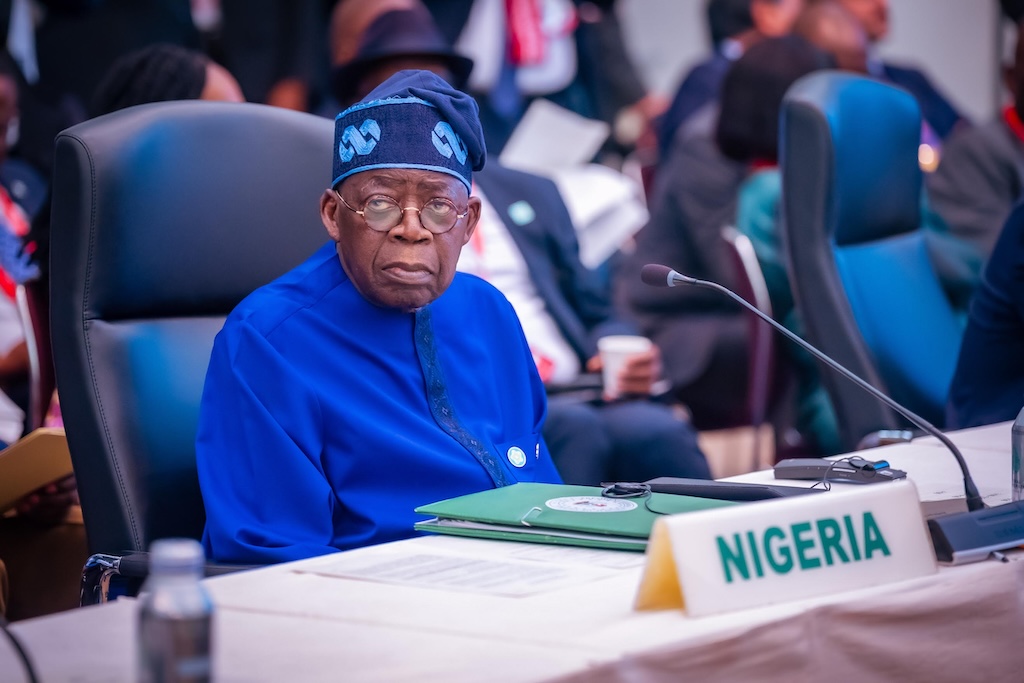
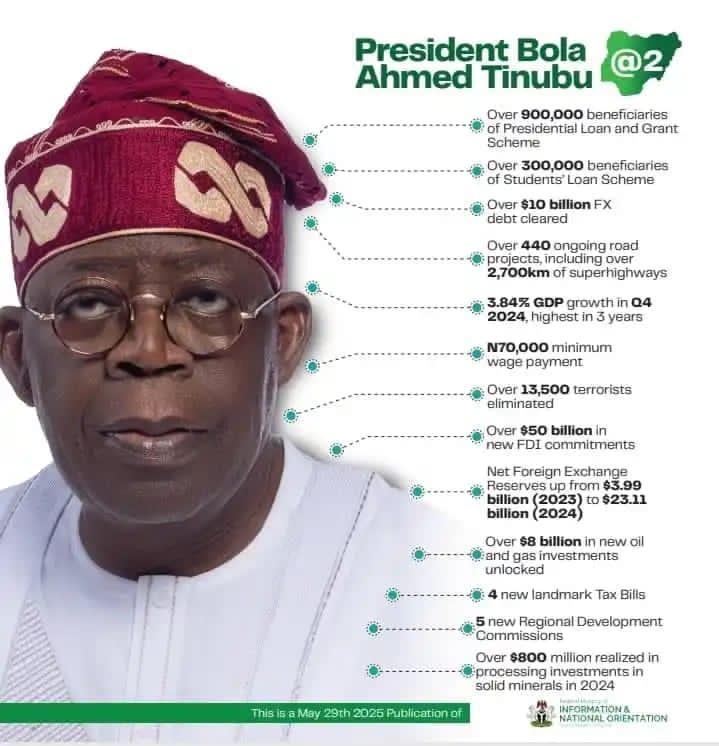
President Bola Tinubu needs little introduction, except for those unfamiliar with his political odyssey — a journey of over three decades laced with pain, sweat, blood and triumph.
For those who have carefully followed his political antecedents and the work he has put in over the years, they would not be surprised at how the All Progressives Congress (APC), which he helped create, has evolved into a go-to destination for some of the country’s prominent political figures.
Let me refresh our brains back to 13 years ago, when Tinubu, alongside some notable politicians, created a mega opposition, which became the ruling party from 2015 to date, thereby becoming the party to beat.

That enviable feat was achieved after the merger of the country’s three biggest opposition parties — Action Congress of Nigeria (ACN), the Congress for Progressive Change (CPC), the All Nigeria Peoples Party (ANPP), a faction of the All Progressives Grand Alliance (APGA), and the new PDP (nPDP), a faction of the then ruling Peoples Democratic Party.




In 2014, Tinubu supported former military Head of State, the late General Muhammadu Buhari, leader of the CPC faction of the APC, who commanded widespread following in Northern Nigeria, and had previously contested and lost in the 2003, 2007 and 2011 presidential elections as the CPC presidential candidate.
Tinubu initially wanted to become Buhari’s vice-presidential candidate but later conceded for Professor Yemi Osinbajo, his ally and former Commissioner for Justice. With the support of Tinubu in 2015, Buhari emerged victorious, ending the 16-year rule of the PDP, and marking the first time an incumbent Nigerian president, Goodluck Jonathan, lost to an opposition candidate.


Tinubu went on to play an important role in the Buhari administration, supporting government policies and holding onto the internal party reins. In 2019, he supported Buhari’s re-election campaign, defeating the perennial presidential hopeful, Atiku Abubakar.
Since then, the APC has continued to grow from height to height and remains at the centre of political attention, thanks to the bold decisions of some political figures to defect to a well-oiled political machine capable of catapulting anyone to their ambitions.
As of the time of writing, no fewer than two additional states — Kano and Plateau — have sought refuge under the rugged, disciplined, fair, democratic and non-discriminatory umbrella of the APC, bringing the total number to 31.
The development recalls a familiar song I once heard during my kid’s secondary school assembly: “Under the canopy, under the canopy, give me security, give me security…”
However, this figurative comparison of the APC to a canopy and a source of security should not be misquoted as the words of one of our party’s elders, Adams Oshiomhole, from 2019, but rather as an acknowledgement of the APC’s expanding influence and purpose-driven agenda, as explained by a sitting governor who also recently joined us.
When a group of editors visited Governor Peter Mbah in October after he joined the APC, he was asked the following question:
“We have always known you as somebody who has strong morals. How morally right is it for you to leave the party that gave you a platform for another party?”
He answered:
“If we have a system, or if we believe that the system on which we campaigned and won elections is no longer serving us optimally, I think it is incumbent on us to seek for a stronger platform where we can continue to deliver service and results to the people who gave us their mandate to serve them.
“So, it is beyond anyone; it is beyond personality. It is about principle, and we try to elevate service beyond self or personal interest. If we believe that a system no longer provides fairness or accountability, then we must elect to make that difficult choice.”
Mbah has spoken the truth. For emphasis, the once-formidable PDP is in tatters. Internal conflicts within the Labour Party (LP) have driven away its political talisman, Peter Obi. Also, the ambitious but emerging African Democratic Congress (ADC) is still adapting and remains politically unfit to wrest power from the APC in 2027.
Like Mbah, after Governor Abba Yusuf of Kano State escaped from the New Nigeria People’s Party (NNPP)’s political bondage, he argued that his decision was not driven by personal ambition nor political excitement, but anchored on overriding considerations that include the stability, progress and well-being of Kano State and its people.
Yusuf further made a point that many critics of the wave of defections rocking some of the country’s opposition parties have refused to acknowledge, given that he stressed that his decision was also borne out of a desire to align closer with the Federal Government under President Bola Tinubu to enhance cooperation, improve service delivery and unlock more development opportunities for the state.
With his statement and others that have been made in recent times, one can see that the Jagaban’s APC is undeniably an incomparable, results-oriented political movement capable of shaping the country’s future, and many of the nation’s political figures have made peace with this fact.
Oyatomi, Former Editor (Sunday Vanguard), Author (Fingerprints, 2008), and a member of the Board of Independent Media and Policy Initiative (IMPI), a think tank based in Abuja.