

By Managing Editor
The National Transportation Safety Board (NTSB) has revealed that a UPS cargo aircraft that crashed in Louisville, Kentucky, last year had a known structural defect that its manufacturer, Boeing, had previously determined would not compromise flight safety.
According to a report released on Wednesday, fractures found in the assembly securing the aircraft’s left engine to the wing had occurred on at least four previous occasions across three different aircraft. Despite these repeated incidents, Boeing concluded in a 2011 service letter that the fractures would not pose a “safety of flight” risk.
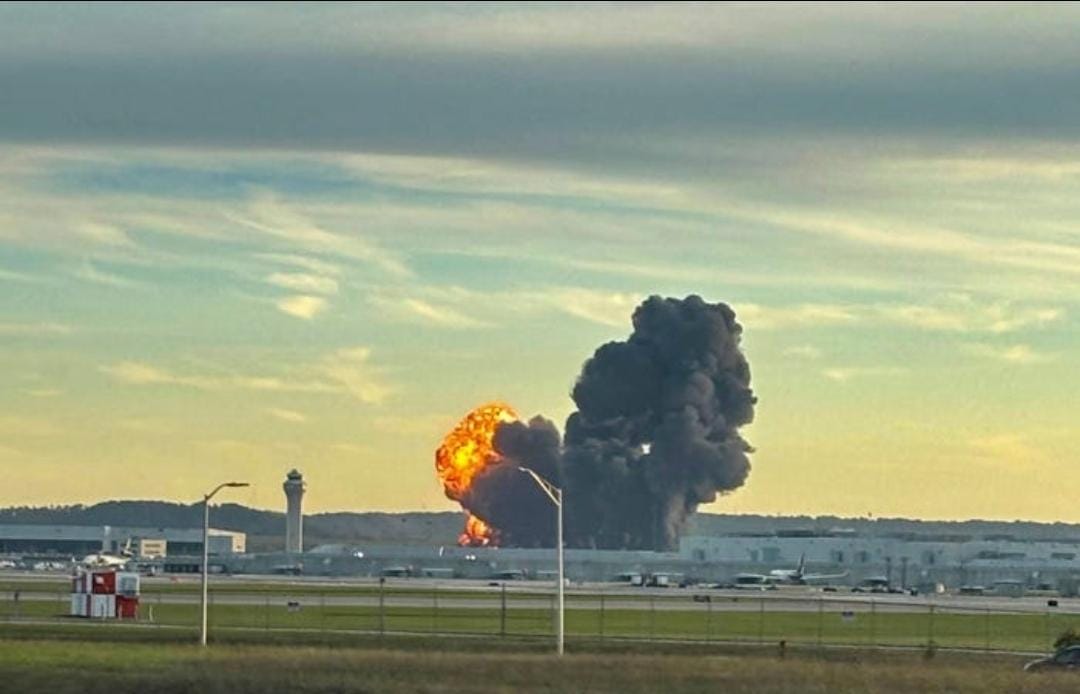
The aircraft involved was an MD-11F cargo jet originally manufactured by McDonnell Douglas, which Boeing acquired in the 1990s. Operated by United Parcel Service (UPS), the plane was en route from Louisville to Hawaii on November 4 when a fire erupted in its left engine shortly after takeoff.

The aircraft subsequently crashed into several buildings near the Louisville Muhammad Ali International Airport, including a petroleum recycling facility. All three crew members on board were killed, alongside eleven people on the ground. A twelfth person later died from injuries sustained in the incident, bringing the total number of fatalities to fifteen.





While the NTSB has not yet issued a final determination on the cause of the crash, investigators said fatigue cracks and overstress failure were discovered in components of the bearing assembly connecting the engine to the wing. These findings are consistent with damage documented in earlier incidents cited in Boeing’s service letter.
In a brief statement, Boeing said it is cooperating with the investigation and expressed condolences to the families of the victims. The company did not directly address the NTSB’s findings regarding its prior knowledge of the defect. Boeing has faced heightened scrutiny in recent years over aircraft safety and quality-control concerns.


Following the crash, Boeing recommended grounding all MD-11 aircraft pending the outcome of the investigation. UPS grounded its MD-11 fleet, while the Federal Aviation Administration imposed a temporary ban on MD-11 flights, warning that a similar engine separation could result in loss of continued safe flight and landing.
The NTSB also highlighted discrepancies in inspection intervals. Boeing recommended visual inspections of the affected component every 60 months, while UPS policy required inspections every 72 months. Records indicate the part was last inspected in October 2021, roughly 49 months before the crash, and lubricated approximately two weeks prior to the accident.
Investigations into the incident remain ongoing, with a final NTSB report and safety recommendations expected in the coming months.
Published by Newspot Nigeria, delivering verified global news with clarity, accountability, and public interest at the core.