

By Newspot Nigeria Editorial Desk

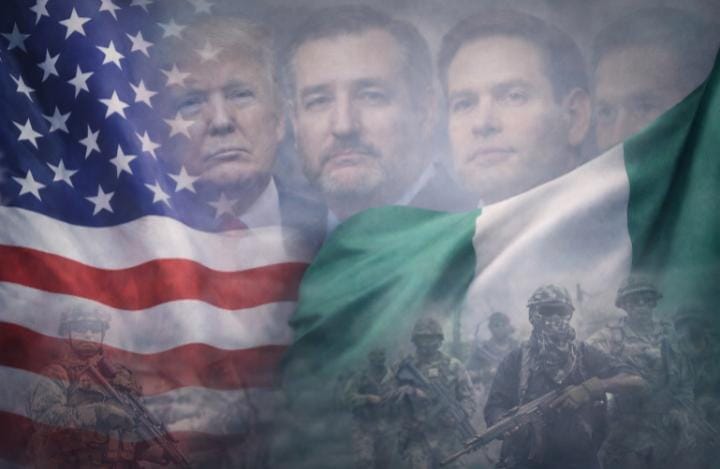
The United States has ruled out any military deployment to Nigeria for now, even as violence affecting religious communities continues to draw attention from advocacy groups and lawmakers in Washington.
A bipartisan U.S. congressional delegation that recently visited Nigeria said Washington is not considering “boots on the ground” at this time, stressing that the U.S. approach remains centered on diplomacy, intelligence cooperation, and security assistance rather than direct combat involvement.
The remarks come amid growing debate in the United States over persistent attacks in Nigeria’s Middle Belt and northern regions. Some advocacy organizations and political figures have framed the violence as a “Christian genocide,” a description that has generated controversy and strong reactions across diplomatic and policy circles.

However, the U.S. government has not made any formal genocide determination under international law. Official U.S. assessments, echoed in international reporting, continue to describe Nigeria’s security crisis as complex and multi-layered, involving terrorism, criminal banditry, land-use conflicts, weak policing, and governance failures — with civilians of different religious backgrounds affected.





Reuters Analysis: Pressure Without Troops
According to Reuters’ analysis of U.S. policy signals, Washington is pursuing a strategy of escalated pressure without direct military intervention. While publicly ruling out troop deployment for now, the United States has reportedly expanded intelligence-gathering and surveillance cooperation with Nigerian authorities and asked defense officials to prepare contingency options should the situation deteriorate further.
Reuters notes that this approach reflects a familiar U.S. pattern in Africa: avoiding large-scale troop deployments while maintaining leverage through intelligence operations, diplomatic pressure, and conditional security assistance. The strategy allows Washington to signal concern and readiness without committing to an intervention that could entangle U.S. forces in Nigeria’s long-running internal conflicts.


The analysis also underscores that statements by congressional delegations do not constitute binding executive policy, leaving room for shifts in posture if conditions change or if political pressure intensifies in Washington.
Nigeria’s Security Challenge
Nigeria has grappled with widespread insecurity for over a decade, including Boko Haram and ISWAP insurgencies in the northeast, farmer–herder violence in the Middle Belt, and mass kidnappings by criminal gangs in the northwest. Human rights groups have documented serious abuses, while cautioning against reducing the crisis to a single religious narrative.
U.S. officials continue to emphasize security sector reform, targeted sanctions, humanitarian support, and diplomatic engagement as the preferred tools for addressing Nigeria’s instability, while reaffirming respect for Nigeria’s sovereignty.
For now, Washington’s position signals no U.S. troop deployment, but Reuters’ analysis suggests the issue remains under close review as Nigeria’s security situation and U.S. domestic political pressures evolve.
Reporting by Newspot Nigeria.