

By Newspot Nigeria Editorial Desk


The debate around immigration enforcement in the United States is often framed in blunt political slogans—border control, law and order, jobs for citizens. But beneath these abstractions lies a far more intimate reality: who takes care of the elderly, the disabled, and the vulnerable when the workforce that supports them is forcibly removed?
A recent analysis by the Economic Policy Institute offers a sobering answer. If Donald Trump follows through on plans to deport four million people over four years—roughly one million annually—the U.S. direct care sector could lose nearly 400,000 jobs. This is not a theoretical exercise. It is a projection grounded in historical data, sectoral labor patterns, and prior enforcement surges.
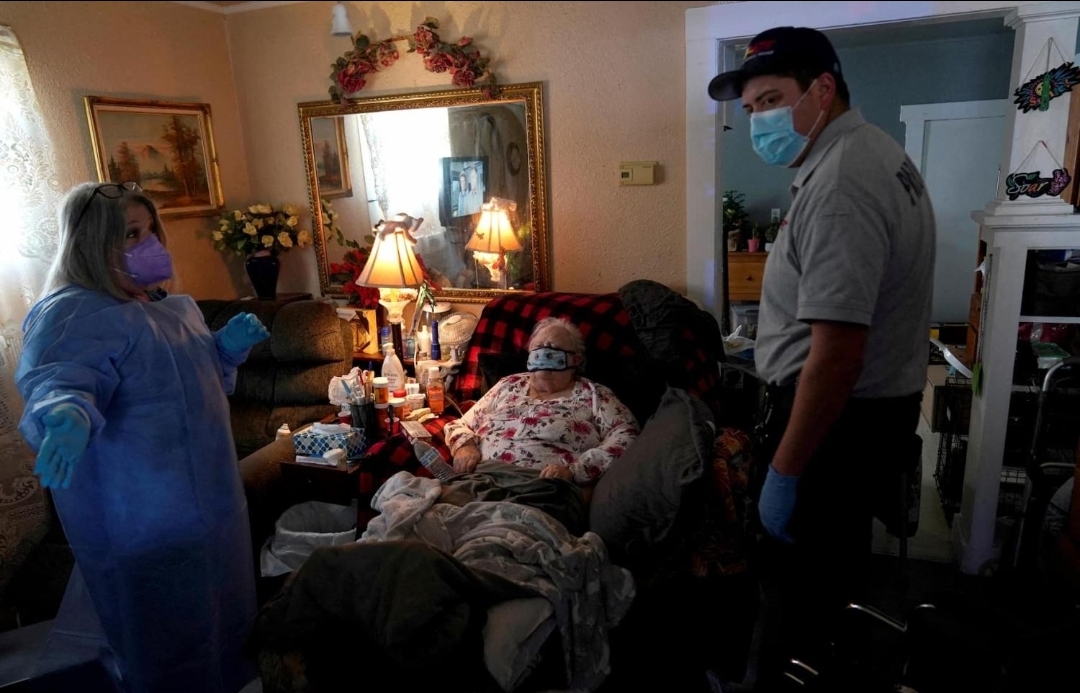
The direct care industry—home health aides, personal care assistants, orderlies, and nursing aides—is the backbone of America’s aging society. These workers help older adults bathe, eat, take medication, and live with dignity in their homes. Immigrants make up nearly 30 percent of this workforce nationally, and in some states, far more. Among home health aides specifically, four in ten workers are immigrants.

Mass deportations would tear through this ecosystem. According to the research, roughly 274,000 immigrant workers would be lost directly, while an additional 120,000 U.S.-born workers would also lose their jobs as the sector contracts. This matters because care work is not easily replaceable. It requires trust, training, emotional labor, and continuity—qualities that cannot be conjured overnight by policy fiat.





Proponents of aggressive deportation often argue that removing immigrants will “free up” jobs for citizens. The evidence says otherwise. When immigration enforcement intensifies, entire industries shrink. Employers reduce operations, working conditions deteriorate, and wages stagnate. U.S.-born workers do not rush in; they retreat. The same pattern has already been documented in construction and child care. Direct care is simply next in line.
The geographic implications are stark. States like New York, California, Texas, Florida, and Massachusetts would bear disproportionate losses. In New York alone—where immigrants make up nearly two-thirds of the direct care workforce—the sector could shrink by almost half. But the damage would not stop at state borders. As professional care becomes scarce, families are forced to fill the gap.


That shift carries hidden economic costs. Family members—often women—may reduce work hours or leave jobs entirely to care for aging parents or relatives with disabilities. Productivity falls. Household incomes suffer. The burden quietly shifts from public systems to private sacrifice. Research already shows that when immigration enforcement rises, U.S.-born mothers work fewer hours due to reduced access to household and care services.
This is why the deportation debate cannot be reduced to ideology alone. It is about labor markets, demographics, and the basic infrastructure of daily life. America’s population is aging rapidly. Care needs are rising, not falling. Even without deportations, the sector is under strain. Removing hundreds of thousands of trained workers at this moment risks triggering a cascading care crisis—one that affects citizens and immigrants alike.
For countries like Nigeria watching U.S. policy debates from afar, there is a lesson here. Immigration is not just about borders; it is about systems. When policymakers pull one lever without understanding the machinery beneath, the consequences often surface where society is most fragile—among the elderly, the disabled, and the families who support them.
Mass deportations may satisfy a political base, but they do not build resilient economies. They dismantle them quietly, one care worker at a time.
—Newspot Nigeria.