

By Deborah Akpede

Lagos, A cross section of Nigerians has continued to advocate for the establishment of state police in response to the growing insecurity across the country.





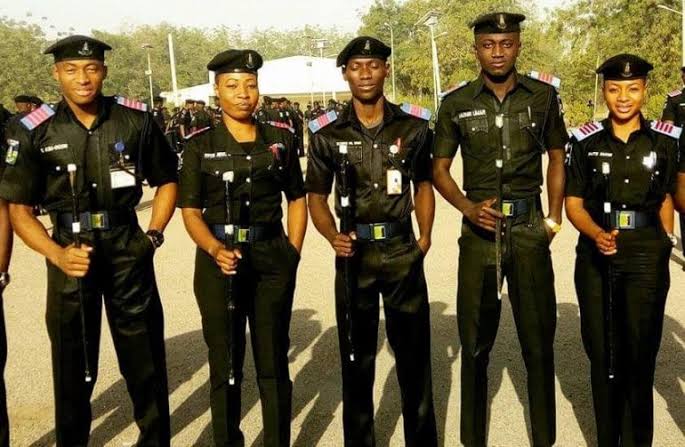
Among those pushing for state police are government officials, religious organisations, civil society groups, traditional institutions, and community-based associations.


They argue that local security structures, being closer to the people, would respond more quickly to threats and protect communities more effectively.
The News Agency of Nigeria (NAN) reports that on Monday, governors and traditional rulers of the 19 northern states, in a meeting held in Kaduna, also joined the call for the establishment of state police.
The leaders expressed concern over recent killings and the abduction of schoolchildren and other citizens in several states, including Kebbi, Kwara, Kogi, Niger, Sokoto, Jigawa and Kano.
In separate interviews with NAN on Wednesday in Lagos, several stakeholders reiterated their concerns about rising insecurity and advocated decentralised policing as a solution.
A security expert and Managing Director of Strict Guards Security Ltd., Dr Bone Efoziem, cautioned that although state police could enhance security coverage nationwide, the current political climate presents serious risks of abuse if adequate safeguards are not put in place.
Efoziem warned that state-controlled police forces might become tools in political battles rather than instruments of public safety, especially given the tribal and religious undertones that often influence decision-making in the country.
According to him, granting state governors the power to appoint police chiefs—while state assemblies provide oversight—creates room for manipulation.
He referenced the recent confrontation at the PDP secretariat involving Nyesom Wike and Governor Seyi Makinde, noting that the clash could have escalated dangerously if both men had access to their own state police forces.
“Imagine if Makinde had his own police and Wike brought his own from Rivers, the situation would have been terrible,” he said.
However, Efoziem acknowledged that state policing offered clear advantages, particularly its ability to reach rural communities and enhance accountability.
He called for strong legal frameworks, independent oversight structures, and constitutional safeguards to prevent abuse.
Another security expert, Mr Frank Oshanugor, expressed strong support for the establishment of state police, insisting that decentralising law enforcement would significantly improve safety and responsiveness at the community level.
He said officers deployed within familiar communities tended to perform better
“It would be easier to police a community when you already understand the area; If deployed to a completely unfamiliar place, it becomes more difficult to settle in and do the job effectively, ” he said.
Oshanugor said that decentralisation would reduce excessive concentration of power at the federal level and give states more responsibility for their own security.
He warned that without constitutional safeguards, governors might use state police to intimidate political opponents, especially during elections.
The expert recommended that state police be made financially independent of the executive arm of government and funded from a consolidated constitutional fund.
He also proposed that state police commissioners operate autonomously, free from political influence.
In the same vein, the Public Relations Officer of the Actors Guild of Nigeria (AGN), Lagos chapter, Mr Cornelius Udofia, expressed strong support for the creation of state police.
Udofia said the move was crucial to addressing Nigeria’s complex security problems.
He said that the current centralised system where state Commissioners of Police (CP) take directives from the Inspector-General of Police limits rapid response to local security issues.
He said that officers should ideally be deployed to regions they understood linguistically and culturally.
According to him, the CP in Akwa Ibom is not supposed to be a Hausa man, the CP should be from that locality because he understands the language of the people.
Udofia noted that state police might not fall entirely under the control of governors if funding was sourced from individuals or corporate bodies.
He insisted that state police remained very important given the growing security challenges across the country.
Similarly, a cleric, Pastor Isreal Omofuma, of Assemblies of God Church, Ayobo, said that it was necessary to address rising insecurity across Nigeria.
He noted that local officers who understood their communities would respond faster and protect residents more effectively.
Omofuma said that while acknowledging fears of political interference, proper legal safeguards could prevent abuse.
According to him, lawmakers should prioritise security reforms that bring policing closer to the people and strengthen accountability.(NAN) (www.nannews.ng)