

Nigeria keeps inching toward an answer that sounds big but fixes nothing. Supporters push the loud proposition of state police with fierce certainty, tagging it the cure for kidnapping, banditry, and terror. The pitch rests on emotion not evidence, and many have recited it like doctrine. But the real problem Nigeria faces is not that it lacks state police. The problem is leadership failure.


In countries wrestling with insecurity, political leaders often reach for the solution that feels bold but costs very little. In Nigeria today, that shortcut is the clamour for state police. The idea is presented with confidence, urgency and even moral weight as if decentralizing armed authority is the silver bullet that will end kidnapping, banditry, and extremism. It is not. In fact, it may be the most dangerous miscalculation Nigeria has flirted with since the civil war. Nigeria’s insecurity was not born out of centralization. It was born out of misrule.
The Roots of the Violence
The violence that now spreads across the country like a virus did not begin with terrorists. It began with leadership failure decades of elite self-indulgence, institutional decay, and deliberate neglect of the rural poor. The deterioration of local governance created vast ungoverned spaces. Politicians armed thugs to win elections, then abandoned them. Funds meant for schools, hospitals, and roads were siphoned into private estates and Dubai bank accounts. In that vacuum, criminal networks did what the state refused to do they became authorities unto themselves.

Nigeria is not dealing with insecurity. Nigeria is the consequences of a political class that treated public office as an inheritance and the nation as a collateral asset. Yet rather than confront this uncomfortable origin story, leaders now reach for distractions disguised as reforms. State police. Mass recruitment. Removal of police escorts. Endless committees. Endless committees. Endless committees. A litany of measures designed to appear decisive while avoiding the systemic rot that created the crisis. Nigeria should not be debating how many layers of police it needs. Nigeria should be asking why the architects of terror financing continue to operate with impunity.





The Risk of Armed Fragmentation
The irony is painful. Many of the governors campaigning to control police forces cannot even manage local vigilante groups responsibly. Some have turned these groups into political instruments; others have allowed them to devolve into extortionists. If local leaders cannot manage the vigilantes they already have, what happens when they control a fully armed state police? Nigeria’s answer lives in its political history: state police could be an officialized militia a tool for silencing critics, intimidating opponents, rigging elections, and enforcing ethnic majoritarianism. It risks formalizing the very behaviours that weakened Nigeria’s democracy in the first place.


But there is an even deeper danger. Giving states independent coercive power may erode what remains of national cohesion. It places armed loyalty in the hands of 36 governors whose political motives, ethnic biases and personal ambitions are not aligned with national stability. In a country already struggling with centrifugal pressures from separatist agitation to pastoralist conflicts state police could move secession from rhetoric into logistical possibility. If adopted without strong national guardrails, state police may become a litmus test for Nigeria’s survival as a single entity. That is not a test the country can take lightly. A test the nation may not pass.
The Reform Nigeria Actually Needs
Modern terrorism and organized crime do not collapse because more officers were hired or because uniforms were changed. They collapse when their financial lifelines are seized. Every armed group in Nigeria—from rural bandits to sophisticated terror cells—runs on the same rails: money, communication and mobility. That is where governance has failed most profoundly. Nigeria lacks the cyber-forensic capability to geolocate kidnapping syndicates in real time. Nigeria has not fully integrated financial intelligence into national security. Nigeria has not built the digital architecture required to track crypto flows, informal value systems, or mule accounts. Nigeria has not held accountable political actors who quietly sponsor violence for electoral gain.
Instead of multiplying police forces, Nigeria should invest in a national intelligence backbone capable of disrupting the economic ecosystem of insecurity. Nigeria needs to modernize digital surveillance, integrate telecom and tax intelligence with criminal financing data from agencies like the Nigeria Financial Intelligence Unit. Nigeria must strengthen AML/CFT enforcement, build centralized terror financing disruption commands comparable to global integrated security stacks, and create a unified counter-terror financing command system that can defend national cohesion, not fracture it. These are not slogans. These are solutions.
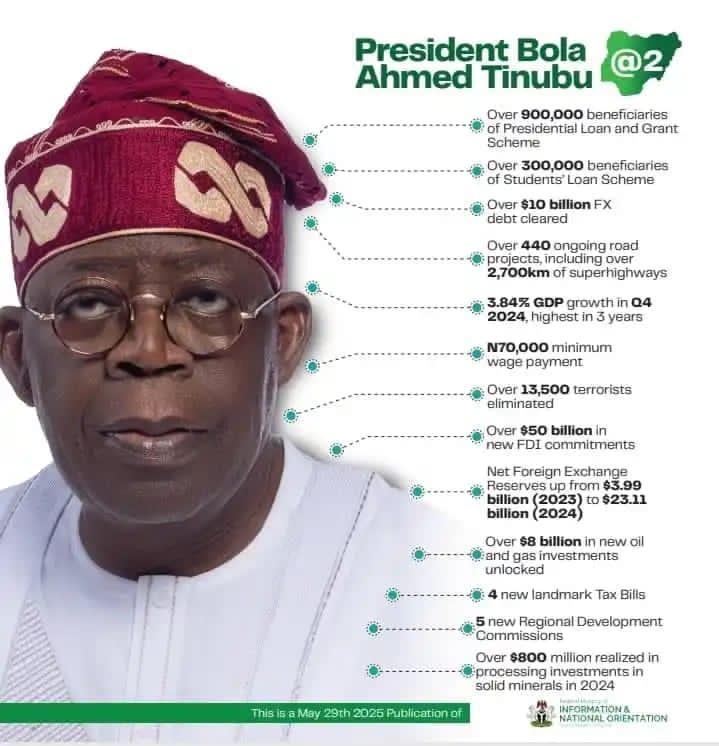
President Bola Ahmed Tinubu now stands at an inflection point. He can choose the difficult path confronting the entrenched interests that profit from insecurity. Or he can choose the easy path giving governors the weapons with which they may one day challenge the very idea of Nigeria. The danger of state police is not simply that it might fail. The danger is that it might succeed in ways nobody wants. Except and except, President Ahmed Bola Tinubu is planning to become the last President of Nigeria!! This is the voice of the common man……
Abdallah Idris Muhammed is a policy and good governance advocate.
Copyright AIM ©️