By Newspot Nigeria Global Desk

Jerusalem — The corruption trial of Israel’s Prime Minister Benjamin Netanyahu has moved to the center of global politics after the U.S. President publicly intervened.
The Israeli leader is currently facing ongoing corruption charges in Jerusalem. In an unprecedented step, the U.S. President, Donald J. Trump, appealed to Israel’s President, urging him to grant a pardon to the Prime Minister.
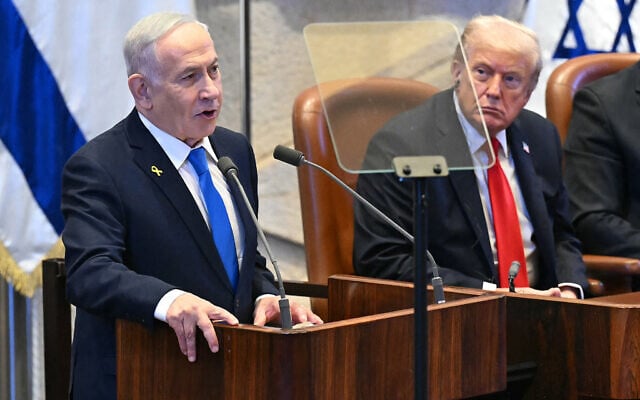
Trump first made the appeal in a speech at Israel’s parliament, the Knesset. He described the prosecution as political and unjust, and said Israel could either stop the trial or issue a pardon. After the speech, Trump sent a formal letter to the President’s office repeating his call for a pardon.

Israel’s President, Isaac Herzog, confirmed that he received Trump’s letter. His office said the request was highly unusual and that he would consider it seriously while seeking advice from legal experts.





Following Trump’s intervention, the Prime Minister, Benjamin Netanyahu, also submitted a formal pardon request to President Herzog, even though the court has not delivered a final judgment.
What makes this legally complex in Israel


In Israel, and globally, presidential pardons are typically granted only after conviction and sentencing, not while a trial is still open.
Legal analysts note that a pardon issued before a court verdict could be challenged at Israel’s High Court of Justice.
How this looks politically
Many citizens watching this from abroad may not know the details of Israeli law.
So in political reality, it simply looks like a U.S. President publicly backing Israel’s Prime Minister and directly urging Israel’s President to pardon him, which has now triggered national debate and legal review.
At the moment:
- Trump asked the President to pardon Netanyahu
- Netanyahu has applied for a pardon Himself
- President Herzog is actively reviewing the request with his advisers
—Newspot Nigeria