

By Newspot Nigeria Global Desk

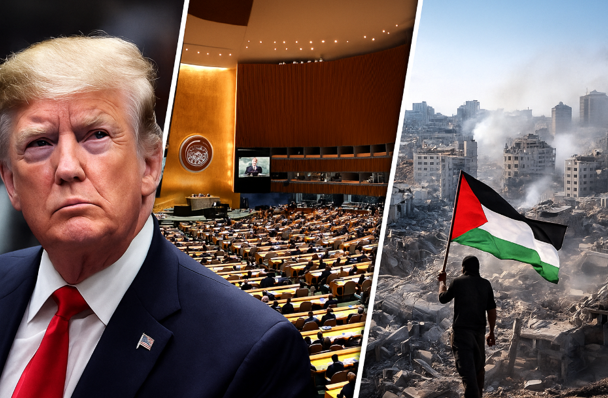
The United Nations Security Council has overwhelmingly approved President Donald Trump’s 20-point Gaza Peace Plan, transforming the U.S.-drafted proposal into an international mandate aimed at stabilizing the war-ravaged enclave and laying the foundation for a post-Hamas administration. The vote marks one of the most significant diplomatic wins for the Trump administration, even as Hamas rejects key elements of the framework.
The resolution passed 13-0, with Russia and China abstaining. The endorsement authorizes the deployment of an international stabilization force and formally establishes Trump’s proposed Board of Peace, a transitional body he will chair as part of the plan’s governance architecture.
President Trump hailed the vote as “a new dawn for the Middle East,” framing it as a decisive global endorsement of the U.S.-led peace blueprint. Israeli Prime Minister Benjamin Netanyahu also welcomed the development, saying the effort would “help lead the region to peace and prosperity.”

What the Resolution Does
The approved plan sets out a multi-phase process that includes:





• Withdrawal of Israeli forces behind agreed lines in Gaza
• Release of all remaining hostages, including deceased victims
• Full disarmament of Hamas
• Deployment of an international stabilization force
• Establishment of the Board of Peace chaired by Trump
• Pathway discussions toward a future Palestinian state
Washington Post reporting indicates that the resolution’s passage effectively gives global legal backing to reconstruction and monitoring mechanisms that had stalled due to disagreements among major powers, particularly Russia and China, which initially floated a competing draft.


With the new vote, those obstacles have been removed, enabling operational planning for security oversight and early reconstruction efforts to advance.
Hamas Rejects Key Conditions
Despite the Security Council’s broad support, Hamas issued a strongly worded statement rejecting two central components of the plan: disarmament and the proposed international guardianship mechanism.
“The weapons of the resistance are tied to the existence of the occupation,” Hamas declared, insisting that any talks on arms must occur only within an internal Palestinian political agreement that guarantees statehood and full self-determination.
The group condemned the plan’s stabilization force as a structure that “strips [the force] of neutrality and turns it into a party to the conflict in favor of the occupation.”
Other Palestinian factions in Gaza echoed these objections, warning that any international presence must operate strictly under a United Nations mandate and in coordination with official Palestinian institutions. They rejected any arrangement that could create a parallel authority or grant Israel indirect control.
Arab and Muslim Nations Support the Vote
The peace plan received significant backing from major Arab and Muslim-majority nations including Egypt, Jordan, Qatar, Saudi Arabia, Turkey, Indonesia, the United Arab Emirates, and Pakistan. These countries urged the Security Council to adopt the plan quickly to consolidate the October ceasefire and prevent further regional escalation.
Diplomats told the Washington Post that these endorsements were instrumental in persuading the Council’s permanent members not to veto the resolution.
A Major Diplomatic Step, But Uncertain Road Ahead
While the adoption of the U.S. plan is seen as a breakthrough, implementation remains complex. Hamas has not yet handed over all deceased hostages, and its refusal to disarm sets up a potential confrontation with the stabilization force if negotiations fail.
Arab governments are now reviewing the level of participation they may commit to the peacekeeping mission. The plan outlines a possible route toward Palestinian statehood, but does not guarantee it, leaving significant political questions unresolved.
A high stakes meeting at the White House is expected in the coming days to finalize operational timelines, troop commitments, and governance structures for the transitional phase.
Newspot Nigeria will continue to monitor these developments and provide updates as new information emerges.