
By Clement Warrie


It was the Commissioner for Information, Akwa Ibom State, Aniekan Umanah, who broke the news to journalists at the Monthly Media Briefing that the ARISE Resort has been rechristened ARISE PALM RESORT by Governor Umo Bassey Eno.
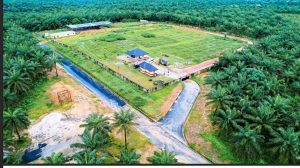
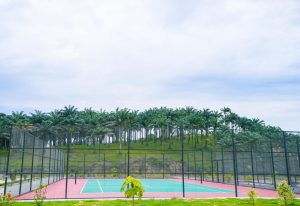
The resort, set to debut in December, is a sprawling wonderland of top-notch recreational attractions, a place that, by any name, would still enchant. Yet, curiosity lingers: what’s in a name? How did the ubiquitous “Palm” earn its place at the heart of the resort’s new identity, just weeks before its wonders are unveiled to the world?
For those who have followed the project’s journey from conception, a few design tweaks and name refinements are natural parts of its evolution. What began as a mission to contain flooding and reclaim the wastelands along Udo Inwang and Dominic Streets has blossomed into an enchanting recreational multiverse.

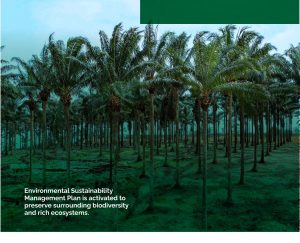
Seeking clarity, I reached out to Aniekan Umanah. “It’s about nature, beauty, and the palm grove that envelopes the resort.” he said. “It’s also about the palm revolution gaining traction across the state under Governor Umo Eno,”





He explained that Governor Eno is reviving the state’s oil palm economy in every local government area. “The idea goes beyond aesthetics,” he continued. “It reflects a natural ambiance. There’s even an upcoming ‘Walk in the Woods’ experience designed around the palm groves,” he added. “The Governor has also directed that palm trees be planted around the model Secondary School that’s under construction in Nsit Ubium.”
To be sure, the resurgence of Akwa Ibom’s oil palm industry is not only a return to the state’s agrarian heritage but also one of Governor Umo Eno’s most strategic policy choices. In the long term, it promises to erase the sector’s checkered past and reposition it for sustainable growth.


Curiously, in the 1960s, Nigeria ranked among the world’s top producers and exporters of palm produce, accounting for about 43% of global output. But by the 1970s, countries like Malaysia and Indonesia , which once imported palm seedlings from West Africa, particularly Akwa Ibom and Nigeria, had surged ahead through research, plantation expansion, and refining technology.
This is why Governor Umo Eno is leading a comeback.
To understand his motivation, one need only recall the wisdom of an old Ibibio adage: “We live by our palms.” To these people, the oil palm was never just a crop, it was a symbol of virility, communal wealth, stability, and civilization.
A British District Officer in Abak Division captured this truth in his annual report to London, quoted in Dr. Edet E. Udo’s 1982 classic, “Who Are The Ibibio?”
It reads in part: “It is impossible to overestimate the importance of the oil palm. By means of it, the Ibesikpo man (Ibibio man) buys his clothes and his bicycle, educates his children, and pays his tax.”
When the colonial-era trade wars of 1910 prompted Messrs. Lever Brothers to seek a monopoly over the palm trade and insisted on installing depericarping equipment in Opobo and Calabar, the Ibibio people resisted fiercely, crying, “We live by our palms!”
Again, the District Officer echoed their sentiment. “To deprive him of his palm bush and produce is to deprive him of his civilization.”
Indeed, some historical accounts suggest that the Ikot Abasi Women’s Revolt , often misnamed the Aba Women’s Riot, was triggered by oppressive colonial taxation on the women’s palm produce.
That’s how deeply the palm defines us; it’s our identity, our cuisine, our landscape and our way of life.
Governor Umo Eno affirms this connection.
“We must take deliberate steps to harness our natural endowments and move beyond dependence on crude oil.”
Emphasizing sustainability and innovation, he adds “This is not just an agricultural intervention; it is a foundational step toward building a sustainable economy. We are laying the groundwork for jobs, exports, and resilient food systems.”
Across the world, developed nations provide models for this cultural agronomy. In Japan, the government supports traditional Satoyama farmers who sustain rural ecology and cultural heritage. Similar practices exist in Peru, China, and Bhutan, where cultural agronomy drives national development, modernization rooted in identity.
In Akwa Ibom, the rechristening of ARISE PALM RESORT aligns perfectly with that vision. Agricultural experts see it as a creative fusion of culture, ecology, and tourism, a signature move under Governor Umo Eno’s leadership.
Commissioner Umanah underscores that significance. “It’s not just about the name. The Governor has directed the planting of extensive oil palm stands along the perimeter and throughout the resort grounds, complementing the existing natural plantation.” He said.
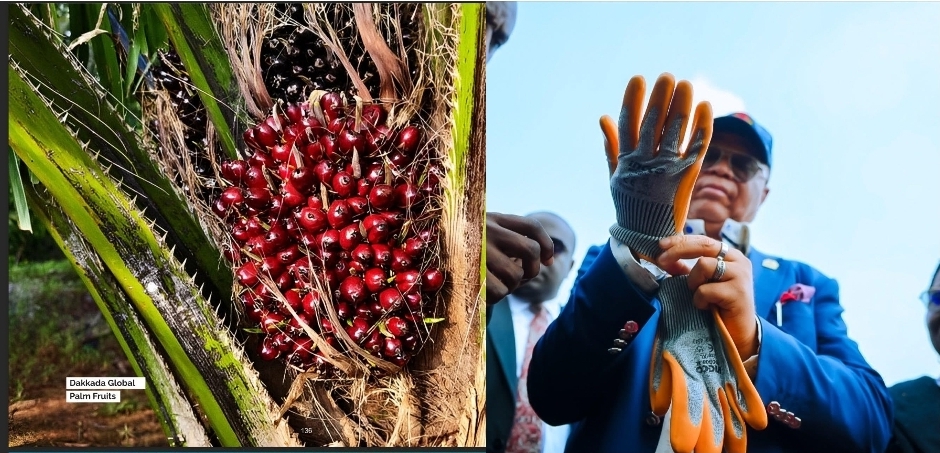
Governor Eno’s Tree-Crop Revolution, set to commence in November 2025, will further reclaim Akwa Ibom’s agricultural heritage. With high-yield seedlings, technical support coordinated by a new Oil Palm Board, and guaranteed markets, the initiative will transform the entire value chain.
Backed by a ₦31 billion allocation in the 2026 budget, the programme represents a strategic investment in Akwa Ibom’s future, one designed to foster long-term economic resilience, ensure food sufficiency, and empower rural communities.
In the PALM of our hands, we hold our fortune.