
By Olugbenga Adebamiwa
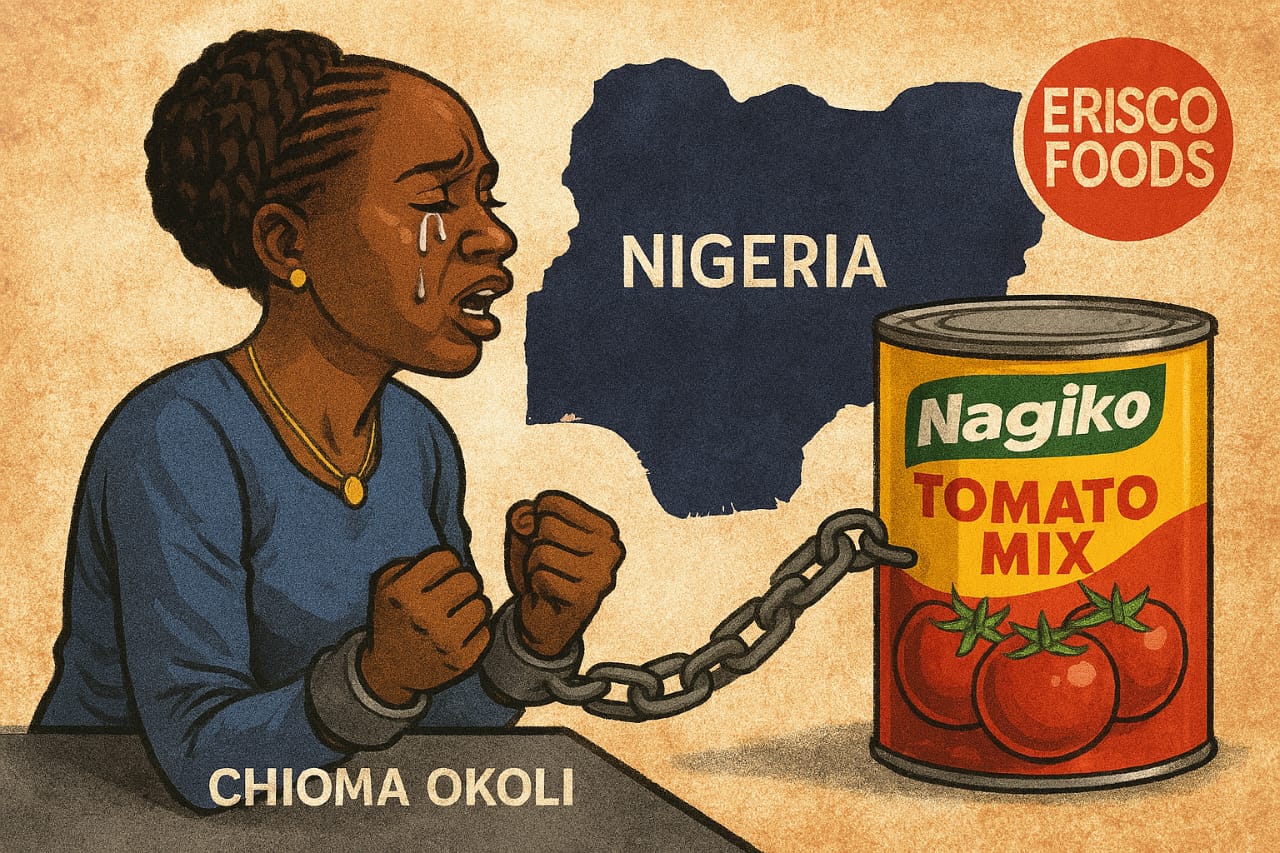
In the digital age, a simple Facebook post can ignite a national reckoning. When Chioma Edoka Okoli, a Lagos-based mother, described Erisco Foods’ Nagiko Tomato Mix as “too sweet” in September 2023, few anticipated the legal and moral storm it would unleash. Within days, she was arrested by plainclothes officers, flown to Abuja, and detained on charges under Nigeria’s Cybercrimes Act. What began as an online product review has since spiraled into a test case for consumer rights, corporate accountability, and the boundaries of free expression in a democracy struggling to balance power and justice in the digital era.
At the heart of the controversy lies a tension that transcends one woman’s ordeal, the uneasy relationship between corporate reputation and citizens’ right to speak truth to power. Erisco Foods, led by its combative CEO Eric Umeofia, insists it is fighting to defend its brand against malicious falsehoods that allegedly caused reputational and financial harm. Yet, to many Nigerians, the case reeks of intimidation, a powerful company wielding state machinery against a lone woman whose only “crime” was expressing an opinion. This perception has transformed the saga from a private dispute into a public crusade, sparking protests, boycotts, and a broader conversation about the misuse of law enforcement to silence criticism.
Legally, the case exposes the troubling ambiguities of Nigeria’s Cybercrimes (Prohibition, Prevention, etc.) Act, 2015, particularly Section 24, which criminalizes “messages known to be false” that cause “annoyance or ill will.” Critics argue this clause is dangerously vague and easily weaponized against journalists, activists, and ordinary citizens. The prosecution’s withdrawal of key evidence in October 2025, following strong objections from human rights lawyer Inibehe Effiong, suggests a weakening case and perhaps, a tacit acknowledgment that the law is being stretched beyond its intent. As the matter heads toward another hearing in January 2026, the judiciary faces a defining moment, to either affirm Nigeria’s constitutional guarantees of free speech or endorse a chilling precedent that criminalizes dissent.

But beyond the courtroom, this case mirrors the sociocultural fault lines shaping Nigeria’s public discourse. Social media, often celebrated as a democratizing force, has also become a battleground for emotion, misinformation, and performative outrage. Okoli’s phrasing particularly her now-famous “killing people softly” remark may have been impulsive, but it captured a widespread frustration among consumers who feel unheard and unprotected. In response, Erisco’s decision to deploy the full weight of the law rather than engage constructively has proven a public relations catastrophe, amplifying sympathy for Okoli and deepening public skepticism toward corporate ethics in Nigeria’s manufacturing sector.




What makes this case profoundly quintessential is not just its legal drama, but its human cost. Okoli’s account of stress-induced miscarriage, her family’s trauma, and her financial strain humanize what might otherwise be a sterile legal debate. For Erisco, too, the reputational damage has been immense, shelves emptied by boycotts, trust eroded, and a brand once associated with national pride now synonymous with overreach. Both sides, in different ways, have paid for a system that prioritizes power over persuasion and litigation over dialogue.
At the end of the day, the Okoli–Erisco saga is not just about a tomato paste, it’s about the soul of civic expression in modern Nigeria. It forces the nation to confront a deeper question, can citizens speak candidly about the products, leaders, and institutions that shape their lives without fear of arrest? The answer will determine not only the outcome of one woman’s trial but also the future of free speech, digital responsibility, and consumer trust in Africa’s largest democracy. The judiciary, therefore, stands at a crossroads, between justice that restores confidence and one that reinforces fear. In a nation where silence is often survival, Chioma Okoli’s voice, amplified by millions, has already changed the conversation.


©️ Adebamiwa Olugbenga Michael
Political and Social Analyst based in Lagos