By Olugbenga Adebamiwa (Newspot Political and Social Analyst ).


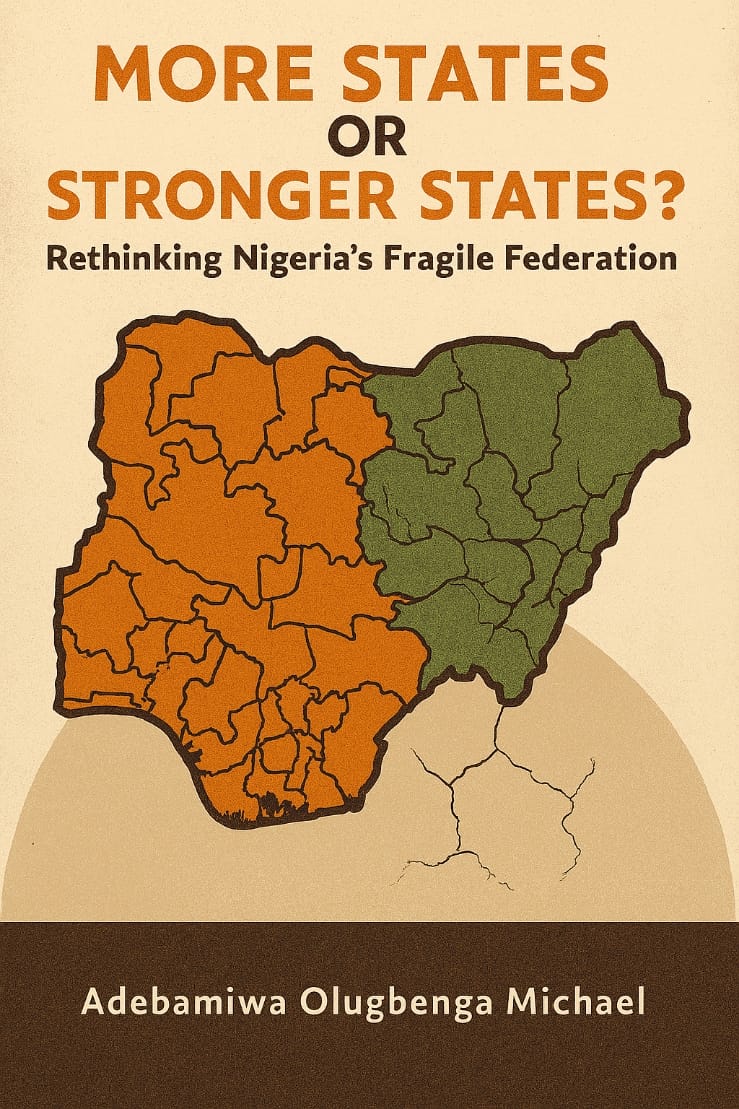
As Nigeria’s National Assembly intensifies its constitutional review process, the most emotionally charged issue on the table remains the demand for new states. Over 55 proposals have been submitted, each championed as a cry for representation, equity, or justice. Yet beneath this populist clamour lies a sobering question, does Nigeria truly need more states or should it first fix the structural weaknesses that make many of the existing 36 barely functional? The ongoing Lagos retreat of the 10th National Assembly’s Constitution Review Committees, led by Deputy Senate President Barau I. Jibrin, brings this debate to the forefront, as lawmakers weigh competing demands for reform, inclusion, and viability.
Nigeria’s current federal structure, 36 states and 774 local governments was largely shaped by military fiat, not popular consent. Between 1967 and 1996, successive regimes carved out states to pacify ethnic demands and consolidate control. That political engineering achieved short-term stability but produced long-term inefficiencies, bloated bureaucracies, weak fiscal autonomy, and overdependence on federal allocation. Today, only about ten states, Lagos, Rivers, Ogun, Delta, Akwa Ibom, Oyo, Kano, Kaduna, and a few others generate significant internal revenue. The rest survive mainly on monthly allocations from Abuja, struggling to pay salaries and sustain infrastructure. In this context, the call for new states feels like multiplying weakness rather than redistributing strength.






Proponents, however, argue that state creation is not merely economic, it’s about justice, identity, and access. Many communities, especially in the South-East and parts of the North-Central, see new states as instruments of political balancing. The South-East, with only five states compared to six or seven in other zones, considers this imbalance a constitutional injustice that perpetuates marginalization. Supporters believe that new states could bring government closer to the people, reduce ethnic tensions, and promote tailored development. Indeed, in a nation of over 250 ethnic groups, the idea of smaller, more manageable administrative units holds natural appeal if only governance were efficient and transparent.


At the just concluded two-day retreat in Lagos, the Joint Committee of the Senate and House of Representatives on Constitution Review unanimously approved the creation of an additional state in Nigeria’s South-East, bringing the region’s total to six. The decision, chaired by Deputy Senate President Barau Jibrin, followed deliberations on 55 state creation proposals from across the country. Lawmakers, including co-chair Benjamin Kalu, described the move as a step toward equity, justice, and fairness, given that the South-East currently has only five states, unlike other zones with six or seven. A sub-committee has also been set up to further review state and local government creation requests nationwide, though details about the proposed new state’s name and boundaries remain undisclosed. The proposal still requires full National Assembly approval and ratification by state assemblies before it can take effect.
Yet critics insist that multiplying states without reforming the underlying fiscal structure amounts to political self-deception. Nigeria’s state system is over-centralized, each governor maintains a mini-presidency with bloated entourages and duplicated agencies, consuming over 60% of annual budgets in recurrent expenditure. Creating more states means creating more bureaucracies, more governors, assemblies, and commissioners without necessarily improving education, healthcare, or infrastructure. Economists warn that Nigeria’s fragile economy, burdened by debt and low productivity, cannot sustain an expanded federation without bold fiscal federalism and resource control reforms. In other words, the problem is not the number of states, but how they are run.
A deeper issue lies in Nigeria’s distorted federalism. Power and revenue remain concentrated at the center, making state creation a struggle for access to federal largesse rather than for genuine self-determination. Without devolution of powers, allowing states to control their resources, raise revenue, and manage local security, new states will simply reproduce the same dysfunction in smaller units. The clamor for new states, while compelling, risks distracting from the real conversation, how to make existing states viable, competitive, and accountable. As some analysts put it, “Nigeria doesn’t need more states, it needs more autonomy.”
All things considered, the National Assembly’s constitutional review process is a historic opportunity to redefine Nigeria’s federation, not by multiplying states, but by deepening governance. True federalism is not measured by how many states exist, but by how well they work. The goal should be to make every Nigerian state a center of productivity, not dependency. Until governance becomes efficient, corruption curbed, and fiscal power decentralized, new states may only stretch the illusion of representation while deepening the crisis of viability. Nigeria’s state formation question, therefore, is not about quantity, it is about quality.