By Olugbenga Adebamiwa ( Newspot Political and Social Analyst)


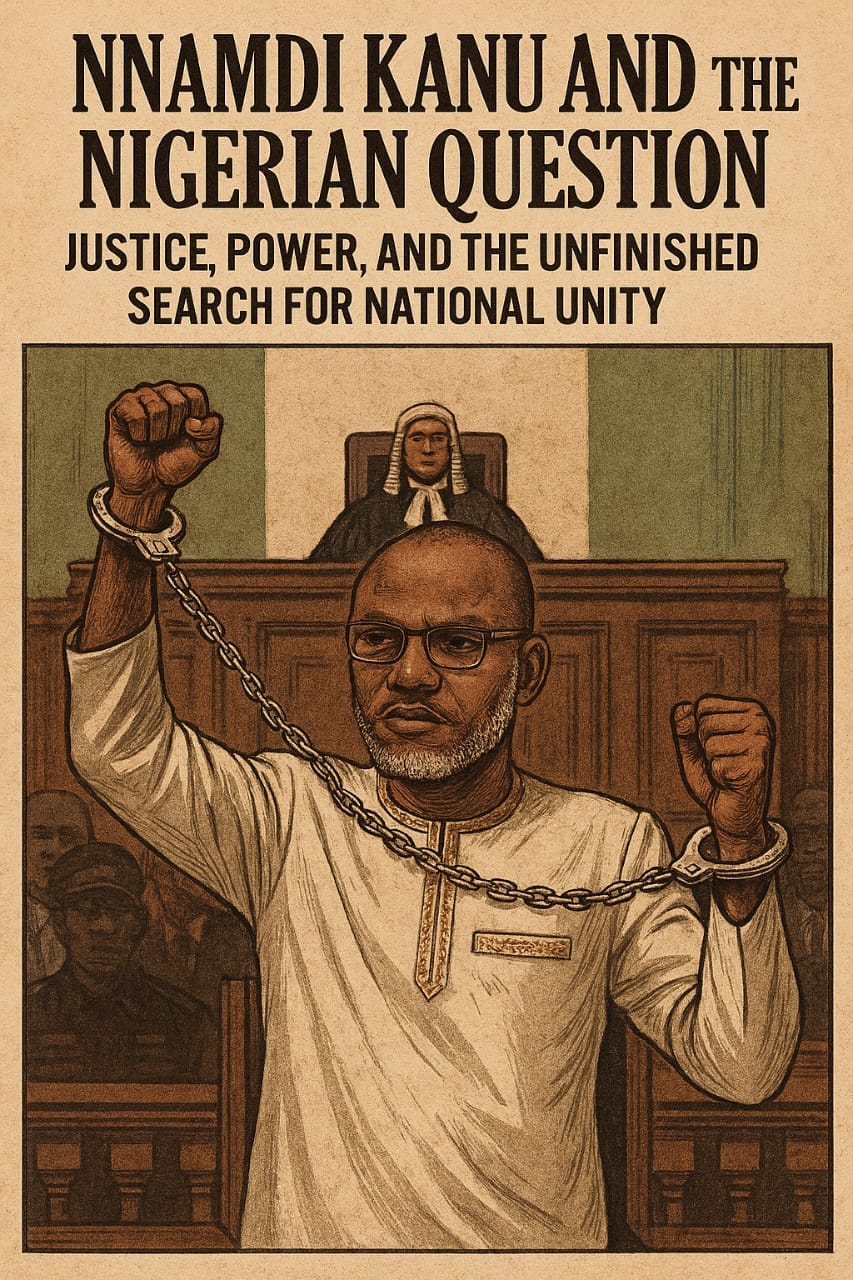
The case of Mazi Nnamdi Kanu, leader of the Indigenous People of Biafra (IPOB), goes beyond the courtroom. It embodies the enduring struggle between state authority and popular agitation, justice and power, unity and self-determination. What began in 2015 as the trial of a separatist leader has evolved into a decade-long mirror reflecting Nigeria’s unsteady relationship with dissent and identity. From multiple arrests to the disputed 2021 rendition from Kenya, Kanu’s saga continues to test the moral and constitutional foundations of Africa’s most populous democracy. Ten years, six judges, and countless adjournments later, the question remains, is this truly a legal trial, or a political reckoning disguised in judicial robes?
At the heart of the Kanu controversy lies a constitutional dilemma, where does legitimate agitation end, and treason begin? The Nigerian government accuses him of terrorism, incitement, and leading a proscribed organization, pointing to provocative speeches and the creation of the Eastern Security Network as evidence. Yet, critics argue that much of the case is built on rhetoric, not action, on what Kanu said, rather than what he did. His 2021 abduction in Kenya, which human rights groups condemned as an “extraordinary rendition,” has clouded the legitimacy of the trial ever since. When the Court of Appeal ruled that his forced return violated international law, the Supreme Court’s reversal of that decision deepened suspicions about judicial independence and the elasticity of Nigeria’s rule of law.






Kanu currently faces seven serious charges before the Federal High Court in Abuja, including terrorism-related offenses under the 2022 Terrorism (Prevention and Prohibition) Act and treasonable felony under the Criminal Code. The prosecution alleges that his broadcasts on Radio Biafra incited violence, encouraged attacks on security forces, and enforced “sit-at-home” orders that crippled the Southeast economy. The charges cut across complex fault lines between free speech and sedition, nationalism and secessionism. For many Nigerians, the case is no longer just about Kanu but about the boundaries of state tolerance in a fragile federation still haunted by its civil war ghosts.


If convicted on all counts, Kanu faces the prospect of life imprisonment. The heaviest punishments stem from the terrorism and treason charges, though the death penalty is unlikely since no direct killings have been linked to him. His refusal to mount a defense or call witnesses, however, has raised legal and strategic risks. By choosing silence and defiance, Kanu appears to embrace martyrdom over compromise, a gesture his followers interpret as bravery but which could hand the prosecution a decisive procedural advantage. Whether it is strategy or resignation, his courtroom posture captures the essence of his broader struggle, a man who would rather challenge the legitimacy of the system than seek refuge within it.
The Southeast, Kanu’s stronghold, bears the deepest scars of this protracted standoff. Once a hub of commerce and innovation, the region has been repeatedly paralyzed by “sit-at-home” orders that began as peaceful protests but have since devolved into coercive cycles of violence and economic loss. Traders, transporters, and students now live under a shadow of fear caught between security crackdowns and militant enforcers claiming loyalty to a man behind bars. Abuja’s heavy-handed response, military raids, mass arrests, and media censorship has only widened the emotional distance between the federal center and the southeastern hinterland. Calls for dialogue, once dismissed as naïve, are now gaining moral urgency.
Internationally, Kanu’s ordeal has placed Nigeria in an uncomfortable spotlight. The ECOWAS Court’s 2022 ruling ordering his release for violations of due process remains disregarded, casting doubts on Abuja’s commitment to international obligations. Western governments, though publicly cautious, privately express concern over the implications for human rights and political inclusivity. Yet their reluctance to pressure Nigeria reveals the geopolitical calculation play, few wish to be seen supporting secessionist movements, especially in a region already beset by instability. This delicate balance between moral principle and strategic diplomacy underscores the complexity of Kanu’s global resonance.
Kanu’s strongly worded statement that “anyone trying me in a Nigerian court is a terrorist” represents his deep mistrust of the system. To his followers, it is a cry against perceived persecution, to critics, a manipulative distortion that trivializes victims of violence. His words echo the unresolved tension between truth and propaganda that defines Nigeria’s polarized discourse. Whether viewed as a freedom fighter or a reckless agitator, Kanu remains a lightning rod for national frustration, a symbol of both defiance and division. His trial has become a proxy for every grievance about injustice, inequality, and the unfulfilled promise of Nigeria’s unity.
Nnamdi Kanu’s case forces Nigeria to confront a question larger than any individual, can a nation built on the ruins of war truly heal without justice, dialogue, and inclusion? Each ignored court order, each repressive response, and each unaddressed grievance erodes faith in the state’s moral compass. If unity is to endure, it cannot be sustained by fear or force, but by fairness. Whether Kanu is freed or convicted, Nigeria’s handling of his case will remain a defining measure of its democratic maturity and a litmus test of whether the country still believes that justice, not power, should be the ultimate authority of national destiny.