
By Idris Muhammed Abdullahi
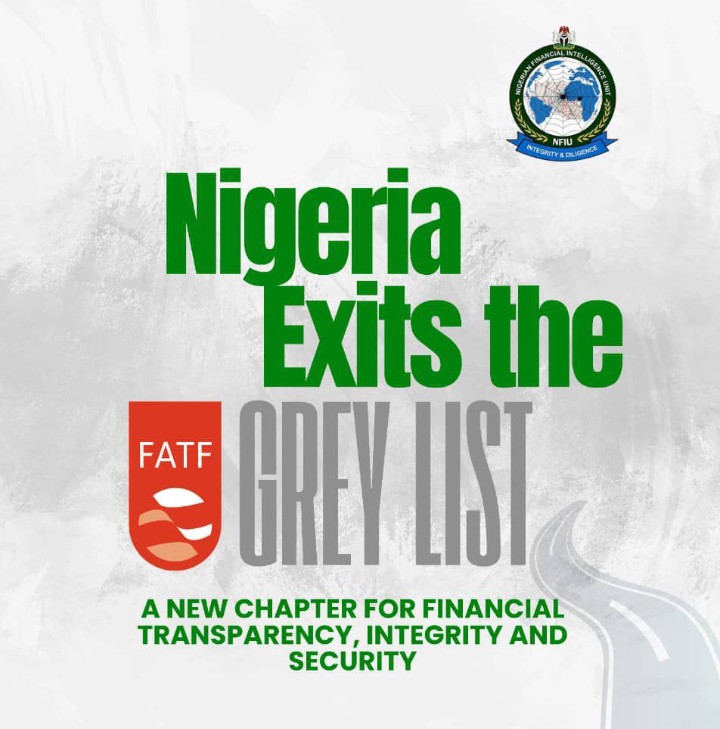
Nigeria has recorded a landmark achievement that signals renewed confidence in its financial system, as the Financial Action Task Force (FATF) has officially removed the country from its grey list. This long-anticipated exit marks a decisive victory in the fight against money laundering, terrorist financing, and other illicit financial activities that have long undermined economic growth and international trust.
A Triumph of Collaboration
Nigeria’s delisting from the FATF grey list did not happen by chance. It is the direct result of unprecedented interagency coordination and sustained political will at the highest levels of government. Agencies such as the Federal Inland Revenue Service (FIRS), Economic and Financial Crimes Commission (EFCC), Nigerian Financial Intelligence Unit (NFIU), Central Bank of Nigeria (CBN), Independent Corrupt Practices and Other Related Offences Commission (ICPC), National Drug Law Enforcement Agency (NDLEA), and national security and law enforcement institutions worked in synergy to close technical and operational gaps previously identified by FATF.
This collective effort ensured Nigeria strengthened its Beneficial Ownership framework, enhanced cross-border intelligence sharing, improved supervision of financial institutions, and integrated anti-money laundering (AML) and counter-financing of terrorism (CFT) requirements into national regulatory standards. The successful alignment of the National Risk Assessment (NRA), effective Customer Due Diligence (CDD) practices, and the institutionalization of data-driven mechanisms for reporting suspicious transactions all contributed significantly to this milestone.

The Implications of Non-Compliance
Had Nigeria failed to exit the grey list, the consequences would have been severe. Prolonged greylisting would have subjected the nation to increased scrutiny from international financial institutions, restricted access to global banking channels, and potentially disrupted correspondent banking relationships vital for trade and remittances.





Foreign investors often view greylisted countries as high-risk jurisdictions, leading to reduced investment flows, currency pressure, higher transaction costs, and weaker economic confidence. Remittances—one of Nigeria’s largest sources of foreign exchange—could have faced delays, higher fees, or outright rejection under stricter global compliance filters.
In short, remaining on the grey list would have undermined economic reform efforts, destabilized the financial sector, and weakened fiscal stability.


A New Era for Economic Growth
Nigeria’s exit from the FATF grey list is more than a regulatory achievement—it represents a restoration of international confidence and a gateway to increased trade, investment, and global cooperation. The milestone strengthens Nigeria’s competitiveness as a financial hub in West Africa and reaffirms the government’s commitment to transparency, accountability, and reform.
Sustaining this progress will require continued vigilance. Nigeria must deepen digital intelligence systems, expand regulatory training, and strengthen its collaboration with regional and global partners such as GIABA and WATAF to prevent regression and reinforce compliance culture across institutions.
Congratulations, Nigeria
This milestone is a collective victory—an achievement of every agency, reform champion, policymaker, and financial professional who contributed to restoring credibility to Nigeria’s financial system. Most importantly, it is a victory for the Nigerian people, whose economy and future stand to benefit from improved global trust, access to capital, and financial stability.
Nigeria’s exit from the FATF grey list marks the beginning of a new chapter—one defined by resilience, reform, and responsible governance. It demonstrates that when institutions work together with clarity of purpose, meaningful change is not only possible—it is inevitable.
Congratulations, Nigeria.
We move forward—stronger, steadier, and trusted.