

By Newspot Nigeria Editorial Desk


The recent Survival article, “Transatlantic Relations: Is There a Beginning After the End?,” published by the International Institute for Strategic Studies (IISS), captures a moment of geopolitical reckoning between Europe and the United States. The authors, Daniel Allin and Christopher Chivvis, liken the current strain in transatlantic relations under President Donald Trump’s second term to Hemingway’s “The End of Something”—a breakup scene that leaves both parties searching for meaning after love’s exhaustion. The metaphor is both literary and piercing: Europe and America, once inseparable partners in defending liberal democracy, now appear to be drifting apart amid mistrust and fatigue.
A New Reality in the Transatlantic Relationship
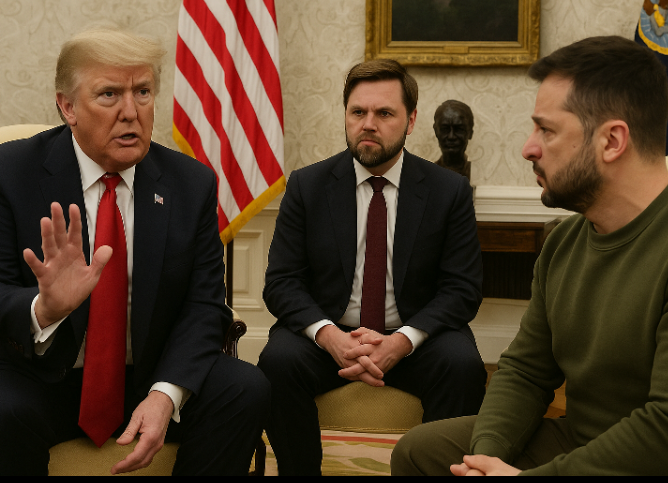
The Oval Office confrontation between President Trump, Vice President J.D. Vance, and Ukraine’s Volodymyr Zelenskyy on 28 February 2025 symbolized a rupture not merely in diplomacy but in shared purpose. Trump’s abrasive posture toward allies like Denmark and Canada, coupled with his sidelining of Europe in efforts to end the war in Ukraine, has, as the authors argue, “pulverised the Europeans’ understanding of the United States.” For decades, mutual trust and predictability anchored NATO and the broader transatlantic alliance. Now, those anchors are loosening under a foreign policy that blends isolationism with populist nationalism.
Yet, the authors wisely caution against “over-indexing” the first 60 days of Trump’s second presidency. Despite the turbulence, Europe may be on the verge of something transformational—a long-overdue political and military awakening. Freed from overreliance on U.S. protection, European nations could emerge as a self-reliant power bloc, capable of managing regional crises without Washington’s shadow. If that happens, Trump’s disruption—intentional or not—might inadvertently serve as the catalyst for Europe’s strategic adulthood.

Populism, Pragmatism, and the Future of Cooperation
Vice President Vance’s vision of refounding transatlantic ties on populist ideological grounds introduces a new layer of uncertainty. Aligning with far-right movements in Europe could complicate rather than strengthen the alliance, as many of those parties are inherently skeptical of American influence. Still, the shared interests between the U.S. and Europe—security, technology, trade, and global governance—remain too deep to dissolve entirely. Even if values diverge, mutual necessity endures.





In the longer arc of history, as the article notes, the transatlantic relationship has evolved from romantic idealism to pragmatic interdependence. Today’s turbulence might not signal an end, but rather a redefinition—a transition from emotional alliance to strategic partnership grounded in realpolitik rather than nostalgia.
The Road Ahead
Europe’s response to this moment will determine whether the “end of something” becomes the beginning of a new chapter. The continent’s wealth, technology, and institutional strength equip it to shoulder greater responsibility in global affairs—from defending democracy to addressing climate change and AI governance. The United States, meanwhile, will need to decide whether it wants to lead through partnership or provocation.


As Allin and Chivvis conclude, the dust will eventually settle. When it does, the transatlantic relationship may look less like a marriage and more like a business partnership—functional, cautious, and driven by mutual benefit rather than shared dreams. But perhaps that’s precisely what maturity looks like.
This commentary was prepared for Newspot Nigeria, as part of our continuing analysis of global political shifts and their implications for democratic governance.