By Olugbenga Adebamiwa ( Newspot Political and Social Analyst)
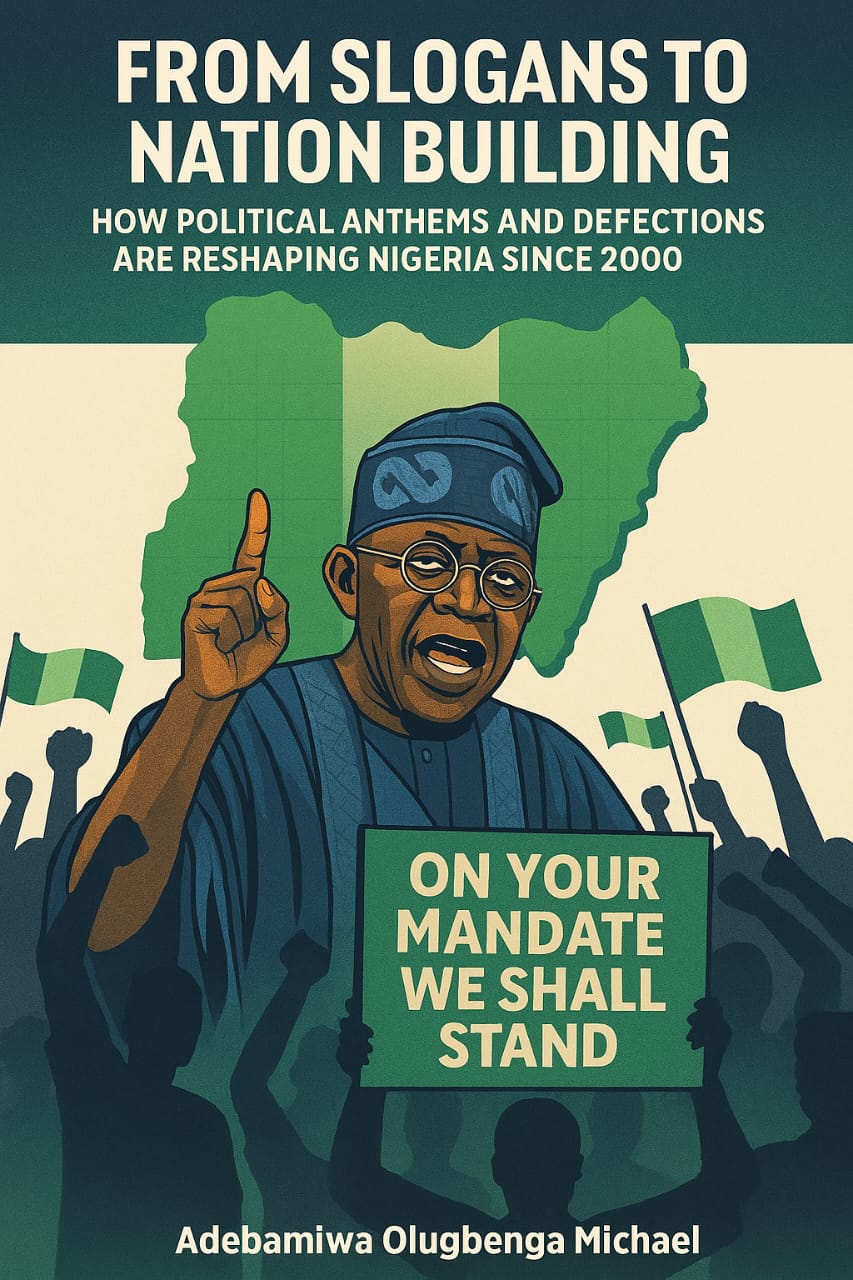
Since the turn of the millennium, Nigeria’s political landscape has been defined not only by elections and governance but also by the ways leaders engage, mobilize, and maintain public loyalty. Among the most visible phenomena is the rise of political anthems and chants, such as the widely circulated “On Your Mandate We Shall Stand,” associated with President Bola Ahmed Tinubu. Emerging prominently before and during the 2023 presidential campaign, the chant has become a symbolic marker of political allegiance, sparking debate over whether such expressions reinforce democratic engagement or encourage performative loyalty.
Political anthems in Nigeria serve as tools of symbolic mobilization. Beyond slogans, they sustain a collective identity among supporters, signaling loyalty and consolidating legitimacy in an environment where electoral outcomes are frequently contested. Recent reports show lawmakers and party faithful chanting the phrase during official events, from legislative sessions to party rallies. While supporters argue these chants validate leadership, critics view them as excessive, performative displays that may overshadow policy scrutiny and citizen accountability.
The historical roots of political anthems in Nigeria trace back to party-building strategies in the early 2000s. During Tinubu’s governorship of Lagos State (1999–2007), loyalty relied heavily on structured party networks, mentorship systems, and messaging focused on urban transformation. The emergence of “On Your Mandate We Shall Stand” aligns with Tinubu’s 2023 presidential bid, reflecting a deliberate attempt to stimulate nationwide affirmation amid opposition disputes. This evolution illustrates the increasing importance of symbolic gestures alongside traditional policy achievements in shaping public perception.

Media amplification has been a critical factor in the spread and influence of political chants. Television broadcasts, social media platforms, and online news outlets have transformed local slogans into nationwide phenomena. This dual effect energizes supporters while creating the risk of political theatrics dominating democratic discourse. The phenomenon illustrates a broader shift in Nigerian politics, where emotional impact and spectacle often carry as much weight as policy content in influencing public opinion.




Parallel to the rise of political anthems is the notable surge of party defections, particularly to the ruling All Progressives Congress (APC) following the 2023 general elections. Presently APC has consolidated control over 24 states, achieved a two-thirds Senate majority, and expanded its House of Representatives presence to around 236 seats. Major defections from PDP governors like Peter Mbah (Enugu) and Douye Diri (Bayelsa) to senators and house members have intensified debates about the weakening of opposition parties, erosion of multiparty democracy, and potential consolidation of one-party dominance.
The reasons behind these defections are multi-dimensional. Internal crises within the PDP, such as zoning disputes and leadership conflicts, created openings for strategic realignment. Many politicians cite alignment with federal policies, access to national resources, and pressures from constituents as motivations. Similarly, smaller parties like Labour Party (LP) and NNPP have experienced depletion due to internal divisions, highlighting how ideological weakness and strategic political calculations often drive Nigeria’s fluid party landscape.


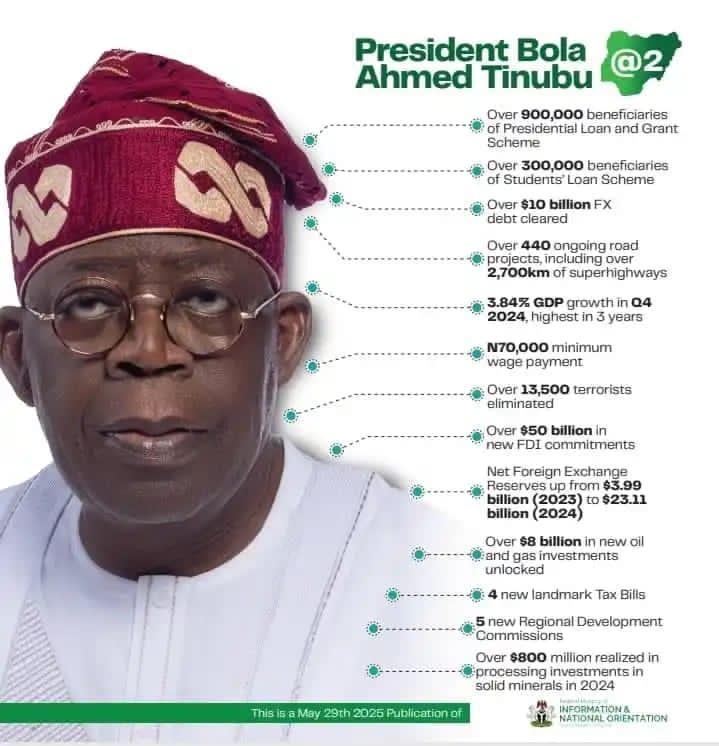
The combined effect of political anthems and mass defections underscores a strategic understanding of modern electoral politics. Leaders increasingly recognize that emotional loyalty, media presence, and symbolic gestures can be as effective in consolidating power as traditional governance. Tinubu’s journey from Lagos governorship to national presidency demonstrates how cultivated networks, symbolic rituals, and elite coordination can translate into both legislative dominance and public recognition, redefining the dimensions of Nigerian political culture.
Looking ahead, these dynamics raise critical questions about the balance between loyalty and accountability in Nigeria’s democracy. While political chants energize participation and reinforce leadership legitimacy, excessive display risks undermining critical engagement. Similarly, defections may consolidate power in the short term but could escalate internal party tensions and weaken ideological commitment. Understanding these developments is essential for citizens, scholars, and policymakers seeking to navigate the evolving interplay of symbolism, strategy, and governance in Nigeria since 2000.