By Olugbenga Adebamiwa
As Nigeria edges closer to the 2027 elections, the political battle lines are already forming. On one side is President Bola Ahmed Tinubu, a man who has spent three decades building influence, networks, and a reputation as one of Nigeria’s most strategic political players. On the other side is a coalition of opposition figures rallying under the African Democratic Congress (ADC), united mainly by their desire to stop Tinubu. But beneath the show of unity lies a deeper truth, this coalition looks more like a gathering of old politicians chasing unfinished ambitions than a credible movement offering fresh hope for Nigerians.
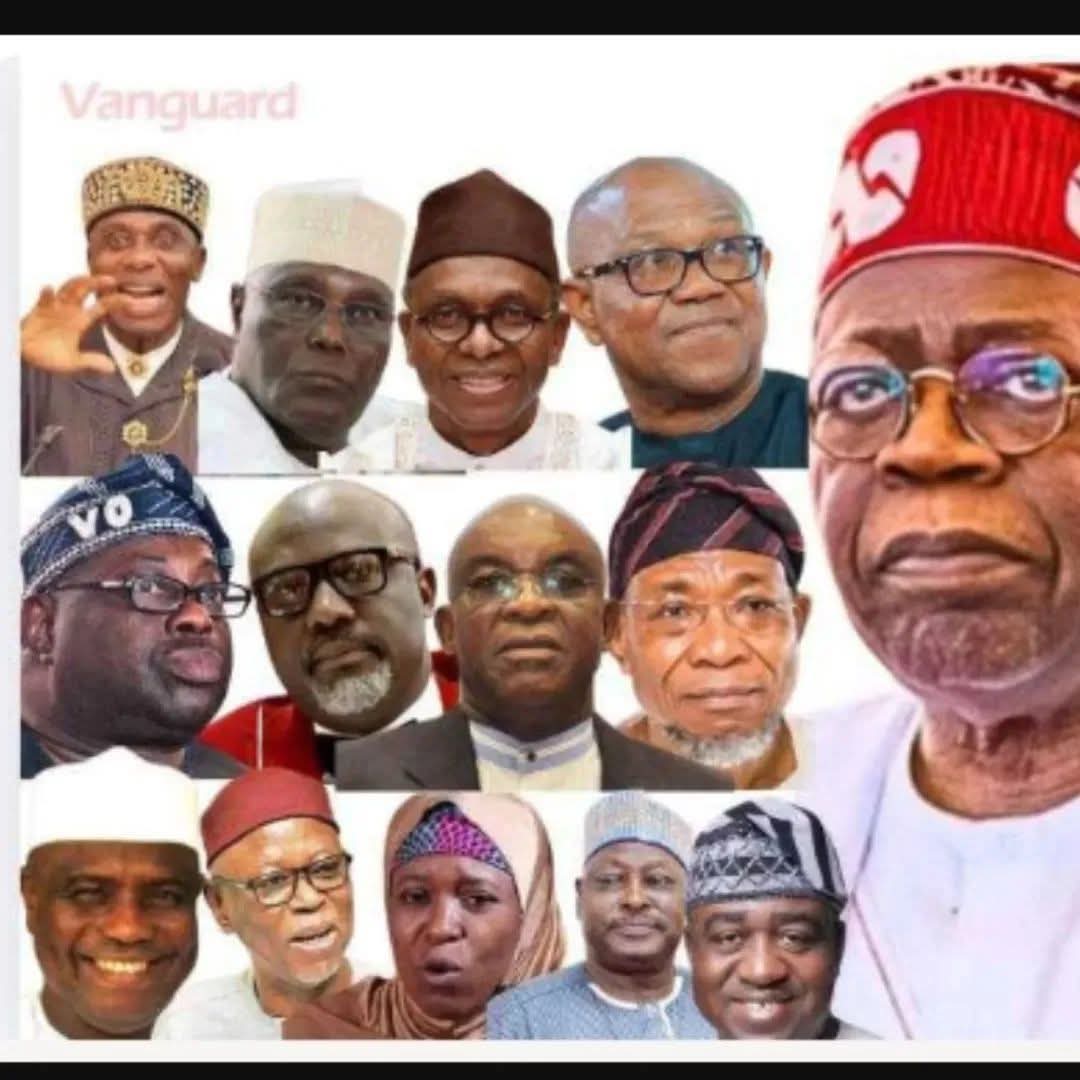
The coalition is made up of well-known figures with mixed legacies. Nasir El-Rufai, former Kaduna governor, is respected for bold reforms but blamed for worsening ethnic and religious divisions. Rotimi Amaechi, ex-Rivers governor and transport minister, helped drive Jonathan out in 2015 but today finds himself politically stranded. Rauf Aregbesola, once celebrated in Osun, left behind huge debts and a bitter feud with Tinubu.
Peter Obi, who captured the imagination of urban youths and the diaspora in 2023, remains a strong voice, but his Labour Party is now weakened by internal fights. Atiku Abubakar, after six presidential runs, represents persistence but also fatigue, as many now see him as pursuing ambition rather than vision. David Mark, a respected former Senate President, carries influence but is seen more as an Abuja insider than a grassroots mobilizer. Together, they bring experience but also heavy baggage, the kind of mix that rarely delivers lasting unity.

Their chosen platform, the ADC, raises even more doubts. Formed in 2005, the party has survived nearly two decades but has never built true nationwide strength. It has often been a resting place for defectors rather than a serious contender. Now, it is being rebranded as the vehicle to challenge Tinubu. But if it has failed to grow structures in twenty years, it is hard to see how it will suddenly become a national force in just two. Nigerian politics rewards structure, money, and grassroots presence , not just elite press conferences.




Tinubu, meanwhile, is no stranger to political battles. From his Lagos governorship to helping build the APC in 2013, to his hard-fought 2023 victory, he has always relied on strong networks, loyal foot soldiers, and careful planning. His government may be criticized for inflation, insecurity, and naira instability, but history shows that removing an incumbent president in Nigeria requires much more than anger and slogans. It takes unity, sacrifice, and real organization qualities the ADC coalition has yet to show.
The biggest obstacle for the coalition is not lack of talent but an excess of personal ambition. Atiku still believes it is his turn, Obi’s supporters insist only he can lead, El-Rufai sees himself as the reformist technocrat, while Amaechi, Aregbesola, and Mark also want relevance. Nigeria’s history is filled with such fragile alliances from the failed merger talks of 2011 to the “Third Force” projects that never moved beyond communiqués. Unless the ADC settles the issue of a single candidate by 2026, it risks falling apart before the real contest begins.


If the opposition is serious, it must go beyond just opposing Tinubu. Nigerians want clear answers on inflation, insecurity, unemployment, and energy not just rhetoric. They need to agree early on one candidate, build real grassroots structures beyond social media, and make sacrifices, especially from Atiku and El-Rufai, who may need to step aside for a stronger consensus figure. Without these, Tinubu’s re-election may come not from his own strength but from the opposition’s weakness.
For now, what the ADC offers looks more like a mirage than a movement. It may create headlines and political drama, but unless it transforms into a disciplined, policy-driven, grassroots force, it risks ending up like many failed coalitions before it. Disunity remains the best gift the opposition can hand Tinubu. As things stand, 2027 could simply repeat 2019 and 2023, a divided opposition, and another Tinubu victory.
©️ Adebamiwa Olugbenga Michael