By Bello Bala Shagari
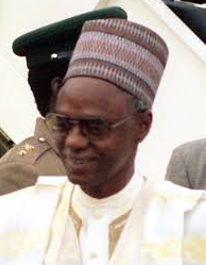
When Nigeria returned to democratic rule in 1979, Shehu Usman Aliyu Shagari stepped into history as the country’s first Executive President. His four-year tenure, though cut short by the 1983 military coup, left an imprint still visible across the nation’s infrastructure, industry, and governance.
One of his most ambitious undertakings was transforming Abuja from a stretch of undeveloped land into Nigeria’s purpose-built capital. Under Shagari’s watch, the Federal Government laid the foundation for roads, an airport, housing, electricity, water systems, schools, hospitals, and government offices — creating a secure administrative city that remains central to Nigeria’s political life.
Housing was another priority. The Shagari administration constructed 32,000 homes nationwide, with a vision of building 200,000 within eight years — a target never matched by any subsequent federal housing program.
Education also saw a boost, with the establishment of seven federal technology universities, which remain vital centers of learning and innovation.





In defense, Shagari equipped Nigeria’s armed forces with unprecedented military hardware, upgraded police resources, and strengthened the navy with acquisitions such as the NNS Aradu — still the largest warship in the country’s history.
Industrialization was a driving force, with projects like the Ajaokuta Steel Complex reaching 90% completion, alongside the creation of steel rolling mills in Jos, Katsina, and Delta State. Key roads connecting major cities and regions — from Badagry–Sokoto to Abuja–Kaduna — were constructed or expanded during this period.


Maritime and inland waterways infrastructure also advanced, with the construction of the Sapele Ports Complex, the start of the Federal Ocean Terminal in Port Harcourt, and modern transport facilities supporting industrial hubs like Ajaokuta.
In agriculture, Shagari invested in large-scale irrigation and dam projects, including Bakolori, Dadin Kowa, Kafin Zaki, Goronyo, and Zobe, while distributing modern farming machinery to improve productivity.
The auto manufacturing sector flourished with the establishment of plants such as ANAMMCO in Anambra, Volkswagen in Oyo, Peugeot in Kaduna, FIAT in Kano, and Steyr in Bauchi. Aviation equally benefited, with the creation of the Ministry of Air Transport, new airports in Minna, Bauchi, and Akure, and a fleet expansion for Nigerian Airways that once gave the country Africa’s largest air network.
Healthcare expansion included new health technology centers in Lagos, Enugu, and Jos; dental schools; the National Eye Care Centre in Kaduna; and plans for children’s hospitals, alongside local pharmaceutical production initiatives.
And in Lagos, preliminary works began on the iconic Third Mainland Bridge — still the longest bridge in Nigeria.
Though his administration was abruptly ended, many of Shehu Shagari’s projects remain cornerstones of Nigeria’s infrastructure and industrial base. His presidency serves as a reminder of how ambitious planning, when matched with execution, can leave a lasting legacy.
This report is brought to you by Newspot Nigeria.