By Newspot Nigeria Editorial Desk
Corruption doesn’t just waste money. It costs lives.
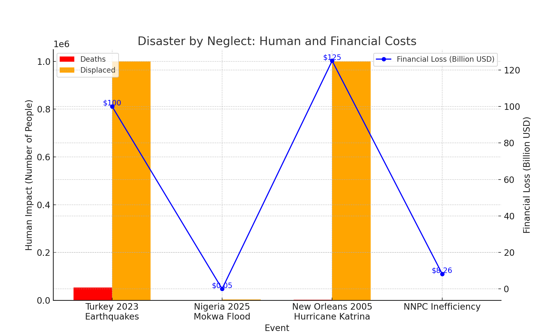
In Turkey’s 2023 earthquakes, about 173,000 buildings collapsed or were badly damaged. This wasn’t simply nature’s doing — it was the result of years of weak enforcement of building codes, political deals, and construction shortcuts. Successive “zoning peace” amnesties allowed unsafe, illegally built structures to be legalized in exchange for fees, even when they failed safety standards. Some politicians, including President Erdoğan, openly celebrated these amnesties. Engineers called them “an invitation to death.”
The construction sector had long been plagued by corruption, with developers using political influence to sidestep inspections. Rapid construction booms were poorly supervised, safety standards ignored. When the February 6, 2023 quakes hit, more than 53,000 people in Turkey and another 6,000 in Syria were killed. Hundreds of contractors were investigated for violations and negligence. Entire families were crushed in seconds.
Nigeria faces its own man-made disasters. Flooding has become a yearly national emergency, worsened by blocked drainage, unregulated construction on flood plains, neglected dams, and abandoned flood-control projects.




In 2022, floods killed more than 600 people and displaced over 1.3 million. In September 2024, the collapse of the Alau Dam in Borno State killed at least 150 and displaced more than 419,000. On May 29, 2025, torrential rain devastated Mokwa in Niger State, killing over 200 and displacing 3,000.
One survivor, Adamu Yusuf, lost nine family members — including his wife and newborn — in the Mokwa floods. “She woke me up when the flood hit… They panicked and we got disconnected. I watched helplessly as water washed away my family. I survived because I could swim. It was God that saved me,” he told BBC News and People magazine. He came out of the water with nothing but borrowed clothes.


This story isn’t unique to Nigeria or Turkey. In New Orleans in 2005, Hurricane Katrina killed more than 1,800 people and displaced over a million. It wasn’t just the storm — it was years of underfunded levee maintenance, ignored engineering warnings, and political budget fights that left the city exposed. When the storm surge came, the levees failed in multiple places, and the poorest residents bore the heaviest losses. Neglect in infrastructure planning became a death sentence when the crisis arrived.
The same kind of neglect runs through Nigeria’s oil sector. The Nigerian National Petroleum Company (NNPC) has been inefficient for decades. In 2022, it spent ₦4.39 trillion on fuel subsidies — more than the combined national budgets for education and health. NEITI reported $8.26 billion in unremitted revenues, underscoring deep problems with transparency and accountability. Decades of waste in the sector mean less money for flood defenses, emergency services, hospitals, and the very infrastructure that could save lives during disasters.
Inefficiency in a national oil company may not seem as urgent as a crumbling levee, but both are part of the same equation: when public institutions fail to use resources wisely and honestly, the capacity to protect citizens collapses. Whether it’s water rushing through a broken barrier in New Orleans or floodwaters sweeping through Mokwa, the root cause is the same — systemic neglect that turns predictable hazards into mass casualties.
From unsafe buildings in Turkey to drowned streets in New Orleans, from washed-away families in Mokwa to billions lost at NNPC, the pattern is clear. Disasters don’t choose their victims — but corruption and neglect decide how many die.
Newspot Nigeria believes the price of inaction is measured not just in lost revenue, but in the graves it fills.