

“The air is no place for ego, provocation, or unchecked temper. Whether one is a global music icon or an unknown traveler, the cabin is a shared space governed by rules that protect every soul on board. When those rules are broken, the fallout is not just about inconvenience or embarrassment it is about safeguarding lives.”
Aviation is one of the few spaces where rules are not just guidelines they are lifelines. Every instruction, every procedure, is woven into a delicate fabric of safety, order, and trust. Yet, in recent days, two separate incidents in Nigeria’s aviation sector have shaken public confidence and sparked fierce debate one involving celebrated Fuji musician K1 De Ultimate (Kwam 1) and the other, an Ibom Air passenger, Ms. Comfort Emmanson. Both stories unfolded thousands of feet above ground or on the tarmac, but their ripples have reached far beyond the runway.






The first episode occurred on August 5, 2025, during boarding of ValueJet Flight VK201 at Abuja’s Nnamdi Azikiwe Airport. According to official accounts from the Federal Airports Authority of Nigeria (FAAN) and the Nigerian Civil Aviation Authority (NCAA), Kwam 1 allegedly attempted to board with a liquid-filled flask said by some to contain alcohol despite repeated warnings. In the tense moments that followed, the flask’s contents were reportedly spilled on a security officer. Matters escalated further when he was accused of obstructing the aircraft from taxiing and resisting removal. Aviation authorities responded swiftly, suspending the pilots for procedural lapses, directing that the musician be placed on a no-fly list, and urging the Attorney General and the Inspector General of Police to prosecute him.


From Kwam 1’s side came a different version, the flask contained only plain water for medical purposes, and the media had blown the incident out of proportion. Days later, he issued a public apology, accepting responsibility but standing by his claim about the flask’s contents. While the sincerity of his apology softened some criticism, lingering questions about intent remained. Legally, the matter may still find its way into court under provisions like Section 459A of the Criminal Code, which penalizes the obstruction of an aircraft.
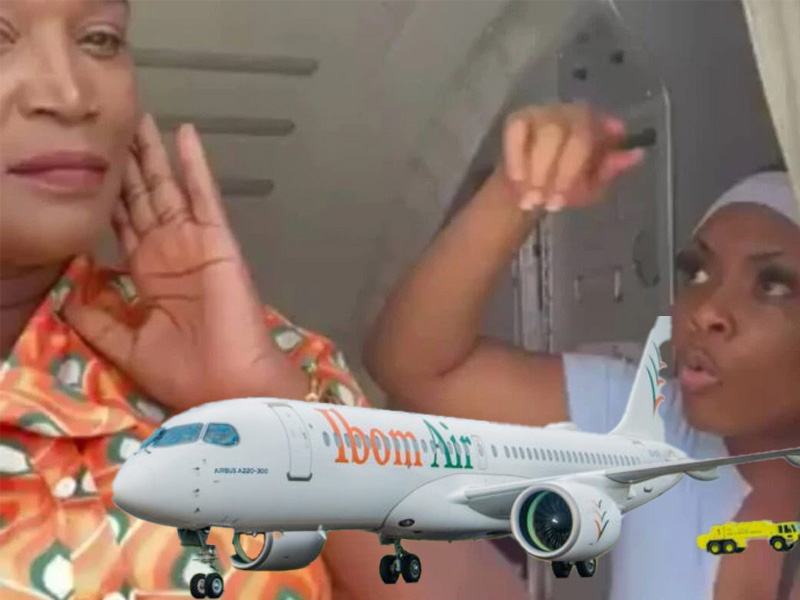
Just five days later, on August 10, 2025, another scene unfolded this time on an Ibom Air flight from Uyo to Lagos. What began as a simple act of non-compliance refusing to switch off a mobile phone before takeoff spiraled into chaos upon arrival in Lagos. Passenger Comfort Emmanson reportedly attacked the cabin crew, stepping on the purser, tearing off her wig and glasses, and slapping multiple staff members. The altercation escalated to the point where she allegedly tried to seize a fire extinguisher as a weapon and assaulted security personnel.
Ibom Air acted decisively. The passenger was removed, handed over to airport security and police, and permanently banned from flying with the airline. A report was sent to the NCAA, affirming a zero-tolerance stance toward violence on board. The crew, praised for their professionalism under pressure, became an example of how discipline in the air should be maintained. This was not the first time Ibom Air had faced such challenges earlier in January 2025, a different unruly passenger incident led to a flight cancellation and a divided public response on whether legal action or reconciliation should prevail.
The contrasts between the two cases are striking. Kwam 1’s incident hinged on questions of compliance, intent, and the optics of celebrity privilege. His actions, if proven, posed a high safety risk by disrupting aircraft movement, but the episode left enough ambiguity for public opinion to split between condemnation and defense. The Ibom Air incident, on the other hand, involved unambiguous, physical violence and the threat of weapon use. Public outrage was swift, and support for legal consequences was near-universal.
Both episodes reveal an urgent need to strengthen Nigeria’s approach to unruly behavior in the skies. Passenger education on aviation rules must go beyond the cursory safety briefing, reaching into pre-flight communications, ticketing terms, and even public campaigns. Legal frameworks should be clearer and swifter in execution, so that offenders face consequences without unnecessary delays. At the same time, airlines and regulators must develop mechanisms for de-escalation that balance firmness with empathy, particularly when misunderstandings, cultural differences, or mental distress are factors.
The air is no place for ego, provocation, or unchecked temper. Whether one is a global music icon or an unknown traveler, the cabin is a shared space governed by rules that protect every soul on board. When those rules are broken, the fallout is not just about inconvenience or embarrassment it is about safeguarding lives.
The challenge for Nigeria’s aviation sector is not only to enforce discipline but to do so with fairness, consistency, and humanity. Because in the end, the safety of the skies depends not on the fame of those who fly, but on the willingness of all to submit to the order that keeps everyone aloft.
Adebamiwa Olugbenga Michael writes from Lagos