
By Idris Muhammed Abdullahi
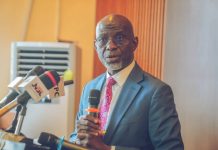
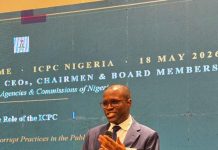
Abuja, Nigeria – In what is now being described as a watershed moment in Nigeria’s fight against Illicit Financial Flows (IFFs), the National IFF Conference held from July 22 to 23, 2025, in Abuja has marked a pivotal shift from rhetoric to results. Convened under the Proceeds of Crime Management and Illicit Financial Flows (POCM-IFF) Cordination at the Federal Inland Revenue Service (FIRS), the conference planning and management was co led and hosted by Idris Muhammed Abdullahi, Head of the National IFF Estimation Coordination Secretariat.
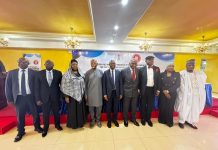
Gracing the event were some of Nigeria’s most influential decision-makers and institutional leaders, including the Honourable Minister of State for Finance, the Executive Chairman of FIRS, the Chairman of NEITI, the Comptroller-General of the Nigeria Customs Service, and the Country Representative of the United Nations Office on Drugs and Crime (UNODC). Also in attendance were delegates from across key Ministries, Departments and Agencies (MDAs), the National Assembly, and international development partners.
This wasn’t just another gathering it was where IFF finally met competence.

For decades, Nigeria has hemorrhaged billions of dollars through illicit outflows money that could have revitalized public services, strengthened infrastructure, and lifted millions out of poverty. But today, a new chapter is being written: one led by professionals, anchored in data, and powered by political will.





At the heart of this transformation is the National IFF Committee, chaired by the Executive Chairman of FIRS, and its operational arm the Technical Working Group on IFFs (TWG-IFF) which is currently executing Nigeria’s first-ever National IFF Risk Assessment and Estimation using internationally recognized methodologies. One of the key tools deployed is the Country-by-Country Reporting (CbCR) Tax Method, a flagship framework of the OECD and the UN, used to track IFFs linked to tax evasion, profit shifting, and base erosion.
“For the first time, Nigeria is not only identifying its IFF vulnerabilities but quantifying them with empirical precision,” said Idris Muhammed Abdullahi, who also serves as the Coordinator of the National IFF Secretariat under the POCM-IFF. “We are bringing the fight to the data and the data doesn’t lie.”


The conference featured high-level plenaries, expert panel discussions, technical workshops, and strategy roundtables. It also spotlighted initiatives like the National Single Window system, as a tool for curbing customs-related IFFs, and showcased Nigeria’s emerging inter-agency synergy. Gone are the days of siloed responses , this is now a whole-of-government approach.
International voices, including Hon. Irene Ovonji-Odida, one of Africa’s most respected IFF advocates, joined Nigerian experts to offer regional and global insights into the systemic drivers of IFFs and how to dismantle them.
“This is not a talk-shop,” Abdullahi emphasized.
“Every recommendation from this conference will be tracked, integrated into policy, and followed through. We are here to act and we will.”
In his remarks, the Executive Chairman of FIRS reiterated the administration’s commitment to curbing IFFs, enhancing revenue generation, and fulfilling the goals of Sustainable Development Goals (SDGs) 16 and 17, which promote peace, justice, strong institutions, and strengthened domestic resource mobilization.
Indeed, when competence takes the lead, and data drives direction, IFFs are no longer invisible. Nigeria is turning the tide and the world is taking note.
Idris Muhammed Abdullahi
Head, National IFF Estimation Coordination Secretariat
One of the Host and planning committee of the recent National IFF Conference Co Coordinator, POCM-IFF at FIRS
Country Expert on AML/CFT, Beneficial Ownership, Forensic & Tax Intelligence Expert