By the Editorial Desk, Newspot Nigeria

There was a time when buying a video game meant just that—you bought it. You owned the disc, the cartridge, or the file. You could play it as many times as you wanted, lend it to a friend in Surulere, or sell it at Computer Village in Ikeja. Once it was yours, it stayed yours.
But not anymore.
Across Europe, gamers are now pushing back—and rightly so. A citizen petition to stop game publishers from quietly revoking access to purchased titles has crossed one million signatures. And while that campaign began abroad, the issues it raises affect all of us, especially in countries like Nigeria where digital access already comes with its own hurdles.

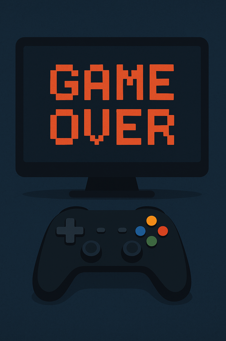
So what’s the problem? Game studios have shifted from selling games as products to offering them as licenses. And unlike physical products, these licenses can expire, disappear, or be revoked entirely at the whim of the company. A notable case is Ubisoft’s The Crew, a game that—despite having millions of players—was made unplayable after the company shut down its servers. Even the solo mode, which doesn’t rely on other players, went dark.




For gamers who grew up saving pocket money to buy a game CD at Palmgrove or in Port Harcourt, this feels like betrayal. You’re not just losing access—you’re losing the very idea of ownership.
And it’s not just happening in gaming. Software like Adobe Photoshop has gone full subscription. Stop paying? Say goodbye. Microsoft Office is dangling the same route. Even ebooks can vanish from your device if the license terms change or if the seller decides they’ve had enough.


This is bigger than entertainment—it’s about property rights. Nigerian traders understand this instinctively: when you buy something, it’s yours. Full stop. But in the digital world, that principle is crumbling.
The studios say it’s about piracy, cost, and software control. But consumers are asking: why can’t there be an offramp? If you’re shutting down online servers, at least let us play the offline version. Give us a patch. Let us keep what we bought.
Some critics dismiss this movement as a call for more EU regulation. But here’s the truth: intellectual property law is already a form of government regulation. It gives companies exclusive rights over code, design, and distribution. Consumers, by contrast, are left with none of the rights they’d have if they bought a book, DVD, or stereo.
The “Stop Killing Games” campaign isn’t asking for radical reform. It’s asking for balance. If laws are good enough to protect publishers’ rights, then they should also guarantee players a way to enjoy what they paid for—especially when the product is no longer being sold or supported.
In Nigeria, where our gaming culture is exploding—from tech hubs in Yaba to PS5 parlors in Ilorin—we need to pay attention. If we don’t shape the rules of digital ownership now, we’ll wake up one day to find out that we’ve paid for nothing. And our laws won’t protect us.
It’s time to stop pretending that digital ownership is too complicated to fix. It’s not. If you buy a game, you should be able to play it. Full stop.
Newspot Nigeria stands firmly with consumers—not just as watchdogs, but as advocates for fair digital practices. If the game industry wants our money, then they must also respect our rights.
— Editorial Desk, Newspot Nigeria
© 2025 Newspot Nigeria. All rights reserved.