
By Newspot Nigeria Editorial Desk
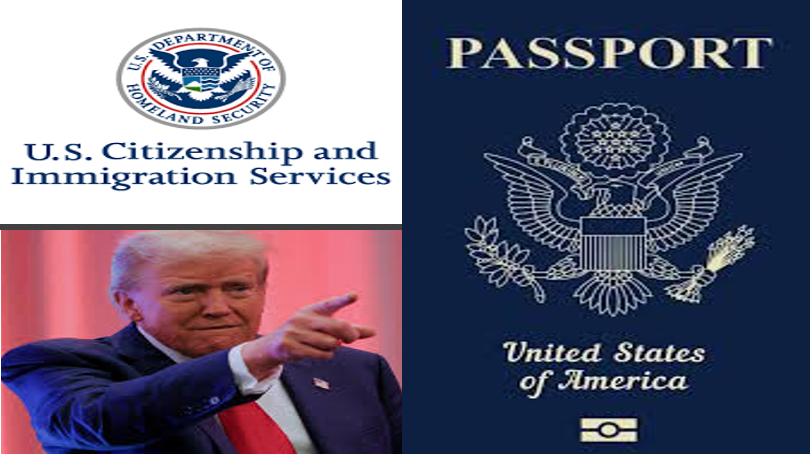
When a person becomes a naturalized American citizen, they take an oath—not just to the flag, but to the promise that they are now equal in rights, protections, and permanence with those born into citizenship. But in today’s America, that promise is unraveling fast—and not just for immigrants, but for the very principle of citizenship itself.
On January 20, 2025, just hours after returning to office, President Donald Trump signed Executive Order 14160. The order attempts to deny U.S. citizenship to children born to undocumented immigrants and those who overstayed their visas. What used to be a constitutional guarantee under the 14th Amendment—citizenship by birth—is now under threat from the very office meant to uphold it.
At the same time, his administration has revived and expanded a denaturalization campaign that allows the government to strip citizenship from naturalized Americans through civil lawsuits, often without legal representation, jury trials, or a time limit. If the government believes someone made an error or omission in their immigration paperwork, even decades ago, it now feels empowered to undo what was once seen as permanent.

This is no longer just about immigration law. It’s about whether citizenship in America is a stable, protected right or a conditional status that can be taken away at will. It means two children born on the same day in the same hospital could have entirely different futures—one with full rights, the other in legal limbo—simply because of who their parents are.




Many constitutional scholars, including conservatives, argue that the 14th Amendment’s language is clear: all persons born on U.S. soil and subject to its jurisdiction are citizens. For over 150 years, no U.S. president—Republican or Democrat—dared challenge this foundational principle. Until now.
For the Nigerian-American community, this situation hits home. Thousands of Nigerians live legally in the U.S., and many women travel there for work, education, or childbirth. Some overstay their visas due to complications, but under the Constitution, their children born in the U.S. were still considered citizens. That legal certainty is now being shaken. A Nigerian mother who gives birth in America while overstaying a visa might find her child has no right to a passport, Social Security number, or any of the protections tied to U.S. citizenship.

And for the future? These children could grow up without the right to vote, receive federal aid, or even remain in the country they were born in. That’s more than a legal technicality—it’s a humanitarian crisis in the making.
Nigeria must not watch this from the sidelines. Over $20 billion flows into Nigeria annually from the U.S. through remittances, and many second-generation Nigerians play key roles in that economic chain. Policies like these risk breaking those ties, weakening Nigeria’s global connections, and sowing doubt in future diaspora engagement.
This is also a time for reflection. How does Nigeria define belonging? Are all children born in our country given the same rights? Or are we quietly adopting the same exclusionary mindset now gaining ground in the West?
For now, U.S. courts have blocked both the birthright order and many denaturalization efforts. But legal victories can be temporary. The bigger question is whether America, once viewed as the global standard for rights and freedoms, is still committed to those ideals.
If the U.S. government can pick and choose which citizens deserve protection—and which ones are expendable—then the very idea of equal citizenship begins to fade. And if it can happen there, it can happen anywhere.
This is not just a legal moment. It’s a moral one. And for Nigerians at home and abroad, it’s a call to stay alert and defend the basic idea that every person, once accepted into a nation’s fold, deserves the dignity and permanence of full citizenship.
—Newspot Nigeria
Standing for truth. Speaking for the voiceless.