
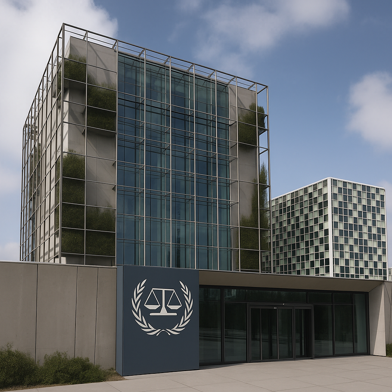

By Newspot Nigeria Editorial Desk


As state parties convene in New York this week for a special session on the International Criminal Court (ICC)’s jurisdiction over the crime of aggression, a familiar tension reemerges: ambition versus reality.
For many observers, this is a moment of reckoning. Should the ICC expand its powers to cover more complex geopolitical crimes, possibly including actions by non-State parties like the United States? Or should it first put its own house in order—strengthening the very foundations that keep the pursuit of international justice standing?
It is tempting to side with the idealists. After all, the horrors of military aggression, from Gaza to Ukraine, demand accountability. But as Nema Milaninia, a former ICC prosecutor and U.S. government representative to the Assembly of State Parties, rightly warns in a sobering essay, “expansion without consolidation” could become the Court’s undoing.

The ICC’s struggle isn’t merely external—it’s deeply internal. It suffers from flawed case management, uneven legal reasoning, and a growing backlog of unexecuted arrest warrants. Trials collapse. Internal dysfunction festers. And too often, the Court’s political navigation resembles a blindfolded sailor in a storm. With these cracks in its walls, does it make sense to add a new floor?





The push to revise the definition and reach of the crime of aggression may appear principled on the surface. But beneath it lies a complex political game. Some States see the ICC as a vehicle for counterbalancing the U.N. Security Council, bypassing the veto powers of dominant nations. Others seek to flex moral authority against perceived global hegemons. However noble these intentions may seem, they blur the ICC’s already fragile identity.
International criminal law does not—and never has—operated in a political vacuum. Prosecutorial discretion, judicial interpretation, even decisions about which conflicts to prioritize are shaped by realpolitik. Pretending otherwise, as some legal purists suggest, is not only dishonest—it’s dangerous. The risk is that the Court becomes a symbol of selectivity rather than justice.


Take, for example, the ICC’s handling of the Myanmar deportation case. It creatively asserted jurisdiction because a part of the crime occurred in Bangladesh, a State party. Yet similar logic has not been applied in Syria or Iran. This inconsistency, while perhaps grounded in resource limitations, opens the door for accusations of bias and politicization. The same can be said of how some arrest warrants are pursued with urgency while others languish for years.
What’s needed now is not more power, but more discipline.
The Assembly of State Parties should resist the lure of moral posturing and instead get back to basics. Consolidate. Reform the Court’s internal structures. Refine its legal methodologies. Secure consistent funding. Improve cooperation with national governments. Build back the trust that has eroded in recent years—not just with global powers, but also with the victims and civil society actors whose lives hang in the balance.
Justice, after all, is not measured by how loudly a court proclaims its authority—but by how faithfully it delivers fairness.
As Prosecutor Karim Khan once said, “The proof of the pudding is in the eating.” If the ICC cannot prosecute the cases it already has, what sense does it make to add more to its plate?
For Nigeria and other African nations that have long wrestled with their complicated relationship with the ICC, this is also a moment for reflection. Is the Court a partner in justice or a political weapon? Can it evolve into a credible forum for global accountability—or will it remain mired in symbolism and legal overreach?
This week’s session should not be remembered for what new mandates were proposed. It should be remembered for whether the ICC, and the international community around it, chose realism over rhetoric, and reform over fantasy.
Only then can the dream of international justice become something more than a mirage.
— Newspot Nigeria