By Newspot Nigeria Global Desk


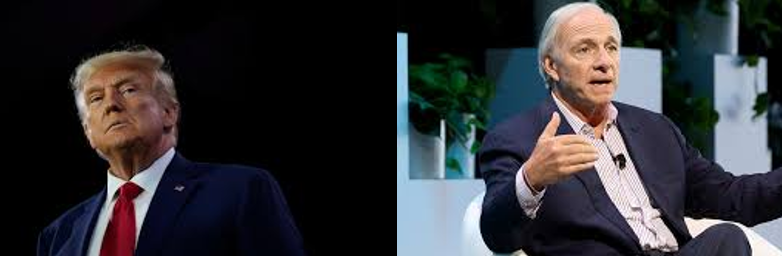
Washington, D.C. —Billionaire hedge fund manager Ray Dalio has issued a searing critique of President Donald Trump’s newly signed One Big Beautiful Bill Act, warning of catastrophic economic consequences if America continues down its current fiscal path.
Signed into law on July 4 after intense partisan wrangling in both chambers of Congress, the sweeping legislation marks one of the boldest fiscal overhauls of Trump’s second term. The bill extends key provisions of Trump’s 2017 tax law, slashes taxes on Social Security and tips, and eliminates a host of green energy incentives. In exchange, it imposes drastic cuts to Medicaid and SNAP benefits, among others.
The law narrowly passed in the Senate with Vice President J.D. Vance casting the tie-breaking vote in a 51–50 decision, following a dramatic standoff over its ballooning cost. The Congressional Budget Office estimates the Act will increase federal spending by $7 trillion over the next decade while generating just $5 trillion in revenue — a $2 trillion gap that alarms economists and investors alike.

Among those sounding the alarm is Dalio, founder of Bridgewater Associates, one of the world’s largest hedge funds. Dalio, whose economic foresight has earned him a legendary reputation on Wall Street, didn’t mince words.





“After spending time in Washington, D.C., discussing the budget deficit with senior people on both sides of the aisle, it’s clear to me that we are unlikely to change the debt trajectory we’re on and avoid the painful consequences,” he posted on X (formerly Twitter).
Dalio projects that U.S. debt, already at 100% of GDP, will balloon to 130% in just 10 years — equivalent to $425,000 per American household. He warns of rising interest payments, shrinking investor appetite for U.S. Treasury bonds, and an eventual spiral into either draconian budget cuts, massive tax hikes, or uncontrolled money printing.
“This printing and devaluing is not good for those holding bonds as a storehold of wealth,” Dalio added. “And what’s bad for bonds and U.S. credit markets is bad for everyone.”
The Act’s Medicaid cuts are especially controversial. Nearly 12 million Americans are projected to lose health coverage over the next decade as a result of tightened eligibility rules and expanded work requirements. The cost of SNAP food assistance will also shift to states that report high administrative error rates.


Meanwhile, Trump’s Republican allies hail the bill as a long-overdue correction to what they call “green overreach and bloated welfare.” Democrats, however, have slammed it as reckless and cruel, accusing the administration of gutting safety nets to bankroll tax cuts for the wealthy.
Notably, the bill did include one concession to blue-state lawmakers: a significant increase in the State and Local Tax (SALT) deduction, which had been capped in the 2017 tax reform law.
While Trump celebrates the bill as a “victory for working Americans,” analysts say the political sugar rush may quickly give way to bitter economic reality.
“Unless this path is soon rectified to bring the budget deficit from roughly 7% of GDP to about 3%… big, painful disruptions will likely occur,” Dalio warned.
His remarks are already prompting fresh debate among fiscal hawks and progressive economists alike about the sustainability of America’s debt-fueled growth model — and whether this “beautiful” bill may carry an ugly price.
This report was compiled by the Newspot Nigeria Global Desk. For more U.S. and international policy insights, stay with Newspot Nigeria.