
By Abidemi Adebamiwa | Commentary Contributor, Newspot Nigeria


President Donald Trump’s latest crackdown on foreign terrorist organizations (FTOs) is already shaking up boardrooms across Latin America—and it’s only a matter of time before its impact seeps into Nigeria’s economic and security discourse.
In a sweeping update this June, the Trump administration expanded its list of designated FTOs to include ten major Latin American cartels and transnational criminal organizations (TCOs), such as Cártel de Sinaloa and Tren de Aragua. This isn’t just symbolic. These designations carry serious legal consequences for businesses, banks, and even individuals doing business in regions where these groups operate or have infiltrated.
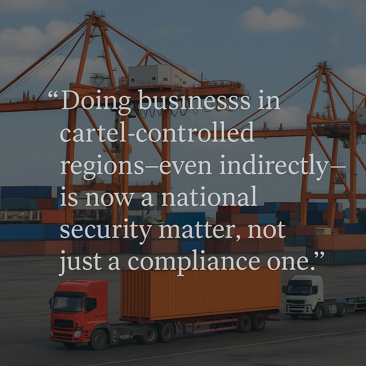
The message from Washington is loud and clear: doing business in cartel-controlled regions—even indirectly—is now a national security matter, not just a compliance one.
Here’s where things get complicated—and globally relevant.





What’s Changed?
Under the Antiterrorism and Effective Death Penalty Act (AEDPA), it is now a criminal offense to “knowingly” provide any “material support” to a designated FTO. This includes financial transactions, logistical assistance, hiring contractors, and even doing business with third parties tied to these groups—whether or not your firm meant to help the cartel. There’s no humanitarian exception, and no minimum threshold.
For Latin America, especially countries like Mexico and Colombia, this could mean operational paralysis for many sectors: telecoms, mining, logistics, energy, and agriculture—industries already operating in red zones—are now walking legal tightropes.


Why Nigeria Should Pay Close Attention
This isn’t just about cartels in Juárez or guerrillas in Cali. The logic behind Trump’s policy has wide implications for countries like Nigeria, where insurgents, militants, and economic saboteurs operate in similar ecosystems.
What if a Nigerian telecoms firm, oil services company, or logistics operator contracts a partner in Latin America who has indirect exposure to one of these FTOs? Under this U.S. framework, your Nigerian firm might face liability in American courts—criminal or civil.
Even closer to home: what happens if this model is applied globally, and the U.S. or other powers begin reclassifying Nigerian terrorist organizations (e.g. Boko Haram, ISWAP, or bandit networks) as FTOs and extending material support laws across borders?
In short: what looks like a Latin America problem today could become a Nigerian legal, economic, and foreign policy dilemma tomorrow.
Risk Isn’t Theoretical Anymore
The risks go beyond mere regulatory compliance. If a Nigerian company is found to have knowingly interacted with an FTO-linked partner—or even if one of its staff does—U.S. prosecutors can pursue the company, and American victims of cartel violence can sue under civil law. Let that sink in.
There’s also the reputational and investment damage. International banks and investors may begin applying a much higher due diligence threshold for any firm operating in cartel- or insurgent-influenced areas. Think Zamfara gold fields, Niger Delta pipelines, or border logistics hubs.
What Should Businesses and Policymakers Do?
For businesses in Nigeria (and those operating in Latin America), the stakes have changed. Here’s what must happen:
-
Review contracts and partnerships for any exposure to high-risk zones or intermediaries.
-
Update compliance programs to flag FTO risks—especially in energy, telecoms, and logistics.
-
Push for better national AML/CFT enforcement so that Nigeria doesn’t end up on a future sanctions or scrutiny list.
-
Stay in dialogue with regulators in both the U.S. and Nigeria to understand emerging threats.
Final Word from the Global South
Trump’s new FTO policy is many things—aggressive, expansive, and unrelenting. But it also reflects a broader shift: national security and international commerce are now permanently fused. A business deal gone wrong in Colombia can end in a courtroom in Washington—and soon, the same could apply in Nigeria.
Latin America may be the epicenter today, but Africa—particularly Nigeria—must see the tremors and prepare proactively. The line between a “compliance error” and “terrorist financing” is no longer as wide as we thought.
Newspot Nigeria will continue to track this evolving policy shift and its impact on global trade, security, and Nigerian companies doing business across borders. Stay tuned for expert insights, updates, and exclusive coverage.
– Published by Newspot Nigeria, June 2025