By Newspot Nigeria Editorial Board
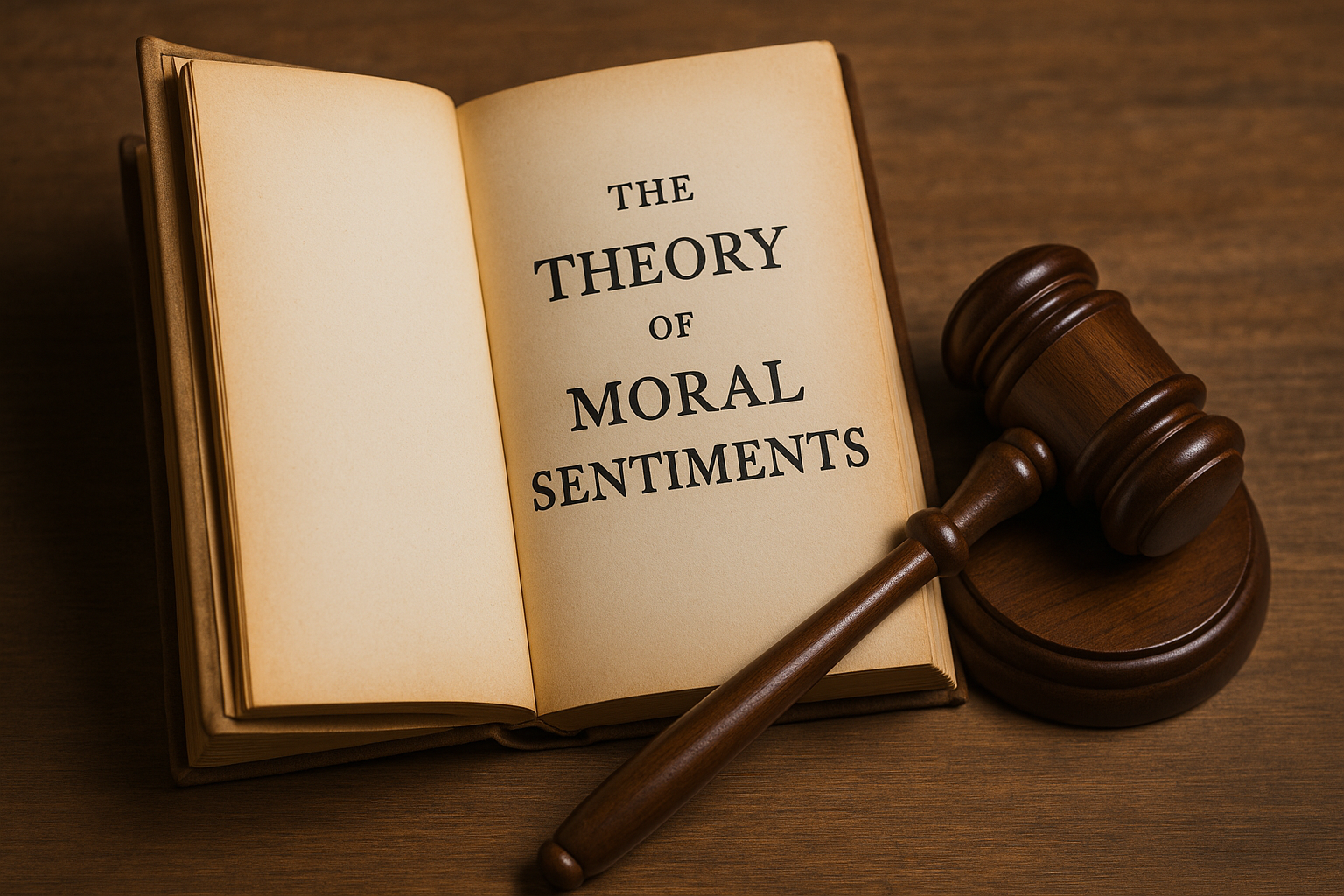
In the global rush to quote Adam Smith as the father of capitalism, many forget that his most profound work wasn’t The Wealth of Nations, but The Theory of Moral Sentiments, published in 1759. While the former laid the groundwork for modern economics, the latter laid the foundation for human ethics. Without understanding both, we risk building wealth without wisdom—systems without soul.
As Nigeria navigates a critical crossroads in governance, national cohesion, and economic fairness, The Theory of Moral Sentiments offers us a mirror. A mirror not of GDPs and oil prices, but of values, virtue, and the moral imagination necessary for real development. And if we dare to look into that mirror, Smith’s 18th-century philosophy might just become our 21st-century guidebook.
Sympathy Before Self
At the heart of Smith’s moral framework is sympathy—what we would now call empathy. He argued that human beings are moved not just by reason or interest, but by our ability to feel with others. Morality, he believed, emerges from imagining ourselves in another’s shoes and acting accordingly.

That’s precisely what’s missing in much of Nigeria’s public life.





How does a senator earning ₦14 million a month—by his own admission—claim it’s not enough to run his office or travel to his constituency, while dismissing concerns about lawmakers living in affluence? How does such leadership vote against a ₦62,000 minimum wage? The failure here is not merely economic—it is moral. It is the absence of sympathy.
Smith reminds us that when society loses the ability to feel with the widow, the poor graduate, or the kidnapped schoolgirl, its decisions lose legitimacy. Policy divorced from compassion is violence in slow motion.


The Impartial Spectator: A Nation’s Conscience
Smith introduces the idea of the “impartial spectator,” an internal judge each of us carries—watching, evaluating, whispering, “That’s not right.” This internal compass, cultivated through social life, helps us align our actions with what is just and praiseworthy.
Nigeria needs this impartial spectator now more than ever—not just in individuals, but in our institutions.
What would our politicians do if every policy were reviewed by an invisible observer, immune to tribalism and bribes? What would civil servants approve if their conscience, not their oga, had the final say? What would our religious leaders preach if their moral compass wasn’t warped by political donations?
We are not short of religion in Nigeria. What we lack is moral imagination—the courage to judge ourselves by standards higher than self-interest.
Justice Is the Minimum
Smith made a crucial distinction between justice and beneficence. Justice, he argued, is the bare minimum—not harming others. It’s the foundation of civil society. Beneficence is the higher calling—active kindness, generosity, and sacrifice.
So, what has Nigeria done with justice?
We’ve allegedly turned it into an auction: reportedly sold to the highest bidder, delayed for the connected, denied to the vulnerable. This isn’t just a betrayal of law—it’s a betrayal of the moral foundation on which trust in a nation stands.
In Smith’s words, society “cannot subsist among those who are at all times ready to hurt and injure one another.”
Our political and judicial systems must treat justice not as a luxury, but as a non-negotiable baseline. Any government that fails to uphold it, regardless of ethnicity or creed, has forfeited the right to moral leadership.
Morality as National Security
Smith knew that markets don’t regulate morals. Commerce without character is a dangerous force. In today’s Nigeria, that truth is painfully clear. Kidnapping is an enterprise. Corruption is a career path. Disinformation is monetized.
To restore sanity, we must stop outsourcing ethics to profit. When a society rewards success over substance, it hands influence to the immoral. When degrees are bought and offices sold, a nation is not merely corrupt—it is collapsing.
Nigeria’s future isn’t just about power generation or foreign reserves. It’s about trust in leaders, in public institutions, in one another. And trust is a moral currency.
Who Will Lead the Moral Reformation?
Smith believed that moral growth is a lifelong journey, shaped by habit, culture, and role models. But who are Nigeria’s role models today? Who, across party lines, embodies restraint, justice, and quiet dignity?
In this age of impunity and hyper-partisanship, we need new leadership—moral leadership. Not the kind that shouts “change” or “renewed hope,” but the kind that does right when no one is watching.
Let governors budget not just for roads, but for civic education. Let schools teach not just tech skills, but ethics. Let the media prioritize truth over traffic. Let pulpits rebuke dishonesty, not just demons.
A Word to the Youth
To Nigeria’s youth—angry, unemployed, or disillusioned: Smith’s message is simple—don’t surrender your values to a broken system. Be the impartial spectator this country needs. Be the generous actor in a world obsessed with survival.
Nation-building isn’t just about protests or hashtags. It begins in living as though your conscience were your constitution.
Capitalism with a Soul
Many quote Adam Smith to justify unbridled capitalism. However, the man who spoke of the “invisible hand” also said no society can flourish if the majority is miserable. Smith knew that markets need morals.
Nigeria’s crisis isn’t just poverty—it’s the poverty of virtue among the elite. Until we restore moral sentiments alongside reform, we’ll continue to mistake motion for progress.
Smith’s Theory of Moral Sentiments is not just a relic. It’s a roadmap. And if we are wise, we will read it—not just with our eyes, but with our hearts.
This editorial was written exclusively for Newspot Nigeria. For more thought-provoking pieces, follow our Editorial section. 🌿🖋️