By Bukar Mohammed
In the last 24 months, Nigeria’s federal government has accumulated over $24 billion in external loans, a staggering figure that underscores a perilous fiscal trajectory. Yet, despite this avalanche of borrowing, key economic indicators — from inflation and unemployment to exchange rate volatility — paint a picture of a nation in economic distress.
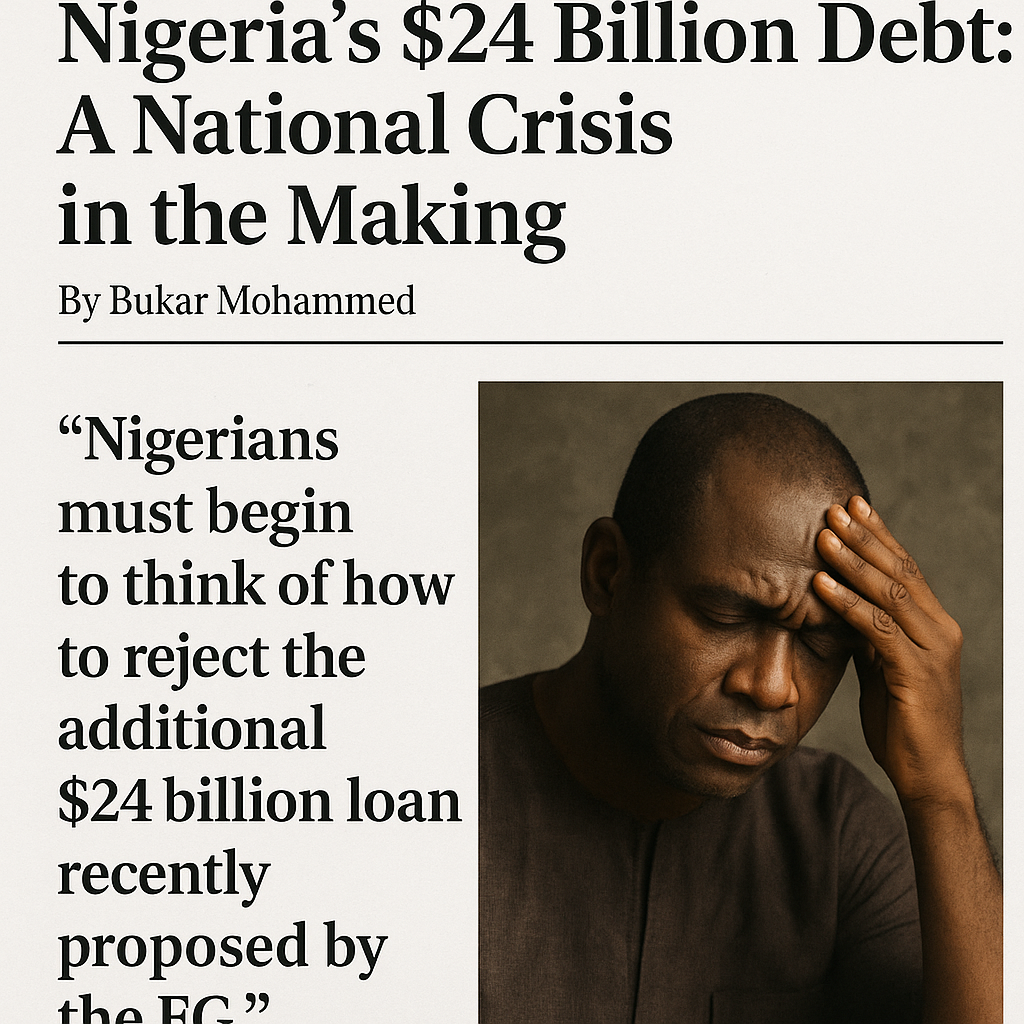
As Nigerians, we must begin to seriously question the rationale behind the new $24 billion loan proposal by the federal government. Our current debt profile is already unsustainable.
A Dangerous Spiral
As of early 2025, Nigeria’s total public debt has surged past ₦97 trillion (over $70 billion). Alarmingly, over 40% of government revenue now goes into debt servicing. The government is spending more to service debts than it is on capital projects. This means we are borrowing to survive, not to invest.

“You can’t borrow your way out of poverty when most of the funds are not going into productivity,” said one economic analyst.
Mortgaging the Future
This borrowing binge is not merely about meeting today’s needs — it’s about saddling future generations with debt that has little impact on infrastructure, education, or meaningful economic growth. A large portion of loans obtained under the Buhari administration were directed towards recurrent spending, not transformational development. If President Tinubu continues on this trajectory, Nigeria risks becoming locked in a perpetual cycle of debt dependency and underdevelopment.





Transparency Deficit
There is widespread mistrust in how borrowed funds are utilized. During the Buhari years, accusations of inflated contracts, misappropriated funds, and phantom infrastructure projects were common. Unfortunately, Tinubu’s government has yet to demonstrate a decisive break from this troubling pattern. Without transparency and accountability, more borrowing simply means more waste.
Inflation, Devaluation, and Misery
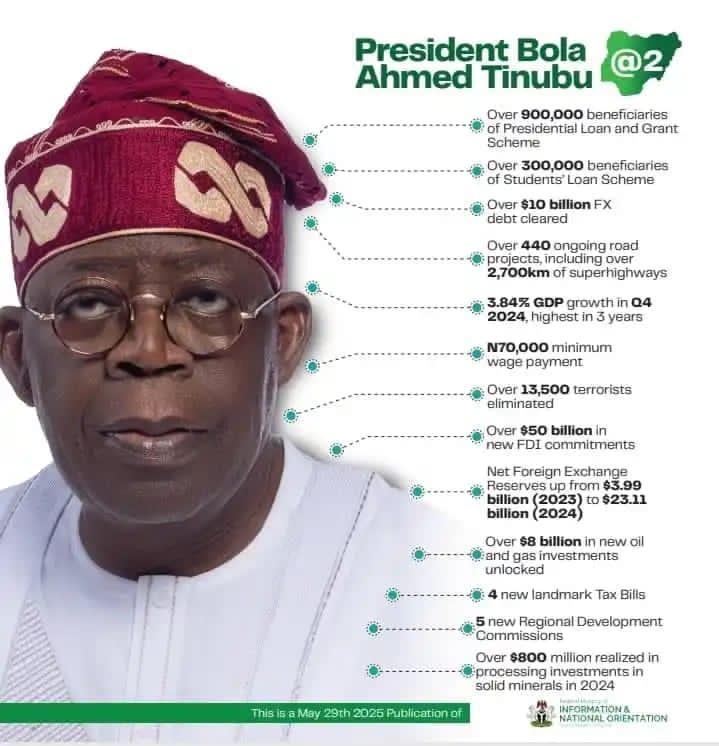
President Tinubu’s economic reforms — including the removal of fuel subsidies and floating of the naira — have triggered record inflation, a free-falling currency, and unprecedented cost-of-living pressures. Adding more external debt will further strain the naira, increase inflationary pressure, and deepen economic hardship for ordinary Nigerians.


Between 2020 and 2024, Nigeria spent ₦24 trillion on debt servicing, surpassing the country’s total capital expenditure on infrastructure. In just the first half of 2024, debt servicing consumed 69% of government expenditure and 162% of revenue, crowding out investments in healthcare, education, and development.
Where Are the Subsidy Savings?
The government claimed that removing fuel subsidies would free trillions of naira for development. But Nigerians have yet to see any meaningful relief or investment in return. Instead, the supposed savings are being swallowed up by ballooning debt repayments, leaving the public skeptical and disillusioned.
A Case for Accountability
Successive governments — from Jonathan to Buhari to Tinubu — have borrowed heavily without providing comprehensive audits of how these funds were spent. The EFCC and ICPC must be empowered and encouraged to investigate the mismanagement of public funds, and ensure accountability across the board.
A Call to Action
Nigerians must rise to the occasion. This is not a time for silence. We must demand legal and civic intervention to stop further loans that lack transparency and offer no clear development impact. The National Assembly, civil society organizations, and the judiciary must collaborate to ensure that borrowing is done responsibly and in the national interest.
It is also time to consider legal action — including seeking court injunctions to stop the reckless accumulation of external debt, particularly when there is no corresponding economic benefit.
Conclusion: A Nation on the Brink
The current debt trajectory is unsustainable. Without a clear shift toward accountability, productivity, and fiscal responsibility, Nigeria risks plunging into a debt crisis that could take generations to recover from. This is a defining moment in our economic history. We must act now — or pay the price later.
Bukar Mohammed is a public affairs analyst and advocate for fiscal justice in governance. He writes from Kano.