
By Newspot Nigeria Editorial Board
In a sobering but heartfelt reflection, Professor Evan Mwangi of Northwestern University forces us to confront a question that many Americans have come to avoid: Can racism in the U.S. ever truly end? As a Black, Kenyan immigrant, Mwangi brings a uniquely global lens to this generational problem, one that does not reduce racism to hashtags or protest slogans, but confronts it as a deeply systemic illness with roots in America’s legal, educational, and cultural structures.
His observations are uncomfortable yet honest. While many celebrate the execution of notorious white supremacist John William King as justice for James Byrd Jr.’s gruesome murder, Mwangi rightly notes that justice for one does not equal equity for all. The racial bias embedded in the U.S. justice system remains glaring: 41.5% of death row inmates are Black, despite Black people comprising just 13.4% of the U.S. population. Prosecutorial discretion, jury bias, and policing disparities feed this imbalance. It’s not just a system that occasionally fails—it’s a system historically tilted against Black lives.
Even in academia, a space presumed to be liberal and inclusive, Mwangi describes subtle and overt acts of racism—nooses in campus gyms, coded neo-Nazi messaging, and intrusive job interview questions. These micro and macro-aggressions make clear that elite education does not shield Black individuals from hate; it only exposes how sophisticated racism can be.

But perhaps Mwangi’s most compelling contribution is the recognition that racism is not exclusive to the United States. He draws parallels to his homeland, Kenya, where ethnicity—down to whether one is circumcised—can determine a man’s political legitimacy. It’s a powerful reminder that tribalism, bigotry, and structural exclusion take different forms globally, but their core mechanics remain the same: a desire to elevate one group by dehumanizing another.




Yet, despite the heaviness of these realities, Mwangi offers hope. Not through token gestures or performative diversity workshops, but through sustained, institutional commitments to fair pay, fair access, and fair treatment. His call for diversity training that reaches beyond minority employees to the actual power-holders within organizations is urgent and necessary. The people most responsible for perpetuating or correcting bias must be the first to confront it.
For Nigeria, and indeed much of Africa, there are lessons to draw from Mwangi’s story. Many African immigrants assume racism is an American peculiarity until they experience it firsthand. But what about the caste systems we uphold at home? Ethnic profiling, religious discrimination, political marginalization—aren’t these Africa’s own versions of racial injustice? As Nigeria grapples with internal strife—from ethnic favoritism to religious bigotry—we must ask: Are we willing to hold a mirror to our own biases, or do we only condemn those we witness abroad?


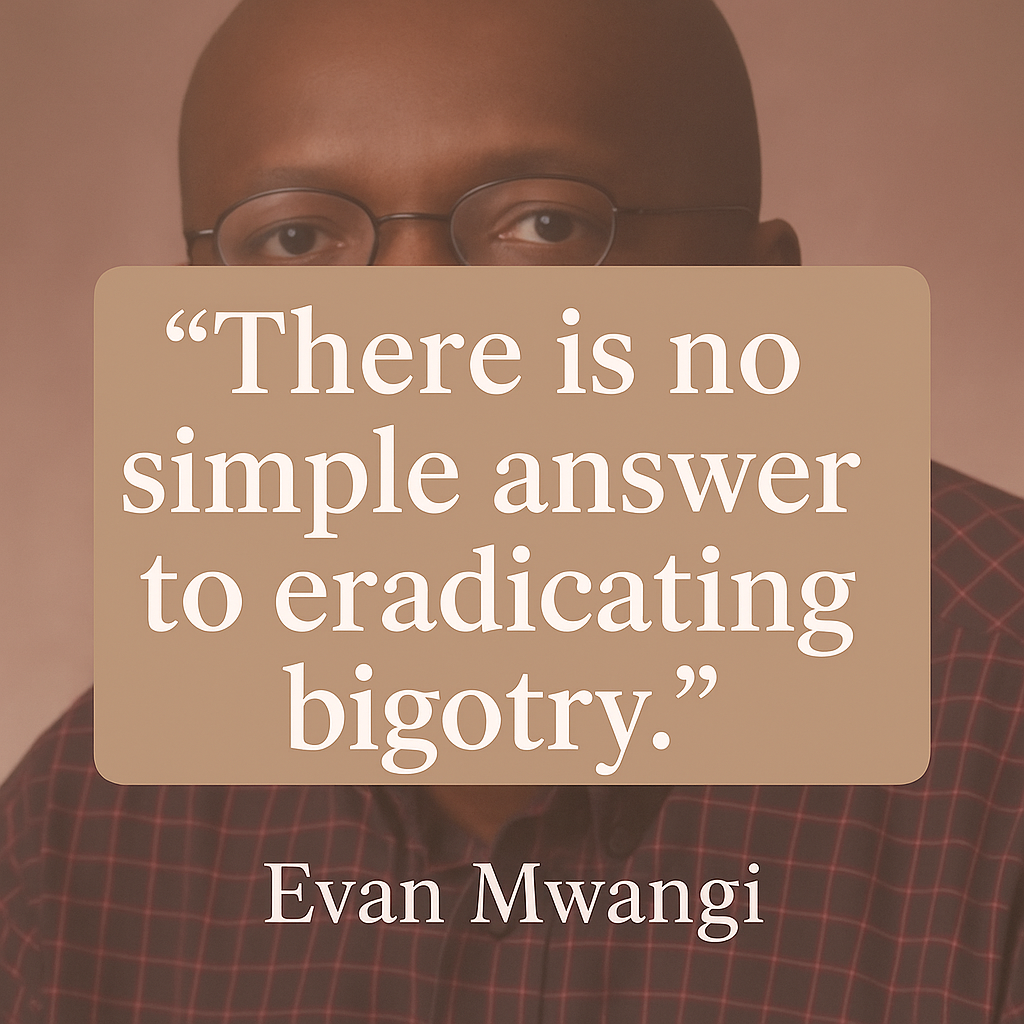
Mwangi’s commitment to teaching African literature as a vehicle for harmony is noble. His belief that the progress of ideas must be enhanced—not restricted—by race is both powerful and universal. As he puts it, “There is no simple answer to eradicating bigotry.” But fair systems, just governance, and inclusive leadership are good places to start.
America’s journey to end racism is far from over. So is Nigeria’s battle against all forms of structural exclusion. But voices like Professor Mwangi’s help light the way—reminding us that silence is complicity, and impact begins with courage, even when it’s risky.
Newspot Nigeria proudly shares this message in solidarity with all who fight injustice—at home and abroad.