
By Newspot Nigeria Editorial Board
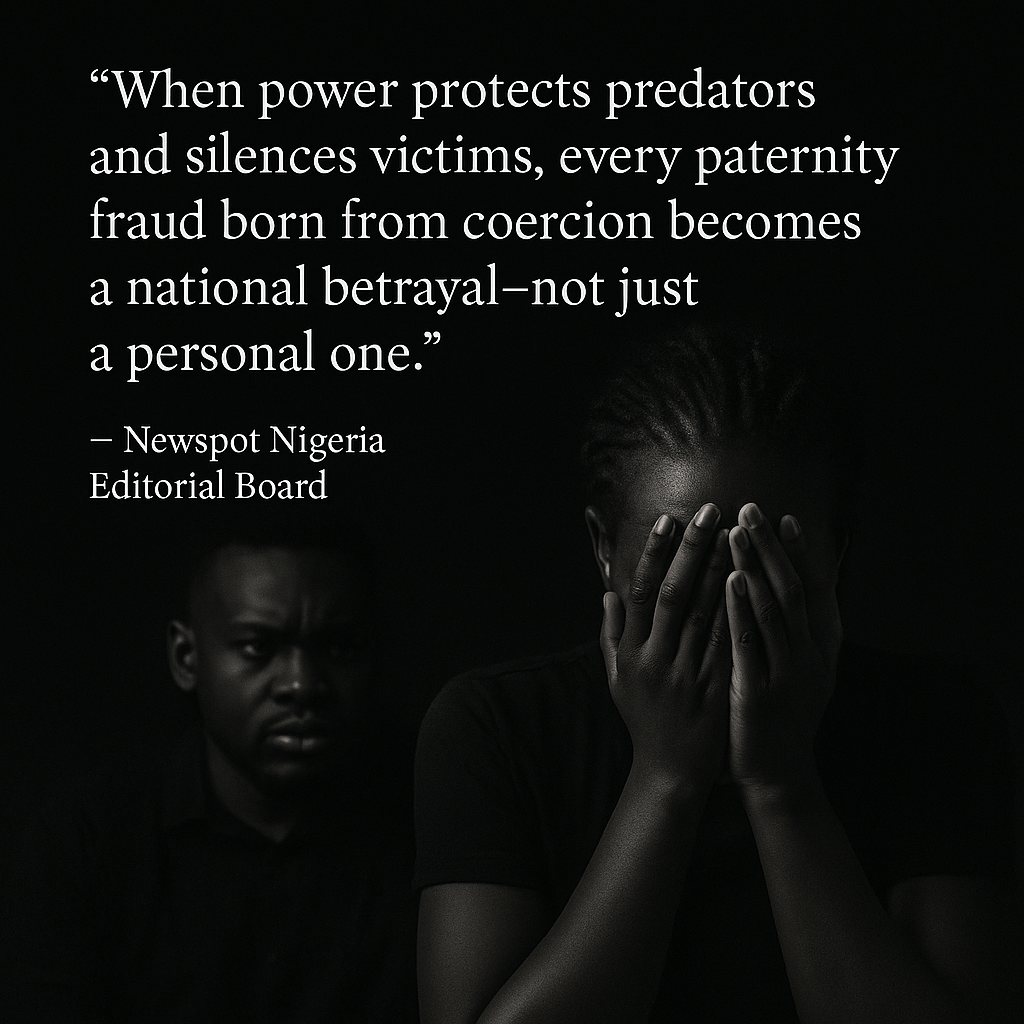
A quiet but devastating crisis continues to fester across Nigeria—one that connects the abuse of power in the workplace to fractured trust within families, and ultimately, to the rising number of paternity fraud cases being uncovered across the country.
Far beyond cases of infidelity, some incidents of paternity fraud are the long-overdue exposure of coerced sexual relationships, often between powerful men and women in vulnerable employment positions. These encounters are not always consensual—they are built on silent pressure, unspoken threats, and institutional complicity.
Children are sometimes born out of these unequal and exploitative encounters. They grow up in homes where husbands believe they are the biological fathers—until a paternity test tells another story. But that story did not begin in the home. It began in the office, under the weight of abuse and silence.

📉 A Disturbing National Pattern





Nigeria is widely reported to have one of the highest rates of paternity fraud globally, with estimates suggesting that nearly 3 in 10 Nigerian men who undergo DNA tests discover that they are not the biological fathers of their children. While the public often rushes to judge these cases as personal betrayals, what is frequently overlooked is the role of coercion and workplace exploitation in shaping some of these outcomes.
🎙 When Power Threatens—and Laughs


The normalization of predatory behavior by men in authority is deeply embedded in Nigeria’s institutions. In 2016, during a closed-door Senate session, Senator Dino Melaye allegedly threatened fellow lawmaker Senator Oluremi Tinubu, claiming he would “beat” and “impregnate” her—remarks widely interpreted as sexually violent and abusive. Despite public outcry, the Senate imposed no known sanctions, reinforcing a culture where abuse from the powerful often goes unchecked.
This same culture echoes in many Nigerian workplaces, where casual jokes about sexual domination, harassment, and even rape are made openly—sometimes by colleagues in positions of authority—without consequence or reprimand. Such remarks reflect not just insensitivity, but a permissive atmosphere that emboldens abusers and silences victims.
More recently, Senator Natasha Akpoti-Uduaghan drew national attention when she described how women are routinely pressured into sexual arrangements to gain or retain political and professional access. Her remarks, though met with controversy, exposed a long-standing pattern of transactional power abuse dressed up as career advancement.
🛑 Sexual Harassment Is Institutional Corruption
Just as Nigeria confronts financial corruption, it must confront sexual coercion with equal seriousness. This is not a matter of office etiquette—it is a form of corruption that destroys dignity, shatters families, and distorts justice.
Too often, HR systems are powerless, complaints are buried, and survivors are forced to choose between silence and survival. Meanwhile, the consequences—emotional, psychological, and legal—are carried by the families left behind.
👨👩👧 The Price of Silence
In a nation where paternity fraud is rising and trust is eroding, it’s time to examine the unseen forces behind these numbers. A man may raise a child for years believing it is his, only to discover that the child was conceived through exploitation his partner could never safely disclose. The emotional and legal consequences are enormous, yet the law remains silent on the deeper cause.
Currently, Nigeria treats paternity fraud as a civil issue, but when rooted in workplace sexual abuse, it becomes a matter of public interest, criminal accountability, and institutional failure.
📣 From Scandal to Reform
Newspot Nigeria calls for the following actions:
-
Enforcement of robust workplace harassment laws across public and private sectors.
-
Whistleblower protections for survivors of sexual coercion.
-
Legislative recognition of sexual coercion as a form of institutional corruption, with corresponding penalties.
-
Full investigation of public officials whose behavior undermines public trust and normalizes abuse.
When sexual misconduct is excused, joked about, or politically protected, it becomes part of a larger betrayal—not only of women, but of families, workplaces, and the nation’s moral code.
Newspot Nigeria stands with victims, families, and all Nigerians affected by the silent scandal of workplace abuse and its far-reaching consequences. It is time to end the complicity, enforce accountability, and rebuild a culture of dignity and protection for all.