
By Newspot Nigeria Editorial Desk


There was a time in Nigeria when holding ₦100 felt like holding opportunity. It could fill your pantry, settle basic needs, and even leave room for savings. Today, that same note can hardly buy a bottle of water—its worth diminished not just by inflation, but by years of economic mismanagement, short-sighted policies, and systemic neglect.
In the 1970s, ₦100 had real purchasing power. You could buy over 20 bags of rice—a symbol of nourishment and family stability. By contrast, in 2025, ₦100 will barely fetch a basic necessity, let alone a full meal. This steep depreciation tells a deeper story: one of economic erosion and rising hardship.
The collapse of the Naira isn’t abstract—it’s lived daily. From the rising costs in open markets to increased school fees and transportation, Nigerians are feeling the crunch in ways that policy papers don’t fully capture. According to long-term inflation estimates, ₦100 in 1973 is now equivalent to over ₦1.1 million in 2025. That means an item priced at ₦100 back then would now require more than a million Naira to purchase.

To put this into perspective: ₦1.1 million is also roughly Nigeria’s current GDP per capita, meaning ₦100 in 1973 had as much economic weight as what an average Nigerian now produces in an entire year. This isn’t just about inflation—it’s about the shrinking of national and individual potential.





The most severe devaluations occurred in the mid-1990s, when the Naira lost over 36% of its value between 1994 and 1995, and plunged again by more than 42% the following year. More recently, 2024 brought another blow, with a value erosion of nearly 19%—a clear indication that the crisis is ongoing, not historical.
The consequences of this economic decline are visible in every corner of Nigerian life. ₦100 once bought 500 cups of garri in 1984. Today, it can hardly buy a bottle of water. This is more than a fall in currency—it is a fall in quality of life, in dignity, and in hope.


In 2014, the Central Bank of Nigeria launched a redesigned ₦100 note to commemorate the Naira’s centenary. It was visually impressive—with colorful graphics, QR codes, and anti-counterfeit features. Yet, while the note got a facelift, its real value kept falling. This contrast is a metaphor for Nigeria’s economic challenge: surface-level fixes without structural change.
This situation is not just about numbers. It’s about trust—trust in leadership, in governance, and in the nation’s ability to secure the future of its people. A currency should reflect a country’s strength, not its struggles. When people lose confidence in money, they also lose faith in the institutions that print it.
📉 When Corruption Disrupts Growth
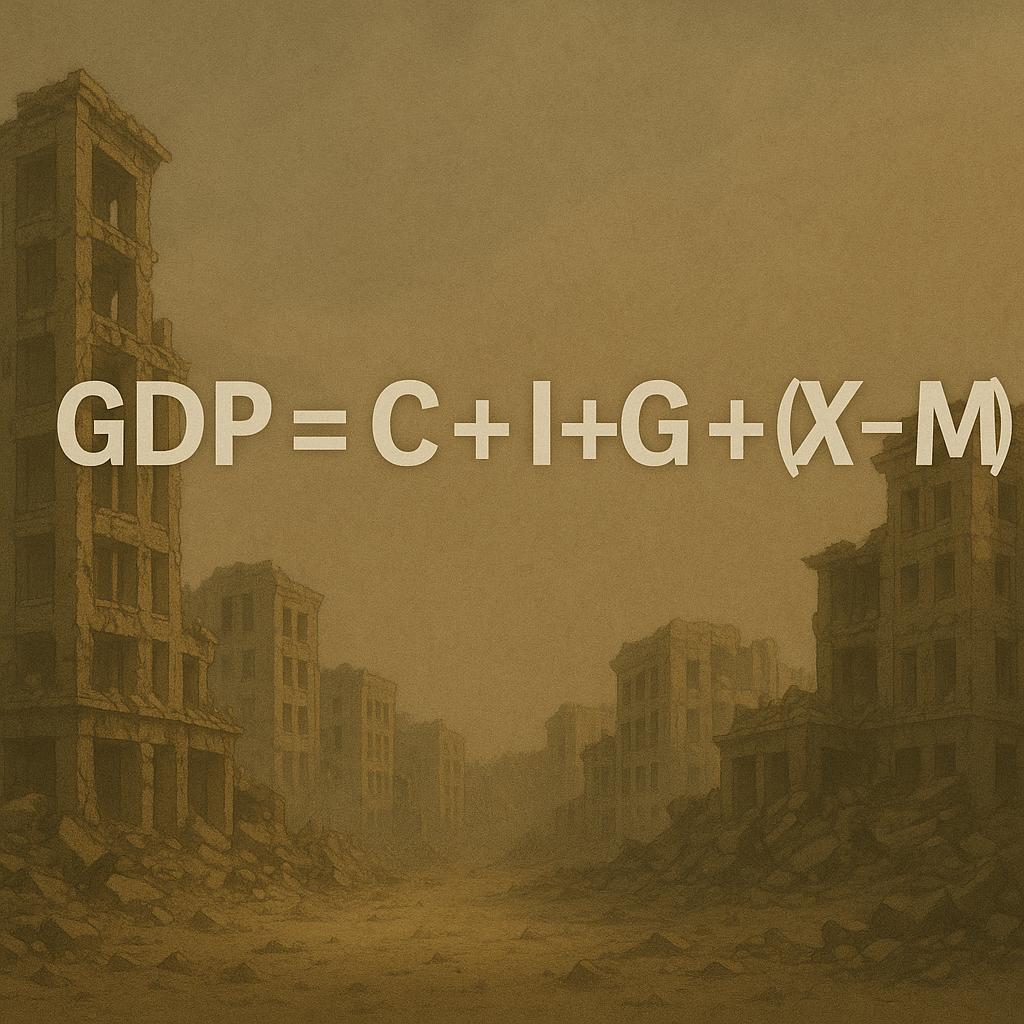
Economists calculate national output using the simple formula:
GDP = C + I + G + (X – M)
Where:
- C is private consumption
- I is investment
- G is government spending
- X – M is net exports
But here’s the catch: when corruption gulps what should make us grow—especially public funds meant for infrastructure, education, or health—the “G” (government spending) becomes inflated by theft, while “I” (investment) dries up due to fear and instability.
When one part of this formula is compromised or falsified, the government may manipulate or pad the other parts to create the illusion of balance. This is how GDP reports can show “growth” even when poverty is rising and people are suffering. It’s growth on paper, not in people’s pockets.
Nigeria’s challenge isn’t a lack of money—it’s a lack of discipline in how money is used and recorded. Until we fix this imbalance, citizens will keep asking why the economy is “growing,” yet the ₦100 in their hands keeps shrinking.
The way forward must be clear-eyed and courageous. Nigeria must:
- Implement credible anti-inflation policies;
- Curb waste through fiscal discipline and subsidy reform;
- Prioritize production and value-added exports;
- And most importantly, treat corruption as economic sabotage, not just a political inconvenience.
The Naira’s fate is a mirror of Nigeria’s direction. If no bold steps are taken, ₦100 may soon be reduced to a historical artifact—relevant only in textbooks and museum displays.
And if that happens, it won’t just be an economic failure. It will be a national heartbreak.
—
🖋️ This article was prepared by the Editorial Team at Newspot Nigeria in response to ongoing economic concerns affecting Nigerians at home and abroad.