By Newspot Nigeria Editorial Desk


Why the Money We Send Home Does More Than Feed Families
In a world obsessed with foreign direct investment, remittances quietly power much of Sub-Saharan Africa’s economy. The numbers are compelling: in 2024, over $54 billion flowed into the region—not from aid agencies or multinational firms, but from everyday Africans living abroad.
Nigeria alone received $20.93 billion, representing an 8.9% increase from the previous year, according to Central Bank of Nigeria and World Bank estimates. While roughly $4.73 billion came through formal money transfer operators (IMTOs), the real story lies beyond the channels—it lies in how these funds are used.
Across Nigeria, Ghana, Kenya, and South Africa—the region’s top recipients—remittances are doing more than bridging financial gaps. They are shaping national destinies, quietly supporting GDP growth, fighting poverty, and stimulating demand for infrastructure where governments fall short. In short, remittances have become a hidden driver of economic stability and development in Sub-Saharan Africa.

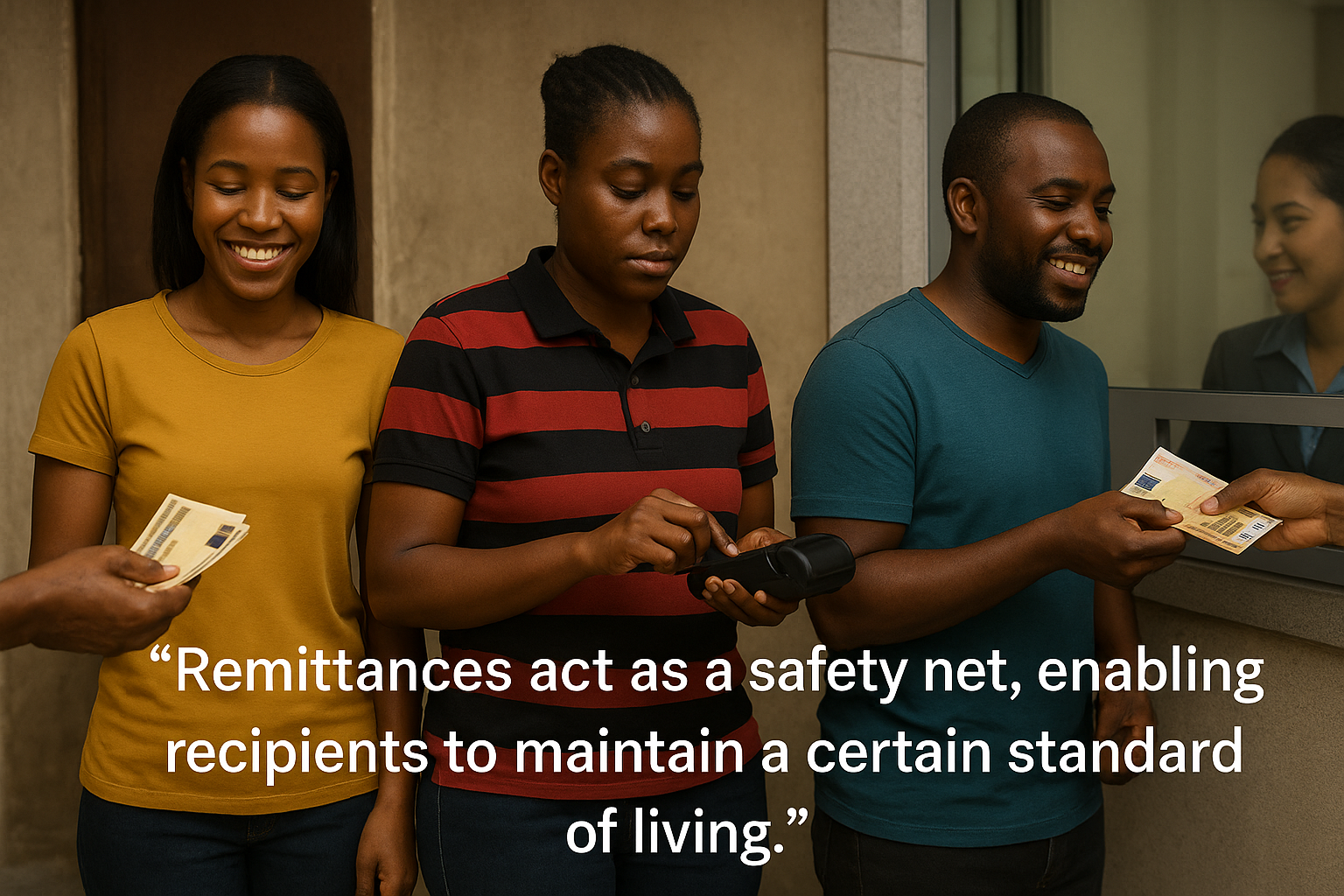
🔍 Let’s bring it closer to home. Picture a family in Abakaliki that just received €278 from a son in Italy. That money could fund a semester of tuition, launch a pepper-grinding business, or repair a leaky roof. While each use may seem small, multiply this effect by millions of households and you begin to see a macroeconomic miracle forming—one transfer at a time.





📊 Research increasingly backs this up. Studies show that remittances positively correlate with GDP growth by stimulating domestic consumption and investment. They also help reduce poverty, particularly in rural and underserved regions where government presence is minimal and credit is scarce. Families use remittances to invest in education, healthcare, and micro-businesses—building the human capital necessary for sustained growth.
Even more surprising? Remittances often have an indirect effect on infrastructure development. While not earmarked for roads or power grids, remittance-driven economic activity creates demand for such infrastructure. As small businesses flourish and consumption grows, so does the need for transportation, electricity, and internet access—nudging governments and the private sector to invest where the people already are.


📌 And it’s not just about money—it’s about trust and resilience. Unlike aid, which may be politicized or poorly targeted, remittances are direct and personal. They reflect a vote of confidence in local communities by those who left, many of whom hope to return.
But there’s a challenge.
For all the good remittances do, many countries still lack coherent policies to harness their full potential. High transfer fees, informal channels, and limited financial literacy mean that too many remittances are used for consumption alone, rather than long-term investment. This is a missed opportunity.
Here’s what must change:
🔹 Formalize remittance channels to reduce costs and improve reliability.
🔹 Incentivize investment—through diaspora bonds, matching grant schemes, and business incubators for remittance-receiving families.
🔹 Strengthen infrastructure in remittance-dependent regions to sustain economic growth and reduce inequality.
Remittances are not a panacea, but they are undeniably a stabilizer—especially in times of crisis. Whether it’s cushioning households during inflation spikes or helping entire regions recover after conflict, remittances are Africa’s silent economic stimulus.
As we debate oil revenues, explore digital currencies, and chase foreign capital, let’s not forget the power of what’s already working—families supporting families, turning hardship into opportunity.
At Newspot Nigeria, we believe in telling the full story—not just of governments and policies, but of households, migrants, and the transformative power of small acts multiplied across borders.
Because in the end, every dollar—or every €278—sent home is more than a transfer—it’s a transaction of hope.