By Newspot Nigeria Editorial Desk
Diplomacy thrives on clarity and consistency, yet the Trump administration’s recent maneuvers in the Middle East have been marked by confusion and contradiction. Allies, adversaries, and observers alike are left navigating a maze of mixed signals.
At the center of this diplomatic whirlwind is Steve Witkoff, the president’s special envoy, who has drawn attention for his erratic public statements. Witkoff has oscillated between criticizing Israel’s approach to hostage negotiations and denying those criticisms, a spectacle that has sown mistrust. Such public back-and-forth not only undermines the credibility of U.S. diplomacy but also places emotional strain on the hostage families caught in the political crossfire.
Adding to the uncertainty is the administration’s claim of a ceasefire with the Iran-backed Houthis in Yemen—a truce that seems to exist only in theory. While U.S. assets may be spared from attacks, Houthi missiles continue to target Israel, and the Houthis have not demonstrated a clear commitment to de-escalation. President Trump’s declaration that the Houthis “don’t want to fight anymore” appears disconnected from the reality on the ground.
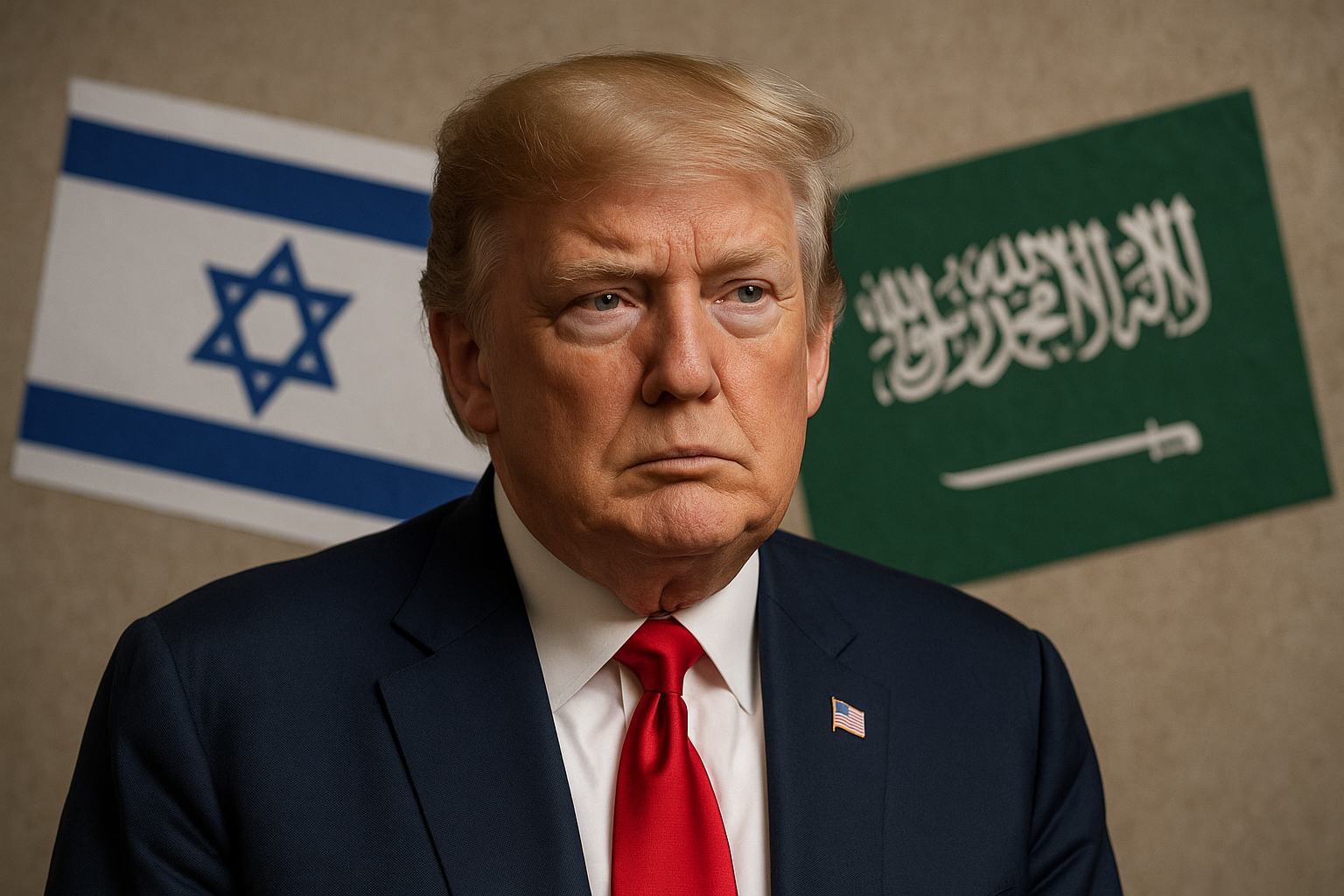
The ambiguity does not end there. The administration’s approach to Saudi Arabia has been equally perplexing. One moment, U.S.-Saudi nuclear cooperation seems contingent on Saudi recognition of Israel; the next, the condition is apparently lifted. This has raised questions not just in Israel but also among other regional players who fear shifting U.S. priorities.





Perhaps most concerning is the evolving U.S. stance on Iran’s nuclear program. President Trump has repeatedly asserted that Iran will not be allowed to acquire a nuclear weapon. Yet, mixed signals persist, with suggestions that Iran could maintain a civilian nuclear program—an approach reminiscent of the policies the administration once criticized.
This pattern of unpredictable diplomacy poses critical challenges for all regional players, not just Israel. Gulf states are wary of a potential U.S.-Iran thaw, while Iran remains cautious of a deal that may be reversed without warning. Regional stability depends on clear, consistent policies, but current developments reflect anything but.


For Middle Eastern countries, the lesson is clear: reliance on external powers with shifting policies is risky. Regional players must prioritize their own security and diplomatic strategies, avoiding the temptation to rely solely on U.S. guarantees.
In a region where volatility is the norm, strategic independence and regional cooperation are crucial.
This commentary is published by Newspot Nigeria, your trusted source for insightful analysis on global events.