
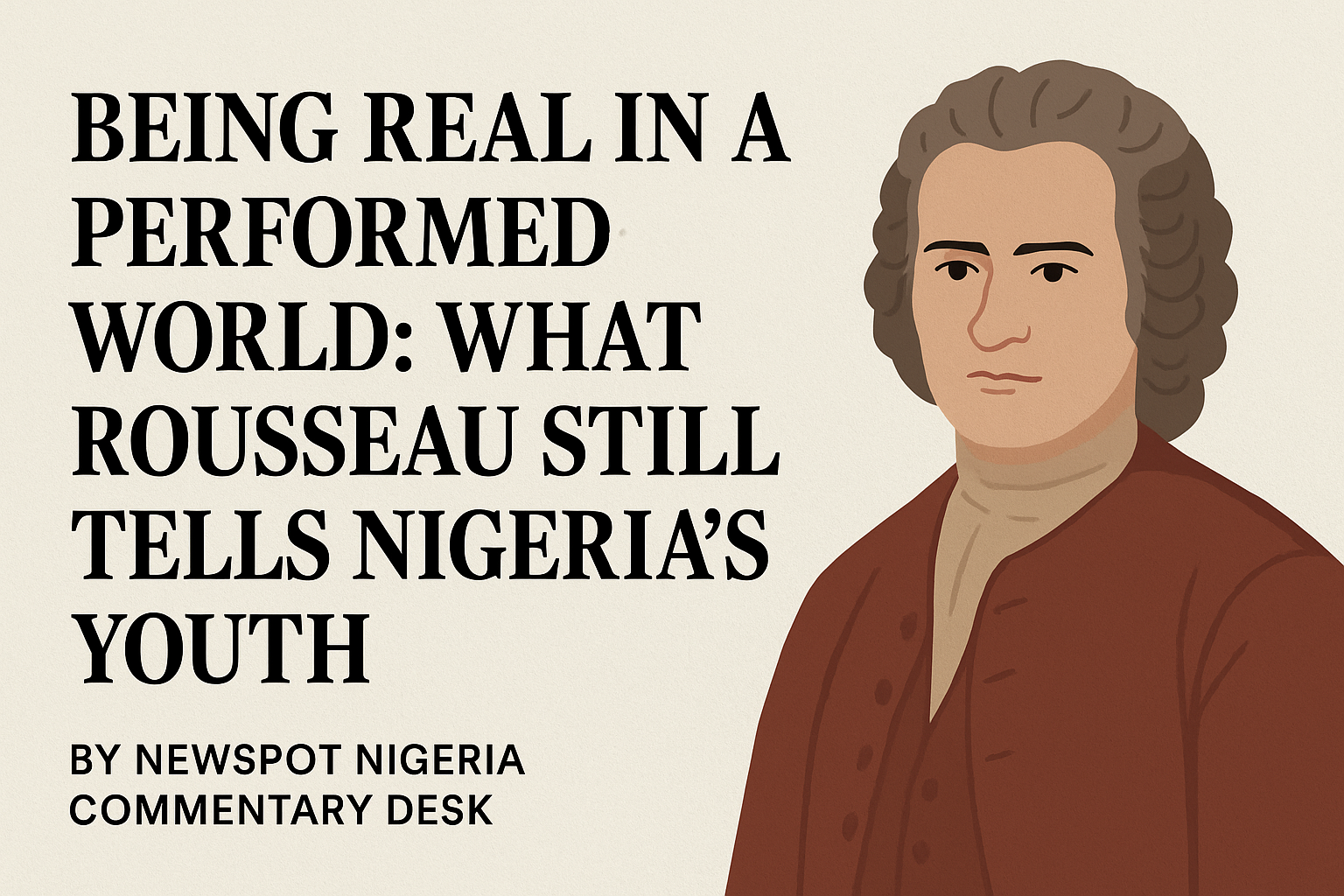

By Newspot Nigeria Commentary Desk
In today’s world, we’re constantly told to “be ourselves.” From motivational slogans to TikTok advice, the message is everywhere. But how real is this call for authenticity when it often comes with filters, brand deals, and curated social media profiles?
Long before the age of Instagram, 18th-century thinker Jean-Jacques Rousseau wrestled with the idea of sincerity in a world of appearances. Rousseau didn’t just talk about being honest—he committed to it, even when it made him look bad. In his autobiographical work Confessions, he openly admitted to deeply personal faults. His goal wasn’t to impress, but to strip away pretense and speak truthfully—even when that truth hurt.
This concept challenges today’s digital culture, where the appearance of being genuine is often more valued than genuine honesty. In Nigeria, this is a familiar struggle. Whether it’s public figures managing image over impact or individuals pressured to display “soft life” despite harsh realities, much of life has become a performance.

Rousseau believed that true freedom means living according to one’s natural self—not the version shaped by societal approval. He worried that constant social comparison would trap people in a cycle of pleasing others rather than understanding themselves. That concern remains relevant in a time when young Nigerians face pressures not only from offline traditions but also from the constant noise of online validation.




He offered a radical idea in Émile, his work on education: shield young people from social expectations early on so they can grow into individuals guided by reason, not applause. He used Robinson Crusoe—a story of self-reliance—as a model of a life lived without chasing social status. This lesson might resonate with those navigating Nigeria’s competitive academic and professional spaces, where self-worth is often tied to external achievements.
Still, Rousseau wasn’t against manners or social norms. He recognized their place in a functioning society. What he wanted was awareness—a conscious balance between playing along with societal rules and preserving personal integrity.


In our own context, Nigerians can learn from Rousseau’s warning. The pressure to succeed, to appear happy, or to meet cultural expectations can be overwhelming. But true authenticity isn’t about dropping all norms; it’s about building a life that reflects internal convictions, not just external approval.
Real authenticity might not be loud, performative, or brand-friendly. Sometimes, it’s quiet. It’s choosing honesty in private, knowing your values, and living them—whether or not it trends.
Published by Newspot Nigeria, where classical thought meets modern African realities.