
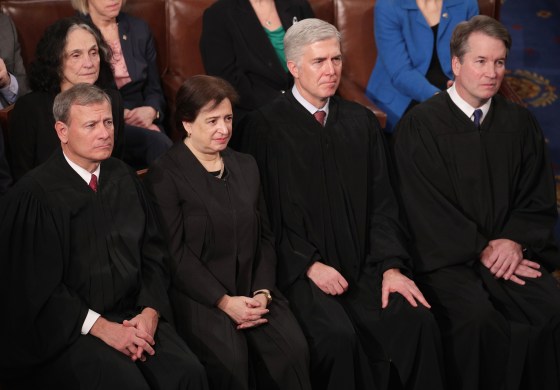

On March 4, 2025, the absence of several Supreme Court justices during Donald Trump’s joint speech to Congress highlighted a troubling trend in the judiciary. Notably missing were two of the court’s three liberal justices, Sonia Sotomayor and Ketanji Brown Jackson, as well as Justices Samuel Alito, Neil Gorsuch, and Clarence Thomas. This selective attendance sends a concerning message about the state of our judicial system and its role within our democracy.


In stark contrast, Chief Justice John Roberts and Justices Elena Kagan, Brett Kavanaugh, Amy Coney Barrett, and retired Justice Anthony Kennedy were present, suggesting a divided court that may be more influenced by political sentiments than by the impartiality expected of the highest court in the land. As citizens, we must ask ourselves: what does this say about the integrity of our judiciary?
Editor-in-Chief of Roll Call, Jason Dick, noted the complexities in interpreting these absences, highlighting that justices like Alito and Thomas have opted out of such events in recent years due to past controversies. However, when justices choose to skip significant events based on their political affiliations or personal feelings toward the president, it deepens the polarization of the judiciary and raises alarms about its impartiality. This trend can erode public trust, leading citizens to perceive the Supreme Court as a politically motivated body rather than a fair arbiter of justice.
The absence of Sotomayor and Brown Jackson could be seen as a protest, but such actions may inadvertently fuel the narrative that the judiciary is divided along partisan lines. This is not merely a matter of individual choices; it is a matter of the Republic’s health. A judiciary that does not uphold the principles of neutrality and respect for the democratic process threatens the very foundation of our government.

During his speech, Trump credited the Supreme Court for its 2023 ruling that ended affirmative action in college admissions, aligning the court’s decisions with his goals to dismantle diversity, equity, and inclusion (DEI) programs. Earlier that day, the conservative-majority court also made headlines by weakening an Environmental Protection Agency rule designed to combat offshore water pollution. These actions underscore the importance of a unified and impartial judiciary that serves all citizens, regardless of political affiliation.





As the political landscape continues to evolve, it is imperative that the Supreme Court reflects its commitment to justice and fairness, rather than division. The future of our democracy depends on a judiciary that embodies these values, ensuring that all Americans can trust in the rule of law.
For more updates on this story and other political happenings, stay tuned to Newspot Nigeria.


Source: Yahoo News